
Did Bihar vote for continuity? Exit polls point to strong mandate for Nitish Kumar
As the Bihar Assembly elections concluded peacefully, exit polls released shortly after polling ended predicted a clear majority for the ruling NDA alliance led by Chief Minister Nitish Kumar. Multiple surveys indicate that the opposition Mahagathbandhan’s hopes of reclaiming power may once again be dashed, with the NDA projected to maintain a comfortable lead across most regions of the state.
According to the People’s Pulse survey, the NDA is expected to secure between 133 and 159 seats, while the Mahagathbandhan could win 75 to 101 seats. The Jan Suraaj Party, led by election strategist Prashant Kishor, may manage 0 to 5 seats, and other smaller parties are likely to get 2 to 8. The Dainik Bhaskar poll forecasted a stronger performance for the NDA with 145 to 160 seats, compared to 73 to 91 for the Mahagathbandhan and 5 to 10 for others. Meanwhile, DVC Research projected 137 to 152 seats for the NDA, 83 to 98 for the Mahagathbandhan, 2 to 4 for Jan Suraaj, and 4 to 8 for independents and smaller outfits.
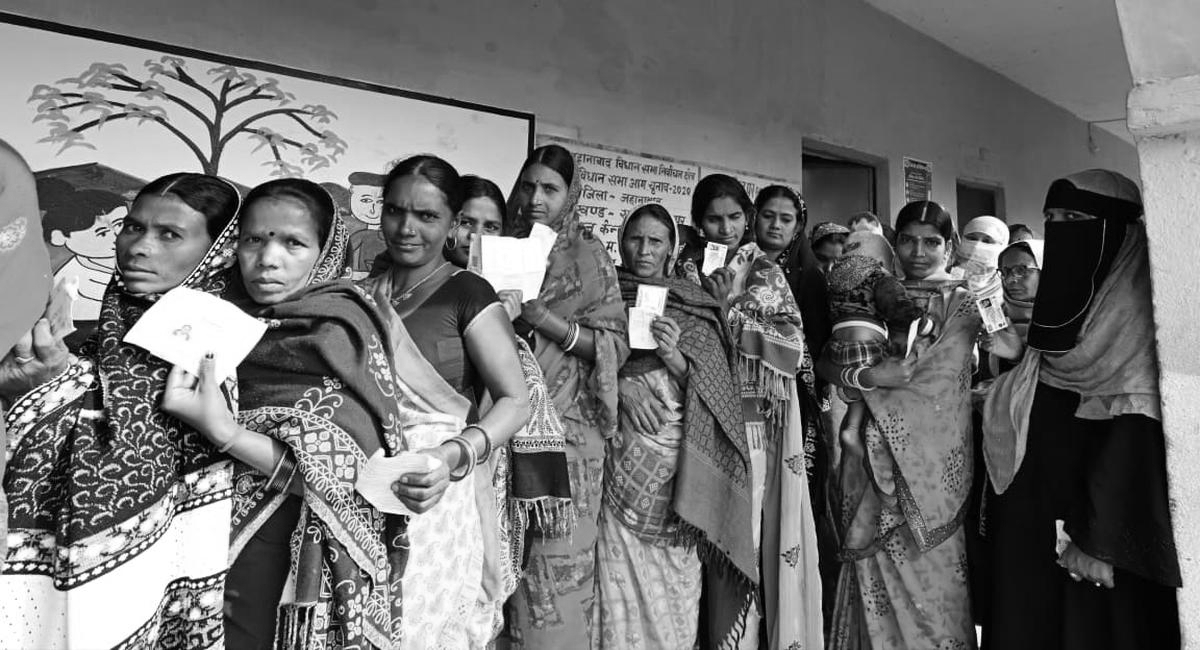
The second phase of voting recorded an impressive 67.14% voter turnout, one of the highest ever in Bihar’s electoral history. Kishanganj district registered the highest polling at 76.26%, followed by Katihar (75.23%) and Purnea (73.79%), while Nawada saw the lowest turnout at 57.11%, according to the Election Commission. The first phase had 65.08% polling. Overall, the two-phase elections were marked by a straight contest between the NDA and the Mahagathbandhan. Analysts have noted that the high participation of women voters outnumbering men in many constituencies could play a decisive role in shaping the outcome.
The BJP, a key partner in the NDA, expressed strong confidence of achieving a landslide victory. Party national spokesperson Syed Shahnawaz Hussain said that “a strong wave” was blowing in favour of the NDA, asserting that the alliance would win at least 160 seats. He credited women voters for showing overwhelming support, adding that the results would reaffirm public confidence in Nitish Kumar’s leadership. Hussain also took a swipe at the opposition, saying that the RJD and Congress spent much of their campaign period dealing with internal rifts instead of engaging with the public. On the Jan Suraaj Party, he commented that it was “visible only on social media and not on the ground,” quipping that even a single seat victory would be a major achievement for the new party.
Political observers describe this election as a referendum on Nitish Kumar’s long tenure as Chief Minister, one that tests whether voters still trust his leadership amid recurring alliance shifts and governance fatigue. They note that while the NDA banks on development and stability, the opposition is hoping to capitalise on unemployment, inflation, and anti-incumbency sentiments.
Adding to the pre-result political turbulence, the Congress suffered a setback as senior leader and former MLA Shakeel Ahmad resigned from the party, citing personal reasons in a letter to party president Mallikarjun Kharge. His resignation on the eve of results has deepened the sense of uncertainty within the Congress camp, already struggling with low morale and organisational discord.
Beyond numbers, the Bihar verdict is being closely watched across the nation as a barometer of political sentiment ahead of the 2029 general elections. Analysts caution that exit polls, while indicative, have sometimes misjudged Bihar’s complex caste and regional dynamics as seen in the 2020 elections, when predictions of an RJD-led edge proved inaccurate. Still, if the latest forecasts hold true, Nitish Kumar’s NDA could cement its dominance once again, sending a strong signal of stability in the Hindi heartland and boosting the BJP’s momentum for upcoming national battles.