
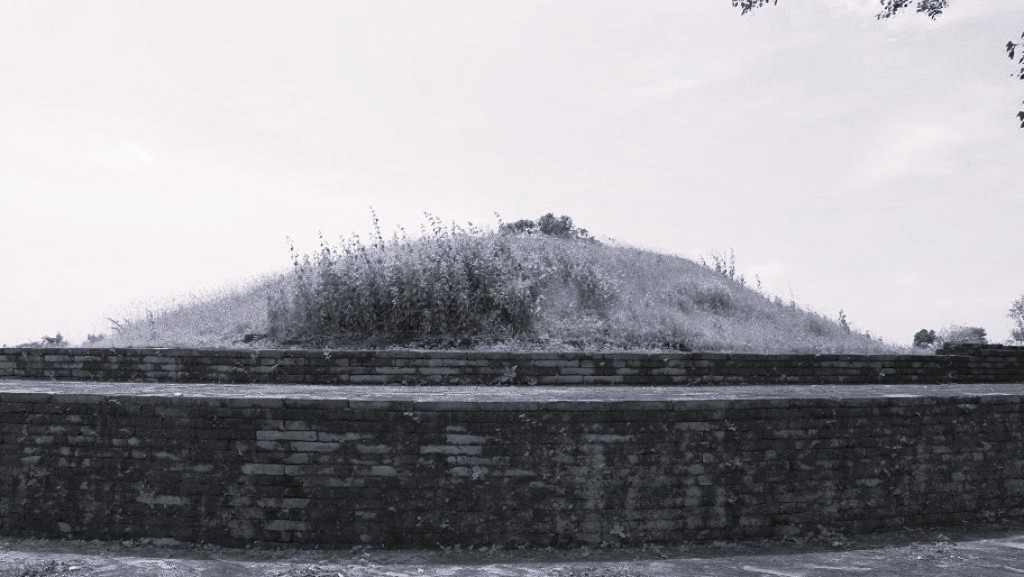
Dhulikatta: The Valor of Satavahanas and the Splendor of Buddhist Dharma
The Satavahana era is a golden chapter in Indian history. While the Mauryas ruled North India, the Satavahanas established a powerful empire in the Deccan (Dakshinapatha). Their journey, which began at Kotilingala on the banks of the Godavari River, expanded all the way to the Krishna River. Dhulikatta emerged as a vital and strategic city in this progression. Today, this quiet site in the Peddapalli district of Telangana flourished two thousand years ago as an international commercial hub and a prominent center for Buddhist teachings.
Historical Background and Geographical Location
Dhulikatta is located approximately 16 km from the Peddapalli district headquarters, within the Vadyapur revenue village limits of Eligaid Mandal. Situated on the banks of the Hussainia River (Hussainia Vagu), this city was originally known as 'Dhulikota' (a fort built of mud), which eventually evolved into 'Dhulikatta.'
Historians believe 'Dhulikota' became corrupted over time into 'Dhulikatta.' Evidence suggests this was a settlement during the Ikshvaku period. Inscriptions indicate that Dhulikatta was one of the thirty fortified cities of the Andhras mentioned in Megasthenes' Indica . Archaeological excavations have unearthed earrings, conch bangles, ivory combs, and female figurines. Until the discovery of Buddhist stupas, the religious practices of the inhabitants remained a mystery, as only idols of Mother Goddesses and Yakshas had been found. Excavations conducted by the Archaeology Department between 1975 and 1976 revealed forts from the Ikshvaku era, a Buddhist stupa, and the Naga Muchalinda sculpture. Every year, a three-day 'Satavahana Utsavam' (festival) is celebrated here. The Dhulikatta Buddhist site is located 3 km north of the village on the opposite bank of the Hussainia Vagu. Due to the lack of a paved road, the site is primarily accessible by bullock cart. Spanning nearly 34 acres, this area reflects the early architectural style of the Satavahana period.
Town Planning: A 3rd Century BCE Engineering Marvel
Excavations conducted between 1974 - 77 and 1984 - 85 revealed startling facts about the town planning of that era, which rivaled modern urban designs. The defense system featured massive mud fort walls measuring 15.18 x 140 meters, along with dedicated quarters for guards. The use of large-sized bricks was a unique characteristic of that period.
The use of "ancient concrete", a mixture of gravel, brick powder, and lime, in the foundations serves as a testament to their advanced technical knowledge. Scientific drainage systems for wastewater, freshwater wells, and granaries were also discovered, highlighting the ancient citizens' awareness of health and hygiene.
Theravada Buddhism and the Maha Stupa
Dhulikatta was not just a political center but a significant spiritual hub. A 'Maha Stupa' was unearthed about a kilometer from the fort, serving as primary evidence of 'Theravada Buddhism' (a form close to Hinayana) in North Telangana.
Features of the Stupa:
• The stupa features 'Ayaka' platforms on all four sides.
• Slabs around the stupa are adorned with symbols such as the feet of the Buddha, the Bodhi tree, and the Dharma Chakra.
• Notably, there are no physical idols of the Buddha; the site reflects 'Early Buddhism' where the Buddha was worshipped only through symbols.
• Remains of Buddhist Viharas (monasteries) built for monks highlight the spiritual grandeur of the site.
'Naga Muchalinda': A Global Attraction
Among the sculptures found at Dhulikatta, the five-hooded Naga Muchalinda is the most extraordinary. According to Buddhist lore, a serpent king named Muchalinda protected the Buddha from rain with his hood while he was attaining enlightenment. This sculpture bears a Brahmi inscription: "Guhapathitho Pathalasa Samayadanam." The panel intricately depicts the Buddha’s throne, his feet, the serpent hood, and the Bodhi tree in the background. These artifacts are currently preserved at the Karimnagar Archaeological Museum.
In 2023, this Naga Muchalinda sculpture was showcased at the "Tree and Serpent" exhibition at the Metropolitan Museum of Art in New York . Being one of only 125 ancient sculptures selected globally, it is a matter of great pride for Telangana.
Roman Connections and Other Artifacts
The discovery of Roman gold coins alongside Satavahana coins confirms Dhulikatta's international trade links. Historians believe trade in textiles and spices with the Roman Empire was conducted from here. Furthermore, Hariti (Mother Goddess) idols, bronze statues of a mother and child, terracotta toys, and beads provide a vivid picture of the social and cultural life of that time.
Preservation and Tourism
Despite its rich history, Dhulikatta currently faces neglect. Parts of this 34 acre historical site are being converted into agricultural land. Further large scale excavations could reveal more historical secrets. Integrating Dhulikatta into a Buddhist Tourism Circuit could transform it into a major destination for tourists from Southeast Asian countries.
Dhulikatta is not just a mound of earth, it is a mirror reflecting the identity of Telangana and the administrative excellence of the Satavahanas. It is our collective responsibility to preserve the glory of the Naga Muchalinda, which has reached New York, on our own soil.
Travel Information
Dhulikatta is easily accessible from major cities in Telangana,
By Road:
From Peddapalli:
16 km (Autos and taxis available).
From Karimnagar:
35 km via Sultanabad and Eligaid.
From Hyderabad:
200 km via Rajiv Rahadari (SH-1) to Sultanabad, then Eligaid.
By Rail:
Peddapalli Junction:
16 km away (Major stop for trains from Secunderabad, Delhi, and Vijayawada).
Karimnagar Railway Station:
35 km away.
By Air:
Rajiv Gandhi International Airport (Hyderabad):
230 km away.
Travel Tips:
Best Time to Visit October to March. No hotels are available in the village; it is best to stay in Peddapalli or Karimnagar. Best visited during daylight hours (10:00 AM to 5:00 PM).