
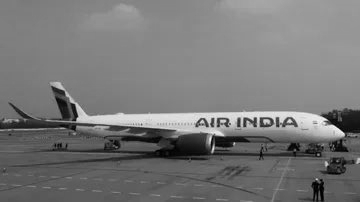
DGCA Orders Air India to Reinspect RAT on Boeing 787s After Technical Glitches
Air India’s Boeing 787 fleet has come under regulatory scrutiny following two technical incidents within a week, prompting the Directorate General of Civil Aviation (DGCA) to order a thorough inspection of the aircrafts’ Ram Air Turbine (RAT) systems. The incidents, involving emergency power deployment and autopilot failures, raised concerns among pilots and aviation safety experts, highlighting the critical importance of the Power Conditioning Module (PCM) recently replaced on some aircraft.
Uncommanded RAT Deployment on Amritsar–Birmingham Flight
On October 4, RAT deployed automatically on Air India flight AI-117, shortly before landing at Birmingham. RAT, a small emergency turbine that generates power from wind in case of total engine or electrical failure, is not meant to deploy under normal conditions. A DGCA official said, “During landing at 400 ft, the RAT unlock message came, and it got deployed. The pilot did not report any related abnormality, and the aircraft landed safely.” Post-flight inspections following Boeing-recommended maintenance actions revealed no discrepancies, and the aircraft was cleared for service on October 5.
Autopilot Failure Leads to Flight Diversion
Five days later, Air India flight AI-154 from Vienna to Delhi, operated by Boeing 787 VT-ANO, was diverted to Dubai due to a “sudden failure of the autopilot system, triggering a series of technical malfunctions.” While Air India denied any electrical failure, the Federation of Indian Pilots (FIP) reported, “The Boeing 787 experienced failures across critical systems, which included Autopilots, ILS, flight directors (FDs) and flight control system degradation with no autoland capability. The pilots could not engage the autopilots and were constrained to fly manually at night.” The aircraft landed safely in Dubai.
DGCA Orders Reinspection and Review
Following these incidents, the DGCA has directed Air India to reinspect RAT stowage on all aircraft whose PCM modules were recently replaced, review D-Check maintenance packages, and ensure no operational discrepancies exist. The PCM regulates and distributes electrical power to vital aircraft systems, making its proper functioning crucial to safe flight operations. The regulator also requested a comprehensive report from Boeing on preventive measures for uncommanded RAT deployment.
Global Data and Boeing’s Role
The DGCA has asked Boeing to provide data on similar uncommanded RAT deployments worldwide, including service difficulty reports after PCM replacement, to understand whether this is an isolated issue or part of a broader pattern. This information will guide future inspections and preventive measures.
Passenger Safety and Confidence
Although both aircraft landed safely and no injuries occurred, the incidents underscore the importance of rigorous technical oversight. Experts say RAT deployments alone are not dangerous, but repeated anomalies can erode passenger confidence. DGCA’s swift intervention, along with Air India’s cooperation, is aimed at maintaining high safety standards and reassuring travelers.