
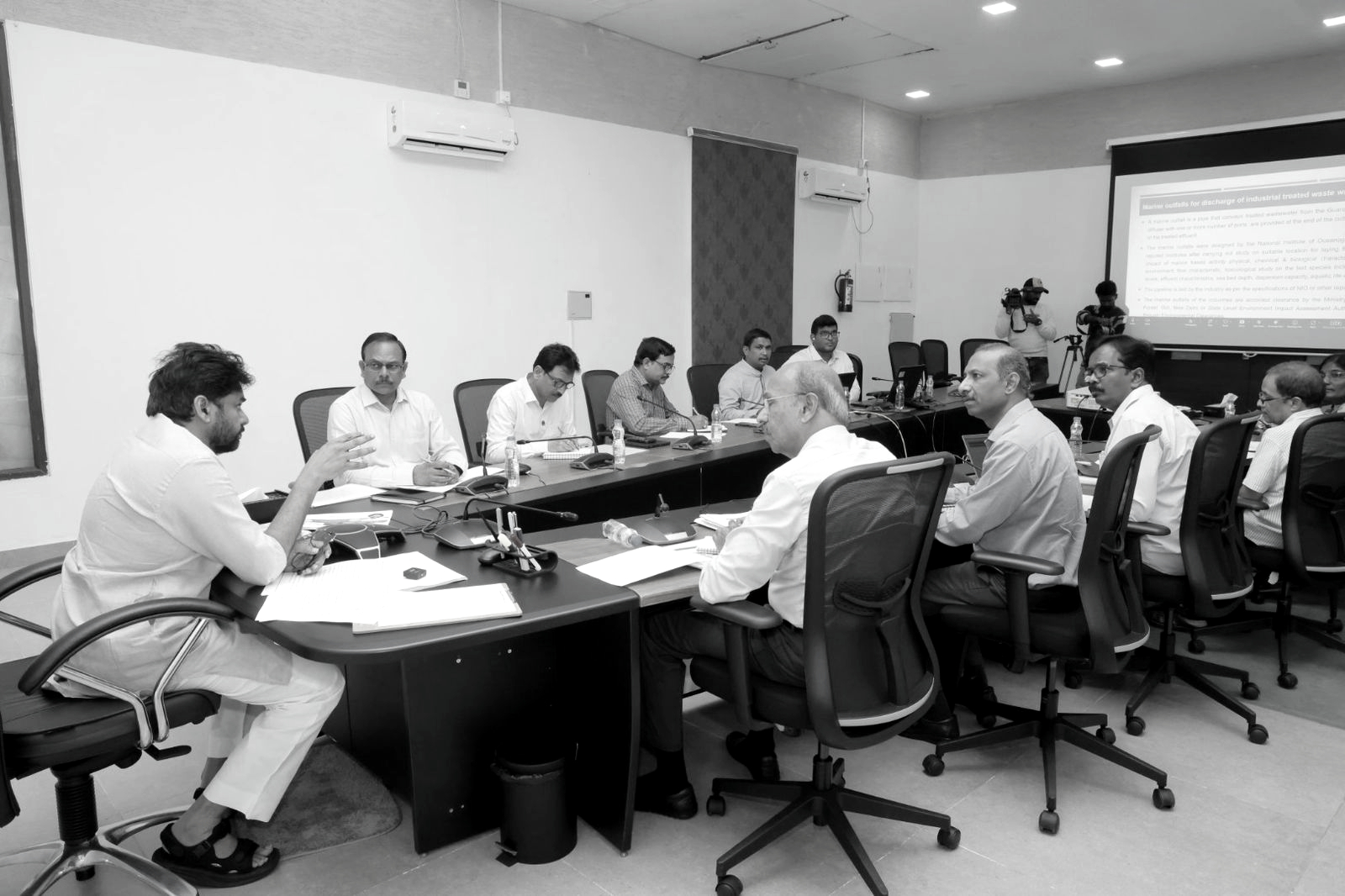
Deputy CM Pawan Kalyan reviews pollution control measures in Uppada coastal area
Deputy Chief Minister and Minister for Forests and Environment, Shri Pawan Kalyan, on Friday conducted a detailed review of pollution control measures affecting the Uppada coastal area .The review was held with officials from the Andhra Pradesh Pollution Control Board (APPCB), while Kakinada district authorities participated through video conferencing.
The focus of the review was on industrial and mining-related pollution affecting coastal ecosystems and local livelihoods, particularly within the Pitapuram constituency. Shri Pawan Kalyan interacted directly with fishermen in the region, gathering firsthand accounts of environmental challenges and clarifying their concerns regarding pollution impacts.
During the session, officials briefed the Deputy CM on current procedures for pollution audits, ongoing monitoring efforts, and the status of compliance by local industries. Discussions also covered environmental conditions across Kakinada and Godavari districts, with an emphasis on sustainable management of coastal resources.
The Uppada coast was highlighted due to its ecological sensitivity and economic importance, particularly for the fishing community. Past complaints from fishermen about water contamination, fish mortality, and soil degradation have made the area a priority for focused pollution control measures.
Shri Pawan Kalyan is expected to engage with industries and factory operators responsible for effluent discharge and other forms of pollution to ensure compliance with environmental norms. The Deputy CM may direct APPCB to issue notices or mandate corrective action, as well as implement temporary operational restrictions if necessary. He may also oversee cleanup drives and stricter monitoring of both air and water quality.
While there are multiple industrial units near Uppada, including shrimp farms, chemical processing units, rice mills, port-related industries, and small-scale mining operations, the exact number of major polluting units is not publicly confirmed. Past environmental assessments suggest that a subset of industries in the region are the primary contributors to water and air pollution.
Officials indicated that a full-fledged pollution audit could be conducted in the coming weeks to systematically assess environmental damage, enforce compliance, and implement mitigation strategies. Long-term measures may include upgrading pollution control systems, stricter coastal zone regulations, and community engagement programs for sustainable fishing and aquaculture practices.
In his review, the Deputy Chief Minister emphasized the importance of coordinated efforts between government authorities, industries, and local communities to address pollution while supporting economic development. He assured stakeholders that the government is committed to protecting the coastal ecosystem and ensuring sustainable livelihoods for residents of the Pitapuram and Kakinada region.