
Democracy, Dignity and Digital Power: India’s Human Rights Debate Enters a New Phase
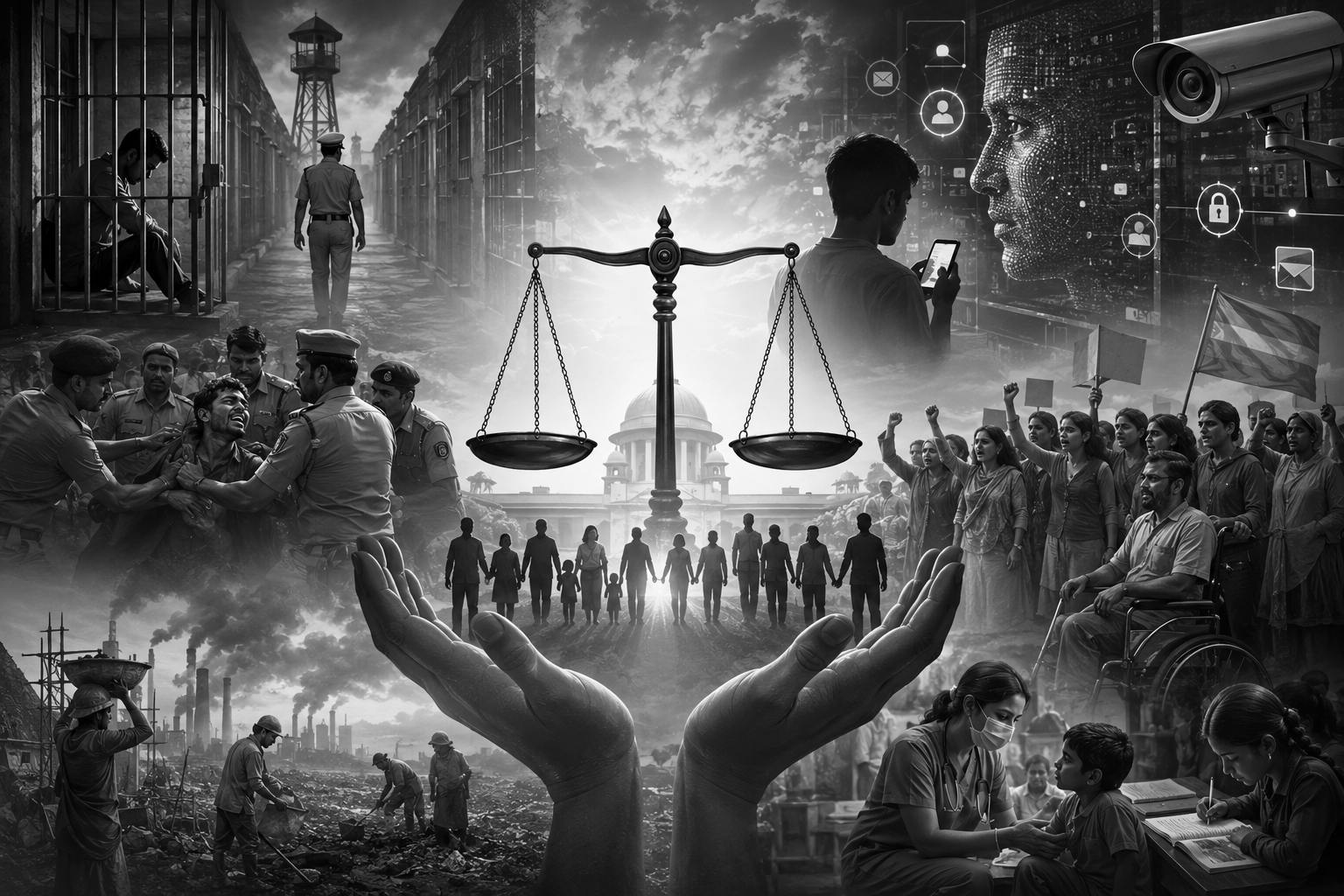
As India races through an era of rapid technological transformation, economic expansion, urban growth, and social change, an uncomfortable reality continues to shadow its progress, the growing scale and complexity of human rights violations. From custodial deaths and prison overcrowding to environmental injustice, labour exploitation, mental health neglect, and digital surveillance concerns, the definition of human rights in modern India has expanded far beyond traditional legal debates.
This evolving challenge formed the core of a major day-long conference organised recently by the National Human Rights Commission (NHRC) in New Delhi, where State Human Rights Commissions (SHRCs), Special Rapporteurs, and Special Monitors came together to discuss the future of India’s human rights framework. The discussions revealed not only the scale of the crisis but also the urgent institutional reforms being proposed to address it.
NHRC Calls for Stronger Coordination and Clearer Jurisdiction
Chairing the conference, NHRC Chairperson Justice V. Ramasubramanian described India’s human rights system as unique because both the NHRC and SHRCs exercise concurrent jurisdiction in several matters while also operating under subject-specific mandates. While this structure was designed to improve accessibility and accountability, it has increasingly created overlapping complaints, procedural confusion, and duplication of cases.
Justice Ramasubramanian stressed that maintaining clarity under the Protection of Human Rights Act was essential to reduce unnecessary litigation and improve the quality of services delivered by the commissions. He also strongly advocated for digitisation and integration through the HRCNet portal , a centralised complaint management system developed by the NHRC to improve coordination, avoid duplication, and ensure faster disposal of complaints.
HRCNet: India’s Biggest Digital Human Rights Reform
The push for HRCNet represents one of the biggest policy reforms currently underway within India’s human rights ecosystem. The portal is designed to connect national and state-level commissions into a unified digital framework capable of real-time monitoring and data-sharing.
So far, 23 SHRCs have adopted the system, though several states are yet to fully onboard or operationalise it. The NHRC believes the platform can significantly reduce procedural delays while creating a comprehensive national database of human rights complaints and responses.
4.28 Lakh Complaints Reveal Scale of Crisis
The urgency behind these reforms becomes clearer when examining the scale of complaints being handled. According to NHRC Secretary General Bharat Lal , the Commission received nearly 4.28 lakh complaints over the past five years , averaging roughly 85,000 to 86,000 complaints annually .
The figures expose the depth of governance failures and institutional distress across the country.
The largest category of complaints involved police-related violations , accounting for 18 per cent of all cases. This was followed closely by organised exploitation by mafias at 17.4 per cent. Other major categories included non-payment of pensions and salaries, women’s rights violations, prison conditions, workers’ rights abuses, health-related grievances, educational institution violations, and child rights concerns.
Yet officials acknowledged that the actual number of human rights violations across India is likely far higher. Many victims, especially those from rural, poor, tribal, migrant, or marginalised communities, never approach formal institutions due to fear, lack of awareness, financial constraints, or distrust of authorities.
Human Rights Beyond Custodial Violence
The conference reflected a growing understanding that human rights can no longer be confined to custodial violence or police excesses alone. Today’s rights concerns increasingly intersect with technology, healthcare, environment, labour, gender identity, and social welfare.
Participants highlighted deeply troubling issues such as manual scavenging deaths , abuse in shelter homes, poor conditions in mental health institutions, gaps in rehabilitation for persons with disabilities and transgender persons, overcrowded prisons, occupational diseases such as silicosis, and unsafe working conditions for sanitation workers and mine labourers.
In recent years, the NHRC has also expanded its focus to include emerging modern concerns such as digital privacy , AI governance, environmental justice, climate-related displacement, gig-worker protections, and online harassment.
This marks a significant shift in the understanding of human rights from a narrow legal framework to a broader governance and dignity-based model.
Why Human Rights Matter More in the Modern World
Human rights experts at the conference repeatedly stressed that modern societies require stronger rights protections precisely because technological and institutional power has grown enormously.
In an age where governments, corporations, and digital platforms possess unprecedented control over information, labour, and surveillance, human rights mechanisms act as safeguards for individual dignity and democratic accountability.
Without strong protections, experts warned, technological advancement can easily lead to exploitation, discrimination, suppression of dissent, privacy violations, and widening social inequalities.
Calls for Faster Action and Greater Public Engagement
NHRC Member Justice (Dr.) Bidyut Ranjan Sarangi emphasised the need for faster coordination between NHRC and SHRCs to ensure timely implementation of recommendations and compensation orders, particularly in sensitive matters like custodial deaths.
Meanwhile, NHRC Member Vijaya Bharathi Sayani urged commissions to move beyond office-based administration and increase field visits and community engagement. She argued that human rights bodies must become more accessible to vulnerable populations rather than remaining distant bureaucratic institutions.
The conference recommendations reflected a broad roadmap for institutional reform. State governments were urged to strengthen SHRCs through better staffing, infrastructure, outreach programmes, and increased field engagement.
Participants also called for stronger legal enforceability of human rights recommendations, noting that many directives continue to be treated as advisory by state authorities.
Shift From Reactive Action to Preventive Governance
One of the biggest policy shifts discussed during the conference was the move from reactive rights enforcement to preventive human rights governance .
Instead of intervening only after violations occur, experts recommended: regular training for police personnel, capacity-building for correctional staff, institutional monitoring, surprise inspections, and stronger accountability mechanisms.
Participants also demanded more frequent inspections of prisons, hospitals, de-addiction centres, old age homes, tribal hostels, shelter homes, and mental health institutions, which are increasingly seen as high-risk environments for neglect and abuse.
Environmental Justice and Labour Rights Enter Mainstream Debate
Environmental justice emerged as another major area of concern. Experts stressed the need for scientific monitoring systems and evidence-based environmental mapping to tackle pollution, water contamination, and climate-related human rights threats.
The growing recognition that environmental degradation directly affects public health, livelihoods, and dignity has significantly widened the scope of human rights discourse in India.
The conference also highlighted the need for stronger welfare protections for frontline workers, sanitation workers, dump-site labourers, truck drivers, mine workers, and disaster-response personnel.
Special Rapporteurs recommended improvements in: occupational safety, healthcare access, insurance coverage, rehabilitation measures, and preventive mechanisms for occupational diseases such as silicosis.
Child Welfare, Disability Rights, and Inclusive Education
Child welfare and inclusive education also received major attention during the discussions.
Recommendations included: strengthening Child Welfare Committees, restoring child and senior citizen helplines, improving rehabilitation mechanisms for rescued child labourers, and expanding educational support for children with hearing, visual, and developmental disabilities.
Participants stressed that vulnerable groups often remain excluded from institutional support systems despite existing welfare policies.
The Larger Debate Around Human Rights
Beyond policy discussions, the conference revealed a deeper philosophical debate about the role of human rights in modern society.
Critics often argue that excessive rights activism may slow governance, interfere with security operations, or become politically selective. However, human rights advocates counter that strong rights protections are essential in societies marked by inequality, concentrated power, and rapid technological change.
Globally, countries with stronger human rights institutions tend to experience greater democratic stability, social trust, and institutional accountability. Conversely, societies that neglect rights protections often face rising unrest, violence, discrimination, and public distrust.
A Defining Moment for India’s Democratic Institutions
For India, the challenge lies not merely in creating commissions or drafting recommendations, but in translating constitutional ideals into meaningful protection for ordinary citizens especially the poor, vulnerable, and socially excluded.
The NHRC conference ultimately served as both a warning and a roadmap. It highlighted that human rights in the 21st century are no longer limited to preventing torture or unlawful detention. They now encompass healthcare, clean environments, safe workplaces, inclusive education, digital privacy, social security, and dignity in everyday life.
As India navigates the pressures of modernisation, the future credibility of its democratic institutions may increasingly depend on how effectively it protects the rights, freedoms, and dignity of its people.