
Delhi’s New Slum Policy Expands Access, Adds Amenities, Redefines Urban Rehabilitation
Delhi’s proposed slum rehabilitation policy marks a decisive shift from basic resettlement to an infrastructure-led urban development model , aiming to transform how informal settlements are integrated into the city.
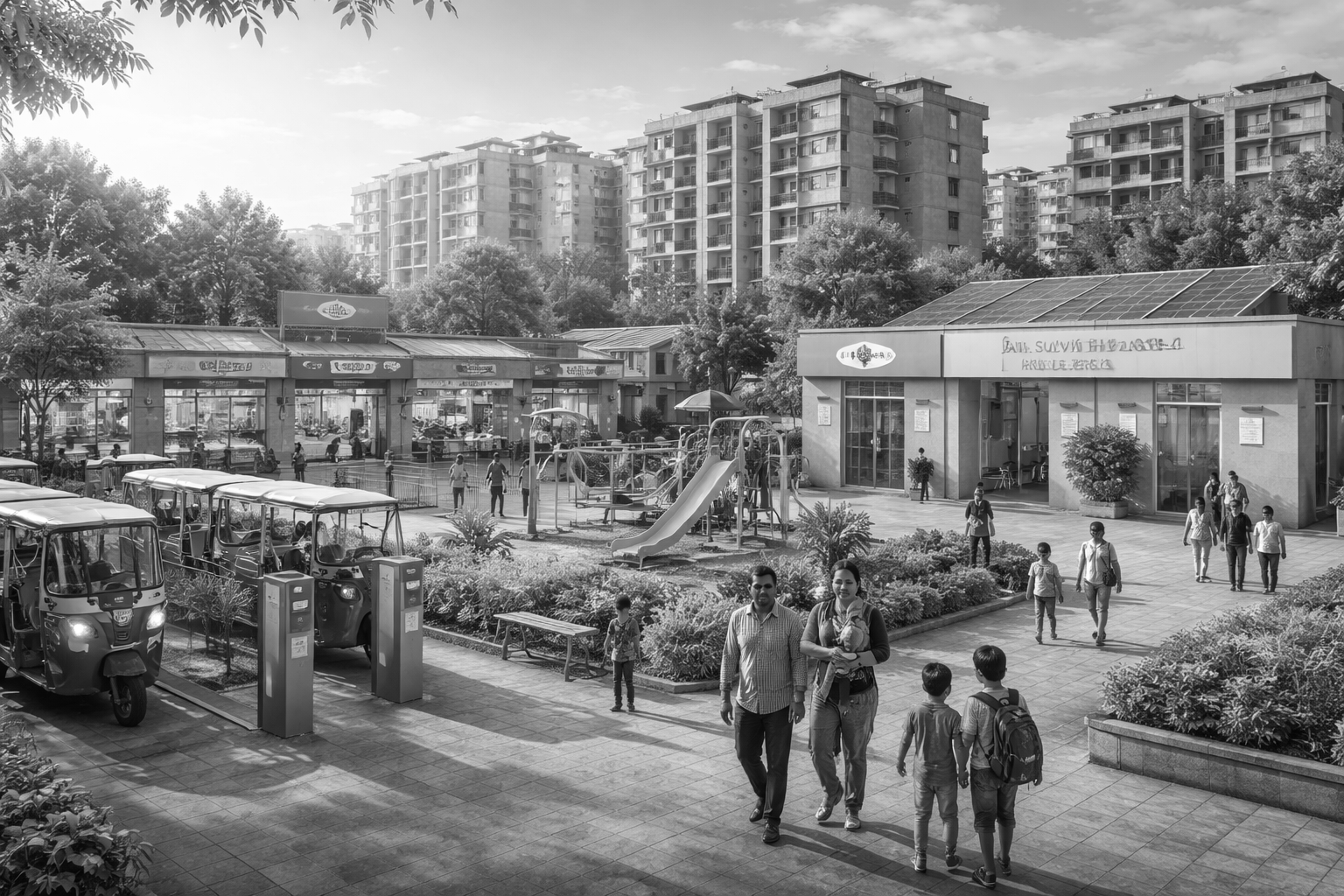
The policy goes beyond housing by introducing integrated urban amenities such as shopping complexes , schools , Jan Suvidha Kendras , dedicated sanitation facilities for women , parking spaces , and e-rickshaw charging points . This reflects a growing recognition that housing alone cannot ensure sustainable rehabilitation without access to services, mobility, and local economic opportunities.
A key structural change is the extension of the eligibility cut-off date from January 1, 2015 to January 1, 2025 , which is expected to significantly expand the beneficiary base . This move could bring thousands of additional slum dwellers into the formal housing network while also addressing the issue of underutilised EWS flats built over the years.
Delhi currently has around 750 slum clusters , with nearly half located on land owned by central agencies such as the Railways , Land and Development Office (L&DO) , and the Delhi Development Authority (DDA) the nodal agency for rehabilitation on such land. The remaining clusters fall under the jurisdiction of the Delhi Urban Shelter Improvement Board (DUSIB) .
Under the existing 2015 rehabilitation policy , residents are offered housing either at the same site or within a 5 km radius . Beneficiaries are required to pay between ₹1.12 lakh and ₹1.41 lakh for a 25 square metre unit , along with ₹30,000 for five years of maintenance .
Since 2008, the government has constructed 52,584 flats across locations such as Dwarka , Sultanpuri , Bhalswa-Jahangirpuri , Savda Ghevra , Pooth Khurd , and Tikri Kalan to support slum rehabilitation efforts.
Together, these measures highlight a transition from a welfare-driven approach to a comprehensive urban rehabilitation strategy focused on integration, infrastructure, and inclusion . The real challenge, however, will lie in ensuring that these developments are supported by livelihood access, connectivity, and functional services .
If implemented effectively, the policy could redefine urban housing by turning resettlement into sustainable urban integration , rather than mere relocation.