
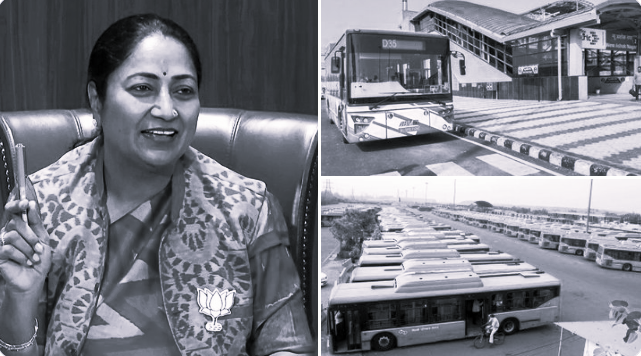
Delhi’s e-bus fleet expansion begins to curb vehicular pollution
As Delhi prepares to induct 500 electric buses into its public transport system on Sunday, taking the total e-bus fleet to around 4,000 , the government says the expansion is beginning to show tangible benefits in reducing vehicular pollution — one of the biggest contributors to the Capital’s chronic air quality crisis. Chief Minister Rekha Gupta has said the aggressive push towards electric mobility is aimed at cutting emissions from road transport while improving public transport coverage across the city.
Multiple studies and emission inventories have consistently shown that vehicular pollution accounts for a significant share of Delhi’s air pollution burden. Research by environmental bodies such as TERI and data cited by pollution watchdogs indicate that road transport contributes close to half of the city’s PM2.5 emissions , besides being a major source of nitrogen oxides and carbon monoxide. These pollutants are linked to respiratory illnesses and are among the primary reasons behind Delhi’s frequent hazardous air quality episodes, particularly during winter.
The growing deployment of electric buses has helped address this challenge by eliminating tailpipe emissions from public transport vehicles. Unlike diesel or even CNG buses, electric buses produce zero on-road emissions, reducing pollution exposure in densely populated areas and high-traffic corridors. Transport department data and independent assessments show that Delhi’s electric buses have already covered more than 100 million kilometres since their induction, resulting in substantial savings in carbon dioxide emissions compared to conventional buses.
Officials point out that electric buses now carry a significant share of daily commuters. E-buses account for nearly 40 per cent of Delhi Transport Corporation daily ridership, a sharp rise from the early phase of deployment when their share was minimal. This shift has encouraged commuters to move away from private vehicles, which are among the largest contributors to urban air pollution, thereby indirectly reducing emissions beyond the public transport sector.
Despite these gains, experts caution that the impact of electric buses must be seen in the broader context of Delhi’s rapidly expanding vehicle population. Thousands of new private vehicles continue to be added to city roads every month, sustaining pressure on air quality. Delhi still ranks among the world’s most polluted cities during peak winter months, with AQI levels often reaching severe or hazardous categories due to a combination of vehicular emissions, construction dust and unfavourable meteorological conditions.