
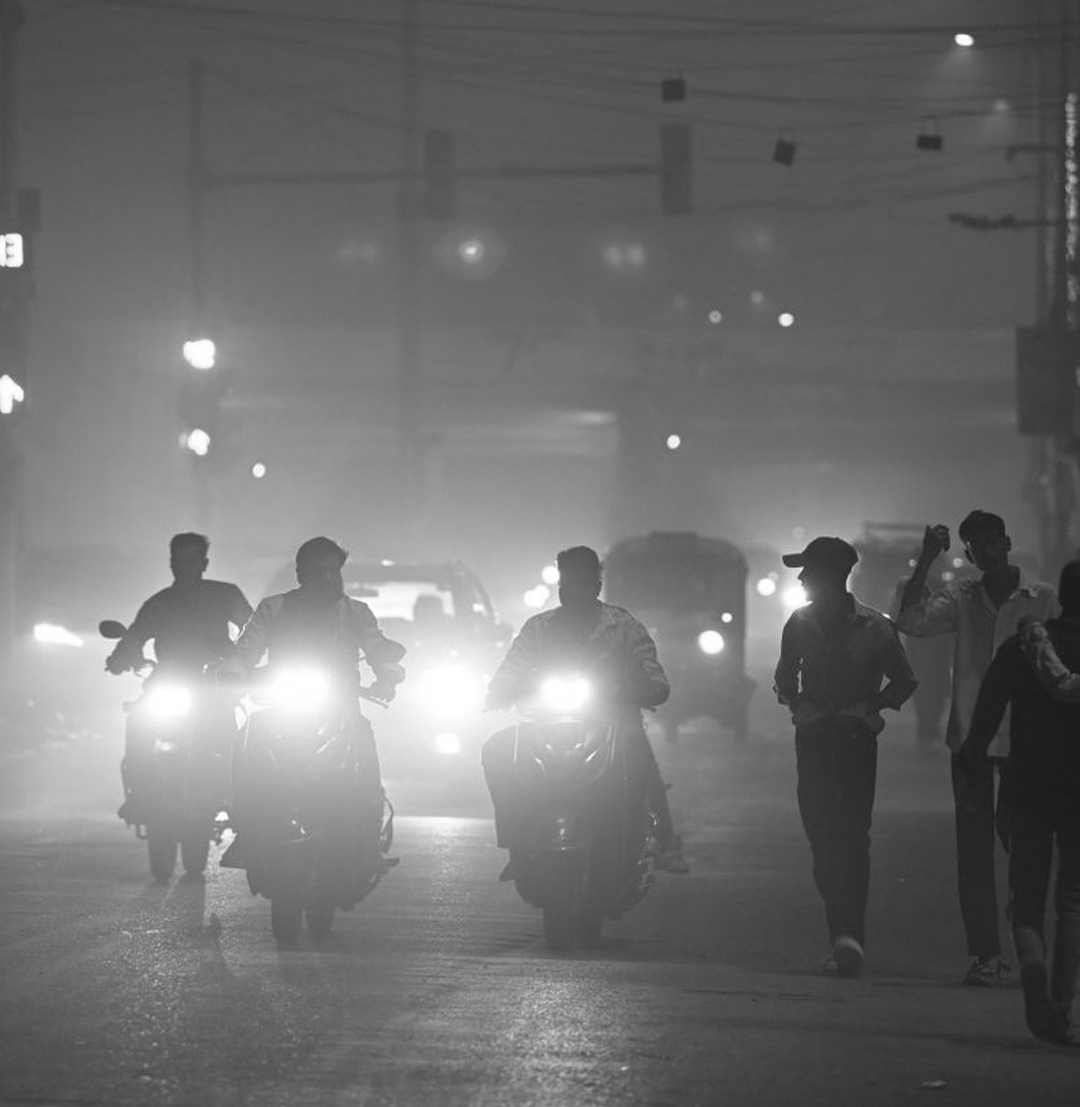
Delhi’s Air turns toxic Post-Diwali: Are you at risk?
Delhi is grappling with a sharp deterioration in air quality following Diwali celebrations, with experts raising serious concerns about the health risks posed by the rising Air Quality Index (AQI). Vulnerable groups, including children, the elderly, pregnant women, and those with respiratory ailments, are particularly at risk.
The surge in pollution is being attributed to multiple factors: festive fireworks, seasonal weather changes, and increased stubble burning in neighbouring states. As winter approaches, cooler temperatures and reduced wind speed prevent pollutants from dispersing, causing smog to accumulate near ground level.
The Supreme Court had earlier relaxed its blanket ban on fireworks, allowing the use and sale of green fireworks under strict conditions. Despite this, the post-Diwali spike in AQI prompted the Commission for Air Quality Management (CAQM) to immediately implement Stage 2 of the Graded Response Action Plan (GRAP) in the National Capital Region.
Health experts have issued warnings and preventive guidance. Dr. Nikhil Modi, Respiratory Medicine Specialist at Apollo Hospitals, explained, “Before Diwali, AQI was already rising, and after the celebrations, it spiked further. People with allergies and lung problems experience difficulty in breathing, coughing, watery eyes, and other symptoms. We are seeing patients visiting hospitals right after Diwali.” He advised residents to take preventive measures, keep medications ready, and for children and the elderly to avoid outdoor activities or wear masks when outside.
Dr. Dhiren Gupta, Co-Director and Paediatric Pulmonologist at Sir Ganga Ram Hospital, highlighted the impact on children and pregnant women. “Children’s organs are delicate, making them highly susceptible to pollution. Even healthy individuals can develop changes in their lungs that may lead to pollution-induced asthma. Vehicular emissions remain a major contributor to poor air quality,” he said.
Delhi’s fire services reported a slightly less hectic Diwali than last year. Deputy Chief Fire Officer AK Malik stated, “We received 269 emergency calls yesterday, down from 318 last year. Our teams managed all incidents efficiently, including a major rescue in Janakpuri. Two firefighters sustained minor injuries, but nothing serious.” He added that public caution during festivities appeared to reduce mishaps.
According to the Central Pollution Control Board (CPCB), the overall AQI in Delhi stood at 359 as of 10 am today. Bawana recorded the highest at 432, followed by Ashok Vihar and Wazirpur at 408, and Jahangirpuri at 405. Air quality in these areas falls under the ‘Severe’ category, meaning residents may face significant breathing difficulties, and prolonged exposure can lead to serious respiratory illnesses.