
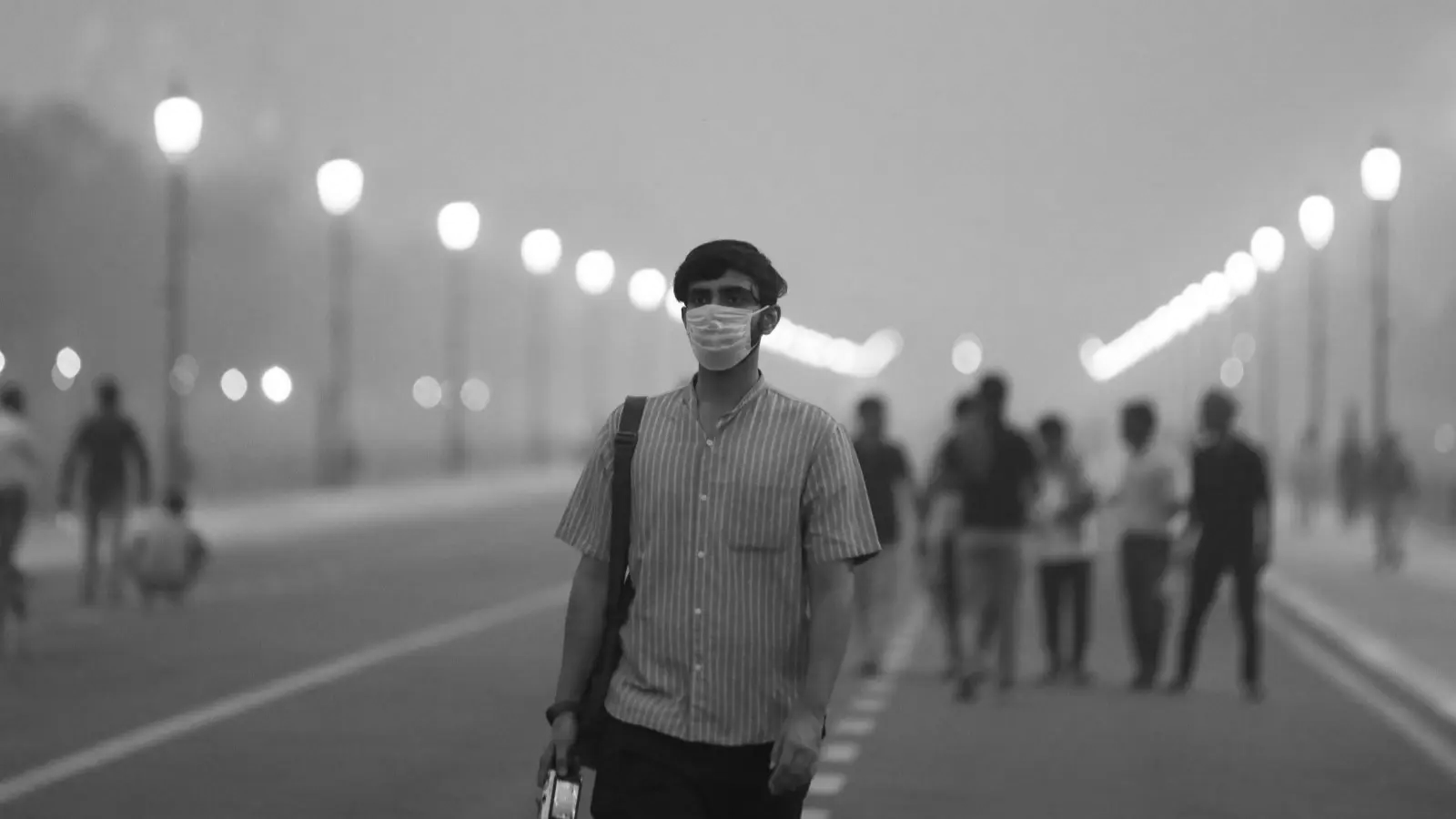
Delhi’s air quality remains ‘very poor’, breathing discomfort reported
Delhi continued to remain under heavy smog on Saturday morning, with the city’s Air Quality Index (AQI) standing at 355, placing it in the ‘very poor’ category, according to the Central Pollution Control Board (CPCB). Major locations including India Gate (322), Palam (320) and RK Puram (321) reported thick haze and reduced visibility, making outdoor activity increasingly difficult for residents.
Local resident Karan Sharma said the rising pollution has made breathing uncomfortable and called for stronger government intervention. “The pollution is very high. We face difficulties in breathing. No action is being taken by the concerned departments. The government should pay attention to the issue,” he said.
Delhi’s air quality has deteriorated steadily over the past three days. The city recorded an AQI of 271 (‘poor’) on Thursday, 312 (‘very poor’) on Friday, and 355 today. Areas such as Anand Vihar, Punjabi Bagh, Chandni Chowk, Mundka and Bawana also reported AQI levels above 300, indicating ‘very poor’ air quality, which can trigger respiratory discomfort, especially among children and elderly residents.
With worsening air quality, Stage II of the Graded Response Action Plan (GRAP) continues to remain in effect across Delhi-NCR. Under this, the New Delhi Municipal Council (NDMC) has doubled parking fees to discourage non-essential vehicular movement. The spike in pollution levels is being attributed to post-Diwali emissions, slow wind speed, and winter weather patterns that trap pollutants close to the surface.
Globally, cities facing similar pollution crises have adopted long-term corrective planning rather than seasonal measures. For instance, Beijing once struggled with severe smog conditions comparable to Delhi’s present situation. Over several years, Beijing reduced pollution significantly by relocating industrial units away from residential cores, phasing out coal-based heating systems, improving public transport, and expanding green cover around the city, which led to a notable decline in PM2.5 concentration.
Delhi has also initiated several control measures over the years, including the cloud seeding initiative, carried out at a cost of around ₹3.21 crore for five trials, which aimed to induce artificial rainfall and temporarily clear the air. However, the atmospheric conditions were not favourable, and the initiative failed to produce meaningful rainfall or any significant improvement in air quality. If extended through the entire winter, the total expenditure could have reached ₹25‑30 crore, funds that could have been better allocated toward long-term pollution control solutions.
Long-term improvement in Delhi’s air quality will require coordinated action such as managing stubble burning in neighbouring states, expanding electric and public transport networks, enforcing strict industrial emission standards, and increasing urban green cover. Without consistent, year-round measures, Delhi’s air quality is likely to follow the same seasonal cycle of severe pollution each winter.