
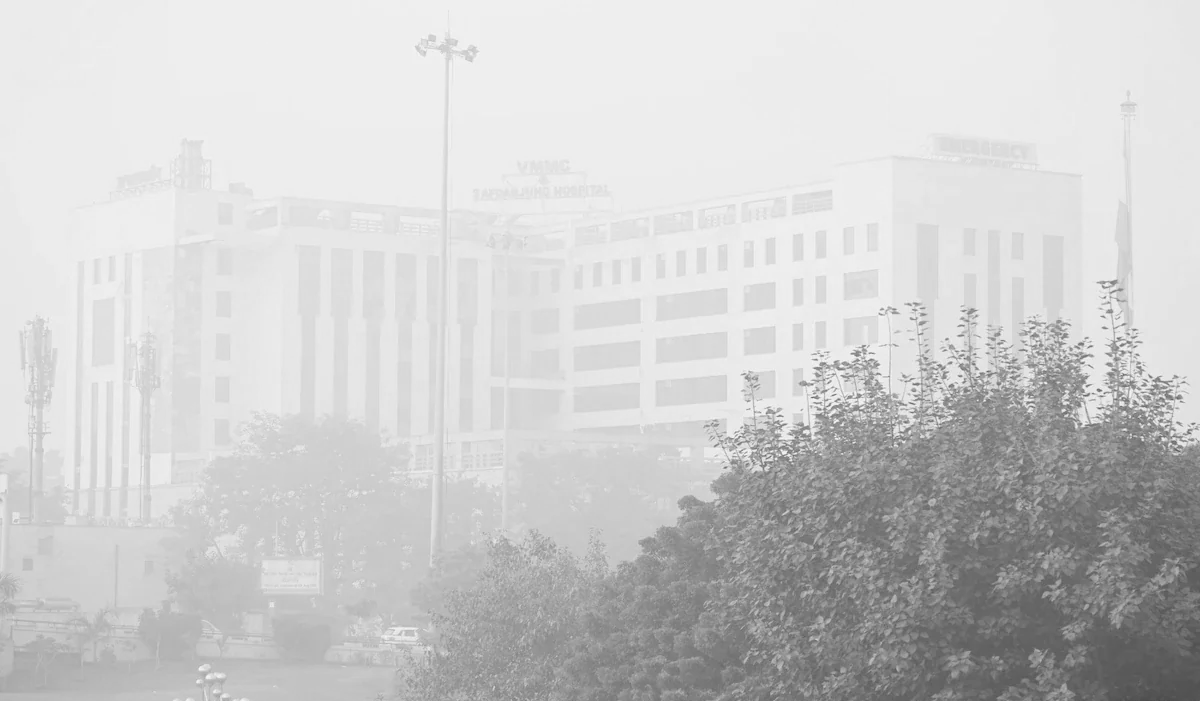
Delhi-NCR enters ‘Severe’ air zone as GRAP stage-III restrictions kick in
The Commission for Air Quality Management (CAQM) on Saturday invoked stricter Stage-III restrictions under the Graded Response Action Plan (GRAP) across Delhi-NCR after pollution levels rose sharply amid unfavourable meteorological conditions.
The national capital’s 24-hour average air quality index (AQI) stood at 349 but climbed rapidly to 401 by 10 am on Saturday , prompting authorities to declare air quality in the ‘Severe’ category. The CAQM attributed the sudden spike to slow wind speeds, a stable atmosphere, unfavourable weather parameters and a lack of pollutant dispersal.
With air quality continuing to deteriorate, the CAQM GRAP Sub-Committee ordered the immediate implementation of all Stage-III measures across the region, in addition to the restrictions already in force under Stages I and II.
Stage-III curbs include a ban on non-essential construction and demolition activities, stone crushing and mining operations , and restrictions on BS-III petrol and BS-IV diesel four-wheelers in Delhi and key NCR districts such as Gurugram, Faridabad, Ghaziabad and Gautam Buddh Nagar . Older diesel goods vehicles have also been barred from operating in Delhi, while schools up to Class 5 have been directed to shift to a hybrid mode of learning. Offices across Delhi-NCR have been advised to function with 50 per cent staff.
While e mergency restrictions have once again been rolled out, the sharp and sudden dip in air quality has raised questions about why pollution levels continue to spiral despite repeated interventions year after year.
Experts point out that adverse winter meteorological conditions often act as a trigger, trapping pollutants close to the ground and preventing their dispersion. Low wind speeds, temperature inversion and high humidity can cause pollution to accumulate rapidly, leading to severe air quality even when emissions remain steady.
At the same time, Delhi-NCR’s pollution burden is the result of multiple sources operating simultaneously. Vehicular emissions, dust from construction, industrial activities, biomass burning, residual paddy-straw smoke from neighbouring states and festive firecrackers together create a cumulative load that becomes hazardous once weather conditions turn unfavourable.
Although governments at the Centre and in the region have implemented a range of measures from vehicle restrictions and construction bans to cleaner fuel norms and crop-residue management schemes their impact often appears limited during peak winter months. GRAP, by design, is largely reactive, kicking in after air quality has already worsened, and is intended to prevent further deterioration rather than deliver immediate improvement.
Officials and environmental experts also underline that a significant portion of Delhi’s winter pollution originates outside the city’s administrative boundaries, limiting the effectiveness of local action. Coordinated, region-wide enforcement remains a challenge, particularly when economic activity, freight movement and agricultural practices are involved.
The recurring winter crisis has fuelled a broader debate on why even the most stringent measures seem insufficient, and why authorities appear constrained despite their best efforts. Analysts say the scale of emissions, dependence on weather patterns for dispersion, and the social and economic costs of harsher restrictions make it difficult for governments to impose more drastic controls.
As air quality slips deeper into the ‘Severe’ category, the situation once again highlights the limits of short-term emergency responses and the need for sustained, long-term structural solutions to tackle one of the capital’s most persistent public health challenges.