
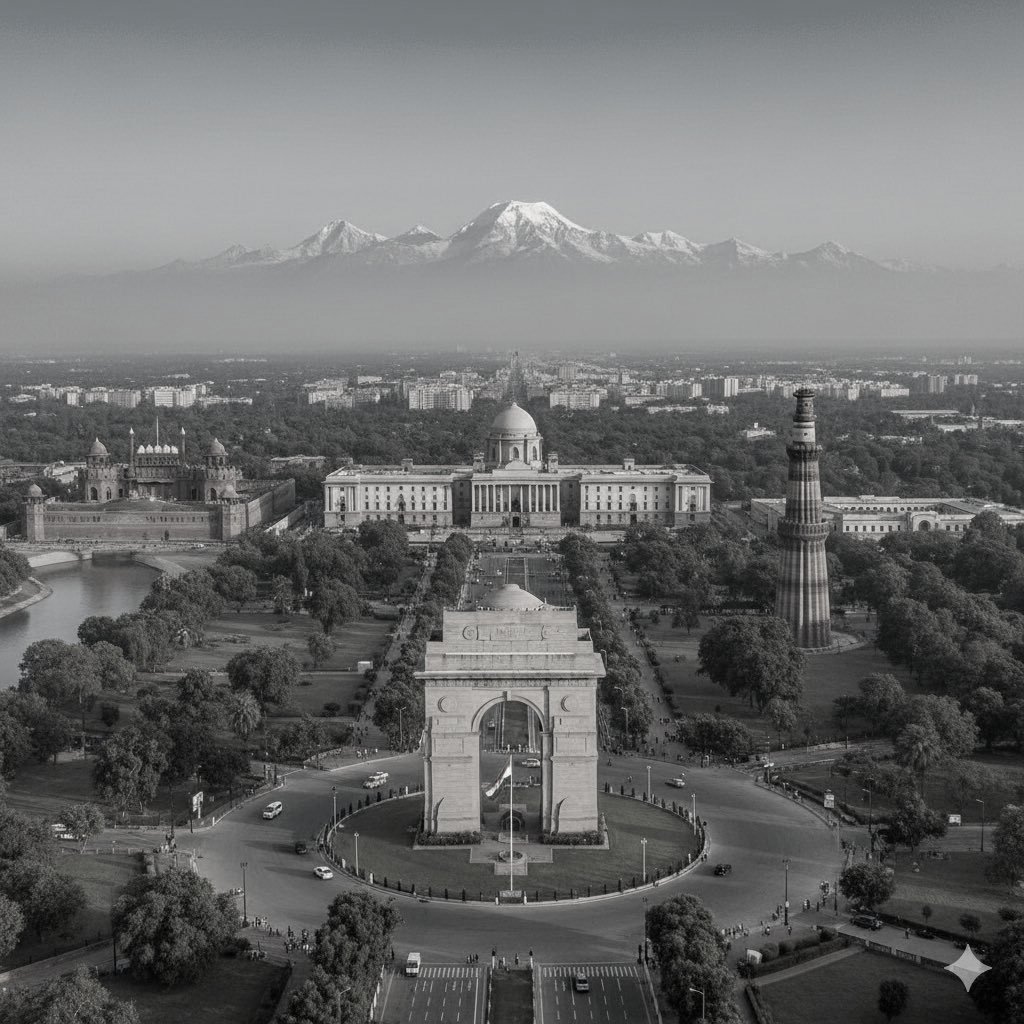
Delhi tops PM10, ranks second in PM2.5 pollution, air quality crisis spreads across states
Delhi recorded the highest annual average PM10 concentration in India in 2025, highlighting the capital’s worsening air quality, according to an analysis by the Centre for Research on Energy and Clean Air (CREA). The city’s average PM10 level stood at 197 micrograms per cubic metre, nearly three times the national safe limit of 60 µg/m³, with standards breached on 285 days during the year.
On finer particulate matter, Delhi ranked as the second most polluted city for PM2.5, registering an annual average of 96 µg/m³, almost double the national standard of 40 µg/m³. Daily PM2.5 limits were exceeded on 212 days, indicating prolonged exposure of residents to hazardous air.
Particulate Matter (PM)* consists of microscopic solid and liquid particles suspended in the air. PM10 particles can enter the nose, throat and upper lungs, while the much finer PM2.5 particles penetrate deep into the lungs and bloodstream. Health experts warn that long-term exposure to high levels of these pollutants increases the risk of *asthma, chronic respiratory diseases, heart attacks, strokes, lung cancer, reduced lung development in children and premature deaths.
The analysis shows that air pollution is not confined to the capital alone. PM2.5 levels remained high across the National Capital Region, with 12 out of 14 NCR cities breaching the national standard, pointing to shared sources such as vehicular emissions, construction dust, industrial activity, waste burning and crop residue burning.
Air pollution continues to affect several other states as well. Uttar Pradesh, Haryana, Punjab and Bihar frequently record very poor to severe air quality, particularly during winter months. Industrial and urban states such as Maharashtra, Gujarat, Rajasthan and Madhya Pradesh also report high particulate pollution, while cities in West Bengal, Jharkhand, Chhattisgarh, Telangana, Karnataka and Tamil Nadu are witnessing rising PM2.5 levels due to rapid urbanisation, traffic congestion and industrial growth.
Although there is no official measure of “smog percentage”, air quality data indicate that Delhi experiences dense smog on a majority of winter days, with Air Quality Index levels often falling in the “very poor” and “severe” categories due to low wind speeds and temperature inversion.
On the policy front, the Centre has released ₹13,415 crore under the National Clean Air Programme and Fifteenth Finance Commission grants, of which 74 per cent has been utilised nationwide. Delhi, however, has been among the weakest performers, spending only 33 per cent of the funds allocated for clean air measures.
Launched in 2019, the National Clean Air Programme initially targeted a 20–30 per cent reduction in PM10 levels, later revised to a 40 per cent reduction or meeting national standards by 2025–26. CREA noted that seven years into the programme, cities including Delhi remain far from meeting air quality norms, making the targets difficult to achieve within the current timeframe.
The report calls for a greater focus on PM2.5, stricter emission controls on vehicles and industries, improved management of construction dust and waste burning, and a regional airshed-based approach to tackle air pollution that transcends state boundaries.