
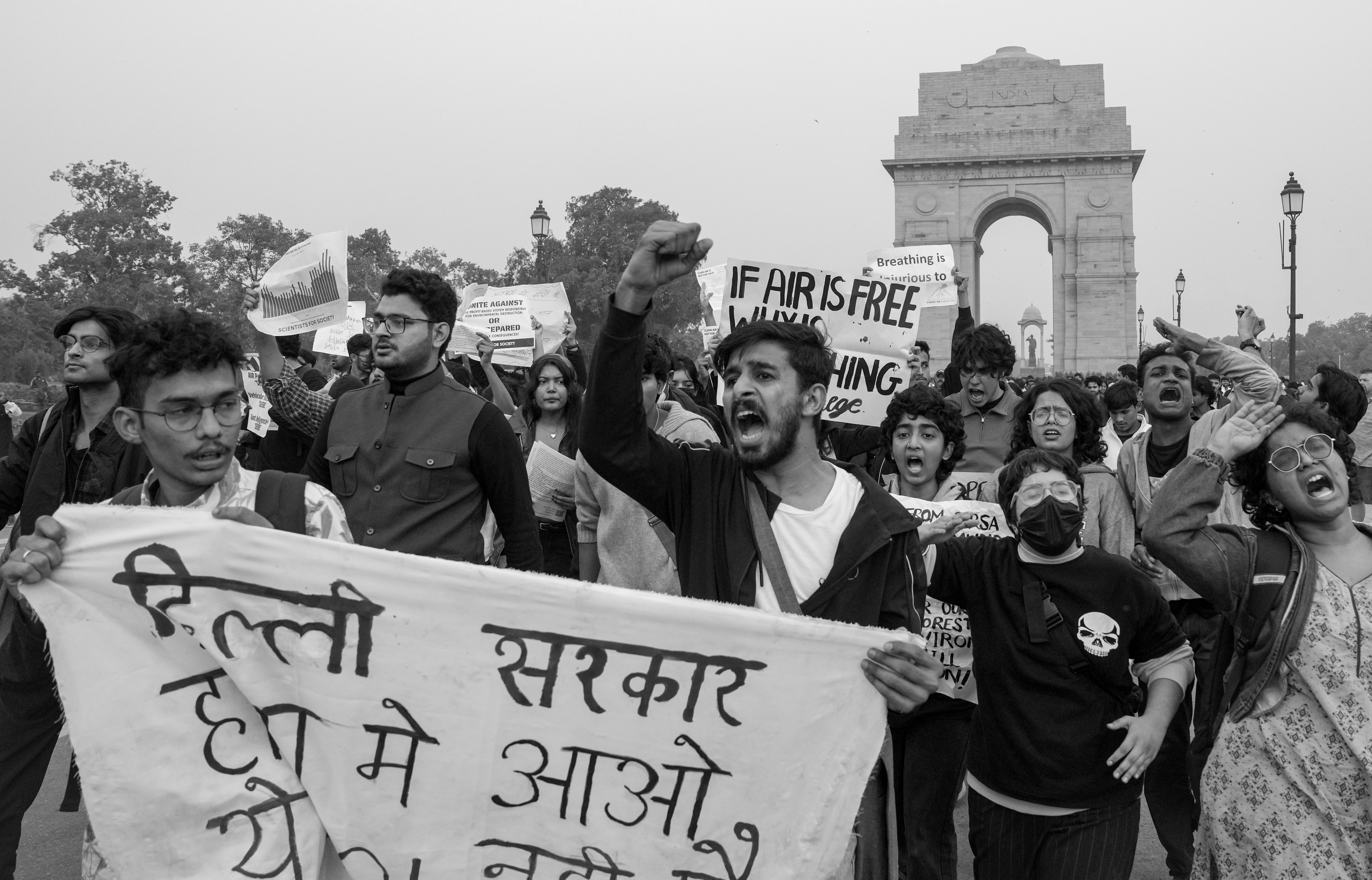
Delhi smog protest turns tense with maoist slogans, Chilli spray used on Police
A protest against Delhi’s worsening air quality turned tense on Sunday near India Gate when demonstrators allegedly used chilli powder on police personnel, leaving several officers injured and prompting legal action.
Protesters blocked roads near the war memorial, holding posters of Madvi Hidma, the CPI (Maoist) commander killed in Andhra Pradesh on November 18, and shouted slogans in his honour. The sit-in obstructed traffic and ambulances, prompting police to step in. During the scuffle, some demonstrators reportedly sprayed chilli powder at officers, three to four of whom sustained eye and facial injuries and were treated at Ram Manohar Lohia Hospital.
Deputy Commissioner of Police (New Delhi) Devesh Kumar Mahla said, “Legal action is being taken against those involved in assaulting officers managing traffic and law and order.” Authorities confirmed that 22 people have been arrested and FIRs filed for assault and unlawful assembly.
The demonstration was organised by the Delhi Coordination Committee for Clean Air, which said the city’s pollution has reached “severe” levels and posed a serious risk to public health. According to the Central Pollution Control Board, Delhi’s AQI stood above 390, indicating very poor air quality, largely due to stubble burning in neighbouring states, vehicular emissions, and dust. Schools in the capital have switched to hybrid learning, while hospitals report a surge in respiratory cases.
Police said the confrontation escalated after demonstrators refused to move from the C-Hexagon junction. When officers tried to clear the road, protesters broke barricades and sat on the carriageway, prompting the scuffle.
Observers believe the incident may deepen debate over balancing the right to protest with public-safety concerns, particularly as Delhi heads into another winter of hazardous air quality. Forecasts indicate that very poor (AQI > 300) — and even severe (AQI > 400) — days are likely in the coming weeks, with the city already recording AQI values above 390. Experts warn that winter conditions such as calm winds and fog can trap pollutants, raising serious health risks for both protesters and bystanders.
The protest also highlights broader grievances over development policies, including mining, forest clearance, and infrastructure expansion in ecologically fragile regions, which activists allege contribute to pollution and recurring climate-related stresses across the country. The incident is expected to influence how authorities regulate environmental protests, with tighter restrictions likely near central Delhi landmarks and a push toward designated sites such as Jantar Mantar.