
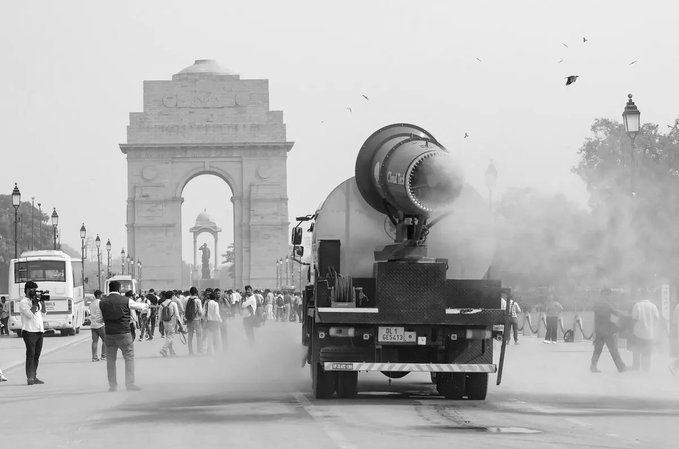
Delhi-NCR's PM2.5 Levels Surge 97% Ahead of Diwali, CSE Report Reveals
Delhi-NCR's air pollution crisis has intensified ahead of winter, with average PM2.5 concentrations during the week preceding Diwali reaching a three-year high of 236 micrograms per cubic metre, according to a new analysis by the Centre for Science and Environment (CSE) released on November 11.
The report revealed a 97 per cent increase in PM2.5 levels compared with 120 micrograms per cubic metre in 2025 and a 32 per cent rise from 179 micrograms per cubic metre in 2024. It highlighted that pollution levels remained higher than last year throughout much of the pre-winter period, except for a brief decline following rainfall in late September.
According to CSE, vehicular emissions, industrial activities, regional pollution inflow, construction dust and waste burning are among the major factors contributing to deteriorating air quality. Diwali firecrackers further aggravated the situation but were not the sole cause of the pollution crisis.
Data from the Indian Institute of Tropical Meteorology (IITM) showed that pollution transported from neighbouring NCR districts accounted for 54.43 per cent of Delhi's PM2.5 between November 1 and 8. Local sources contributed 33.06 per cent, while stubble burning accounted for 14.29 per cent. Among local sources, vehicles were the largest contributor at 52 per cent, followed by residential activities (13 per cent), peripheral industries (11 per cent), construction (7 per cent), and energy use and waste burning (5 per cent each).
Stubble-burning contributions peaked at 16.2 per cent on November 4 before declining to around 8 per cent by November 6. However, Delhi's Air Quality Index (AQI) deteriorated to 382 on November 6, prompting the implementation of GRAP Stage III restrictions.
The analysis also identified emerging pollution hotspots, including Vivek Vihar, Sonia Vihar, ITO and Delhi Technological University. Jahangirpuri remained the most polluted designated hotspot, recording an average PM2.5 concentration of 163 micrograms per cubic metre.
Traffic restrictions under the Graded Response Action Plan provided little relief, with congestion levels remaining almost unchanged. The report further highlighted rising nitrogen dioxide (NO2) concentrations during evening rush hours, with nearly 80 per cent of emissions coming from vehicles.
CSE called for year-round pollution control measures, improved public transport, reduced private vehicle usage and stricter controls on industrial emissions, construction activities and waste burning to address the growing winter pollution crisis.