
Delhi govt sets up expert, implementation panels to tackle hazardous air
The Delhi government has constituted an expert committee to provide independent ideas, suggestions, and solutions to address the capital’s chronic air pollution crisis, officials said on Monday.
The committee forms a key part of the government’s five-pronged pollution-control strategy , which focuses on innovation, scientific management of dust and solid waste, action against polluting industries, reduction of vehicular emissions, and long-term efforts to make Delhi greener and healthier. Officials said the move marks a shift from earlier approaches, which relied mainly on regulatory orders without structured expert consultation.
The 11-member Special Expert Committee comprises former secretaries, former chairpersons of the Delhi Pollution Control Committee (DPCC), secretaries of environment and forest departments, representatives from the Commission for Air Quality Management (CAQM), and experts from premier institutions such as IIT Kanpur and IIT Delhi. This mix of scientific, administrative, and technical expertise is expected to guide Delhi’s pollution-control strategies, according to The Economic Times.
To ensure faster implementation, the government has also set up the 16-member Implementation Committee on Control of Air Pollution (ICCAP) , which includes the chief secretary, Municipal Corporation of Delhi (MCD) commissioner, Delhi Development Authority (DDA) vice-chairperson, New Delhi Municipal Council (NDMC) chairperson, Delhi Urban Shelter Improvement Board (DUSIB) chief executive officer, special commissioner of police (Traffic), and other senior officials.
Officials said vehicular pollution is a major focus area, with large-scale road infrastructure upgrades currently underway. This year, over 50,200 potholes have been repaired compared to 36,629 last year, and 2,180 km of roads have been identified for redevelopment. Meanwhile, 469 km of roads under MCD and PWD have already been recarpeted and strengthened. A policy has also been taken to ensure end-to-end pavement construction on all roads.
Globally, cities are increasingly relying on expert panels and targeted measures to improve air quality. For instance, Wellington in New Zealand electrified a large part of its bus fleet, cutting black carbon by about 50% and nitrogen dioxide by nearly 29%, while European cities such as Paris and London expanded cycling infrastructure, introduced low-emission zones, and restricted polluting vehicles to improve urban air quality, the World Economic Forum reported.
Among the solutions that experts often recommend and which Delhi’s bodies are expected to study and adapt are phased shifts to electric vehicles (EVs) with incentives and charging infrastructure, expanded public transport networks, larger cycling and pedestrian corridors, green urban spaces that absorb pollutants, and policies to restrict high-emission vehicles in dense areas.
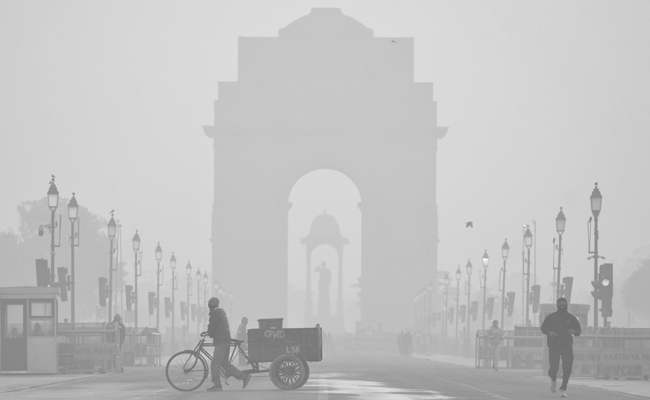
Meanwhile, Delhi’s air quality worsened on Monday, slipping into the ‘severe’ category, with an Air Quality Index (AQI) of 401 at 4 pm, compared to 390 a day earlier, in the ‘very poor’ range. As per Central Pollution Control Board (CPCB) standards, an AQI of 0–50 is ‘good’, 51–100 ‘satisfactory’, 101–200 ‘moderate’, 201–300 ‘poor’, 301–400 ‘very poor’, and 401–500 ‘severe’.