
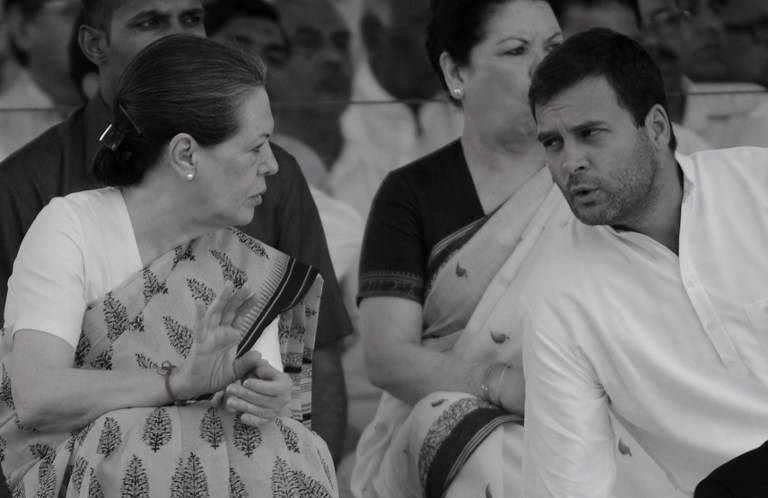
Delhi Court rejects ED charges against Sonia, Rahul Gandhi in National Herald Case
The Rouse Avenue District Court on Tuesday refused to take cognisance of the Enforcement Directorate’s (ED) prosecution complaint against Congress leaders Sonia Gandhi and Rahul Gandhi in the National Herald money-laundering case, dealing a significant setback to the central agency and providing major relief to the Opposition party’s top leadership.
The case dates back to 2012, when BJP leader Subramanian Swamy filed a private criminal complaint alleging that senior Congress leaders had conspired to illegally take control of Associated Journals Limited (AJL), the publisher of the National Herald newspaper. AJL had run into financial distress and received loans amounting to about ₹90 crore from the Indian National Congress (INC).
Swamy alleged that instead of recovering the loan, the Congress party assigned the ₹90-crore debt to Young Indian Private Limited, a not-for-profit company in which Sonia and Rahul Gandhi together hold 76 per cent shareholding for just ₹50 lakh. He further claimed that AJL subsequently converted the debt into equity, issuing shares to Young Indian, resulting in the company acquiring nearly 99 per cent control of AJL. AJL owns prime real estate assets in Delhi, Mumbai, Lucknow and other cities, estimated to be worth over ₹2,000 crore.
Based on the same allegations, the ED initiated a probe under the Prevention of Money Laundering Act (PMLA), alleging that the transfer of control and assets amounted to money laundering, a charge consistently denied by the Congress leadership. After years of investigation, the ED filed its chargesheet on April 9, 2025, naming Sonia Gandhi, Rahul Gandhi and others as accused.
In its order delivered on December 16, 2025, the Rouse Avenue Court declined to proceed with the case, holding that the ED’s complaint was not legally maintainable. The court observed that the prosecution was founded on a private complaint and that under the PMLA, a money-laundering case must be preceded by a registered police FIR for a scheduled or predicate offence. Since no such FIR existed at the time the ED initiated proceedings, the court ruled that the agency lacked jurisdiction to prosecute the matter.
After the ED filed its chargesheet in April 2025, the case was first listed for cognisance consideration on April 25, followed by hearings on May 2 and May 21. The court later conducted day-to-day hearings from July 2 to July 8, before deferring its decision on July 29 and listing the matter again in August for further clarifications. The order was reserved on November 7, deferred on November 29, and finally delivered on December 16, when the court refused to take cognisance of the ED’s complaint.
The Congress welcomed the verdict, with party president Mallikarjun Kharge calling it a “victory of truth” and an exposure of what the party has long described as a politically motivated prosecution. He said the ruling vindicated the Congress’s stand that the case was baseless, fabricated and driven by political vendetta, accusing the ruling establishment of misusing central investigative agencies to harass Opposition leaders and divert attention from real issues affecting the country.
Senior advocate and Rajya Sabha MP Kapil Sibal also reacted sharply to the decision, saying the ED should never have invoked money-laundering provisions in the case. “Shame on the ED for alleging money laundering in this case. I have been saying for years that the Gandhis are innocent,” Sibal said, adding that the agency should focus on investigating real money launderers instead of following the tune of the Pied Piper.
Other Congress leaders echoed these views, reiterating that no money laundering or personal enrichment was involved in the Young Indian–AJL arrangement. They maintained that Young Indian, as a not-for-profit entity, is barred from distributing dividends and that the transaction was undertaken to revive a legacy institution rather than generate private gain.
While the Congress has projected the ruling as a moral and political victory, the legal battle may not yet be over. The ED retains the option to appeal before the Delhi High Court, while the original criminal complaint filed by Subramanian Swamy in 2012 continues independently under the Indian Penal Code.