
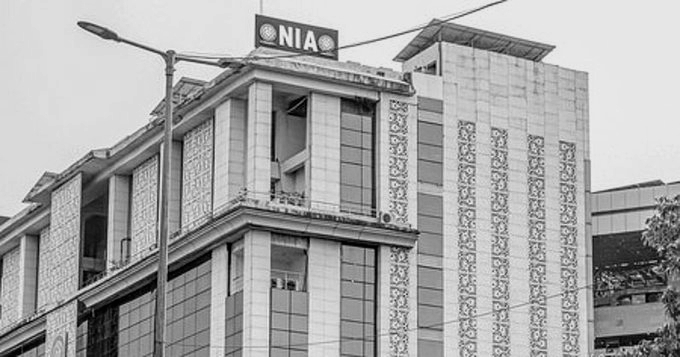
Delhi Court extends NIA custody of 7 foreign nationals in terror case
A Delhi court has extended the National Investigation Agency (NIA) custody of seven foreign nationals in a high-profile terror conspiracy case, underlining the sensitive nature of the investigation and the multiple questions that remain unanswered.
In an order dated March 27 , NIA Special Judge Prashant Sharma noted that investigators must examine crucial aspects such as the accused’s motive for visiting India , their travels to Myanmar , and the purpose behind using drones . The judge also raised questions regarding possible links with Indian individuals or insurgent groups and the infrastructure used by the accused during their visit .
“Facts of this case have to be appreciated in totality. Why did the accused persons come to India? Did they use drones for training? Are any Indian entities or members of ethnic rebel groups connected with them?” the court observed.
The court allowed a 10-day custodial interrogation , directing that the accused be produced again on April 6 after completion of the custody period. Earlier, the court had permitted the NIA to conduct proceedings at its headquarters, citing the highly sensitive and nationally significant nature of the case.
The accused include US national Matthew Aaron Van Dyke and six Ukrainians Hurba Petro, Slyviak Taras, Ivan Sukmanovskyi, Stefankiv Marian, Honcharuk Maksim, and Kaminskyi Viktor.
According to the NIA, some of the Ukrainians entered India on tourist visas and travelled to Guwahati before proceeding to Mizoram without valid permits . They are alleged to have illegally crossed into Myanmar to provide pre-scheduled training for Ethnic Armed Organisations (EAOs). The FIR further alleges that they were supporting certain proscribed Indian insurgent groups by supplying weapons and terrorist hardware and imparting training.
The court emphasized that the allegations have serious implications for national security and attract Section 18 (conspiracy) of the Unlawful Activities (Prevention) Act (UAPA) .
The accused have also requested an independent translator to ensure fair judicial proceedings during their interrogation.