
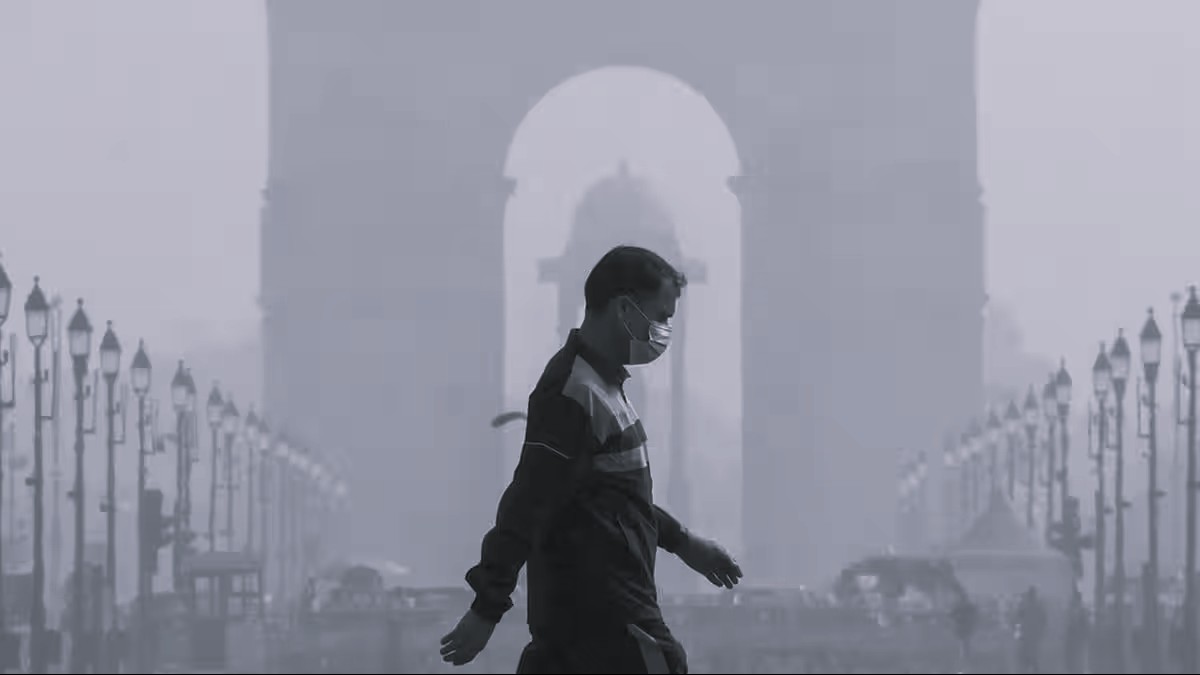
Delhi chokes as air quality worsens; surge in mask and purifier sales across city
Delhi’s air quality has slipped further into the “poor” category, prompting a rush among residents to buy air purifiers and masks. Traders across the city report a sharp 60–70 per cent increase in sales over the past few weeks, as concerns over respiratory health mount with the onset of winter.
According to the Central Pollution Control Board (CPCB), Delhi recorded an Air Quality Index (AQI) of 354 on Wednesday, the highest so far this season up from 351 on Tuesday and 345 on Monday. Although the index showed a marginal improvement on Friday morning, with an AQI of 290 recorded at 9 a.m., the overall air quality remains unhealthy.
With pollution levels worsening since early October, electronics stores across the national capital have seen an unexpected surge in demand. “At least two to three customers visit us daily to purchase purifiers, and we receive around 20-plus phone inquiries every day,” said a salesperson at Chroma Odeon in Connaught Place, adding that sales have risen by 60 to 70 per cent. Vijendra Mohan, owner of Air Expert India in Indirapuram, said his store now sells 35 to 40 purifiers in just two to three days, compared to about 10 a week earlier. Mahajan Electronics in Raja Garden echoed similar trends, reporting a 60 per cent increase in sales, both online and in-store, since mid-October.
Mask sales, too, have picked up notably. “Over the past two weeks, mask sales have increased by about 40 per cent,” said Rajeev Kumar, a salesperson at Apollo Pharmacy in Connaught Place. “Most people are still buying regular masks, but the demand has clearly gone up.”
Experts attribute the sharp decline in Delhi’s air quality to multiple factors. The post-Diwali use of firecrackers despite bans has worsened the smog, while stubble burning across Punjab and Haryana continues to contribute heavily to toxic air over Delhi-NCR. Vehicular emissions, construction dust, and low wind speeds have further trapped pollutants near the surface, creating a blanket of haze across the region.
To counter the alarming situation, both the Delhi and Central governments have stepped up their pollution-control efforts. The Delhi government has launched a 25-point winter action plan focusing on dust management, vehicular emission control, industrial monitoring, and waste management. Chief Minister Arvind Kejriwal’s administration, in partnership with IIT-Kanpur, is also preparing to conduct a cloud-seeding experiment Delhi’s first artificial rain initiative—to help settle airborne pollutants.
The Central Government, through the Commission for Air Quality Management (CAQM), has invoked Stage II of the Graded Response Action Plan (GRAP), which includes curbs on construction activity, restrictions on heavy vehicles, and advisories urging citizens to reduce private car usage. These measures are aimed at mitigating the impact as the city braces for its most polluted months.
Health experts have raised concerns over the increasing number of respiratory cases in recent weeks. Hospitals have reported a rise in asthma attacks, bronchitis, sore throats, and eye irritation, especially among children and the elderly. Doctors are urging residents to stay indoors, use N95 masks, and rely on air purifiers wherever possible.
As Delhi continues to battle its perennial air crisis, citizens are hoping that sustained government action, combined with public awareness and responsible behavior, will bring some respite in the coming weeks.