
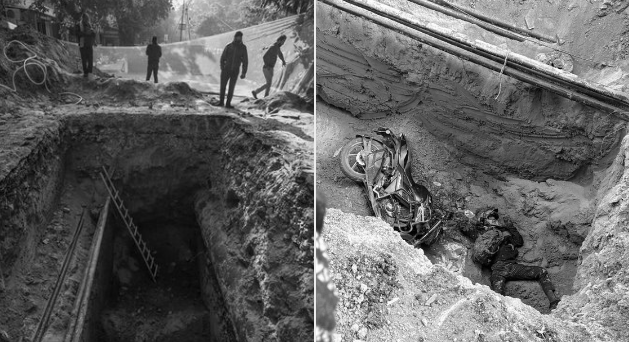
Delhi biker death: Probe cites unattended site, weak barricading, DJB staff pulled up
A routine construction project turned fatal in west Delhi’s Janakpuri after a 25 year old motorcyclist fell into an unprotected pit, with a Delhi Jal Board (DJB) inquiry pointing to serious safety lapses and negligence at the site.
The internal probe, ordered by Water Minister Parvesh Verma, found that mandatory barricading and supervision norms were not followed during the execution of the work. Kamal Dhyani entered the stretch early Friday morning while heading home and fell into a pit dug by the agency.
The inquiry flagged multiple shortcomings in safety management. Iron barricades, compulsory around such worksites, were either inadequate or poorly maintained , and the project area had been left unattended at the time of the incident. The absence of proper monitoring, officials said, reflected a major lapse in basic safety arrangements.
Although traffic had officially been diverted and the road closed from both ends, the lack of clear demarcation, signage and physical protection turned the construction zone into a hazard. The report described it as a serious deficiency in the discharge of duties by both the contractor and supervising engineers.
Responsibility has been fixed on several DJB officers, with the committee observing prima facie dereliction of duty . Show cause notices have been recommended for contractors, along with strict corrective action.
To prevent similar incidents, the panel has called for stricter enforcement of barricading and pit protection norms and mandatory daily safety monitoring reports from site engineers.
Meanwhile, the victim’s family has alleged negligence and demanded accountability, questioning how a public construction zone in a busy residential neighbourhood was left exposed and unsafe.
The tragedy also underlines a larger and uncomfortable reality. In many civic projects, safety rules exist more on paper than on the ground . It often takes incidents like these to expose gaps that should have been addressed long before.
For one family, those corrective steps now come too late, a reminder that prevention, not post accident action, is what truly saves lives.