
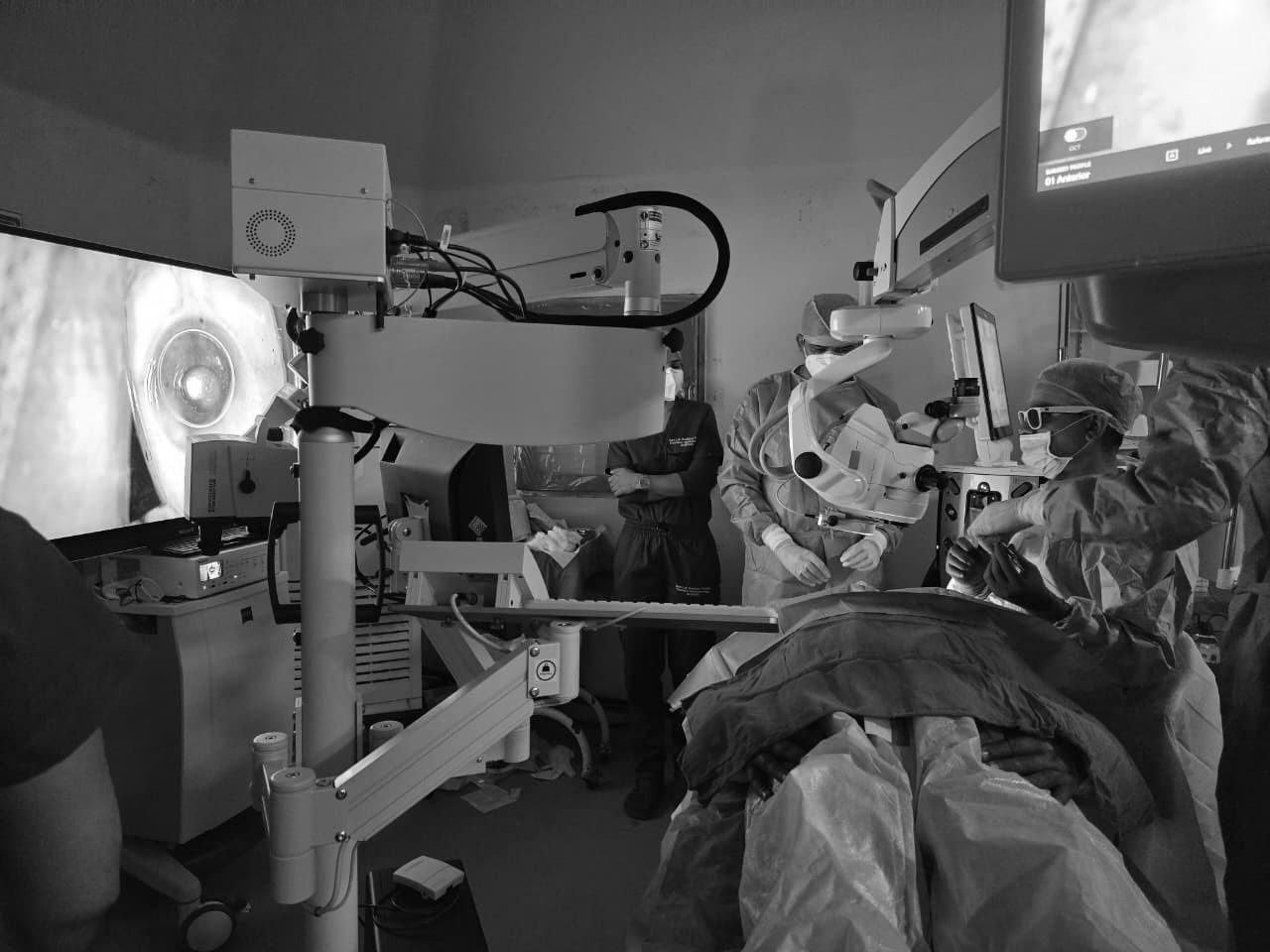
Delhi Army Hospital Performs India’s First 3D Flex Aqueous Angiography
In a landmark achievement for Indian medicine, the Ophthalmology Department at Army Hospital (Research & Referral), Delhi Cantt, has successfully performed the country’s first-ever 3D Flex Aqueous Angiography combined with iStent implantation , marking a major advancement in glaucoma care. The pioneering procedure integrates cutting-edge diagnostic imaging with minimally invasive glaucoma surgery, positioning the Armed Forces Medical Services (AFMS) at the forefront of advanced ophthalmic treatment in India.
The procedure was carried out using a stand-mounted Spectralis Flex imaging system alongside a state-of-the-art 3D operating microscope , enabling surgeons to visualise aqueous humour outflow pathways in real time during surgery. This level of intraoperative precision allows clinicians to identify functional drainage areas within the eye and tailor surgical intervention with far greater accuracy than previously possible.
Glaucoma, often described as the “silent thief of sight,” remains one of the leading causes of irreversible blindness worldwide. Its gradual and symptomless progression means that many patients are diagnosed only at advanced stages. In India alone, millions are estimated to be affected, with a significant proportion remaining undiagnosed. The introduction of real-time aqueous angiography represents a crucial breakthrough in addressing this challenge by enabling personalised, anatomy-guided treatment.
Aqueous angiography is an advanced imaging technique that maps the eye’s fluid drainage system, revealing areas of high and low aqueous outflow. Research has shown that aqueous drainage is not uniform across the eye, a factor that can influence the success of glaucoma surgeries. By identifying these segmental outflow patterns, surgeons can optimise the placement of devices such as the iStent , a tiny implant designed to bypass resistance in the eye’s natural drainage channels and reduce intraocular pressure.
The integration of aqueous angiography with iStent implantation falls under Minimally Invasive Glaucoma Surgery (MIGS) , an approach that aims to lower eye pressure with minimal tissue disruption and faster recovery when compared to conventional glaucoma surgeries. The addition of 3D visualisation further enhances surgical precision, depth perception, and safety, setting a new benchmark for glaucoma interventions in the country.
For the Armed Forces community, this milestone has implications beyond clinical innovation. Vision readiness is a critical component of operational effectiveness, particularly for serving personnel and veterans who may be affected by chronic eye conditions. The successful adoption of this advanced technology underscores AFMS’s commitment to delivering world-class healthcare while safeguarding long-term visual health and operational readiness.
As the first-of-its-kind procedure in India, the achievement also opens the door for further research, training, and potential expansion of advanced glaucoma services across military and civilian healthcare institutions. Experts note that while the technology holds immense promise, long-term outcomes, standardised protocols, and wider accessibility will be key factors in determining its broader impact on glaucoma management nationwide.