
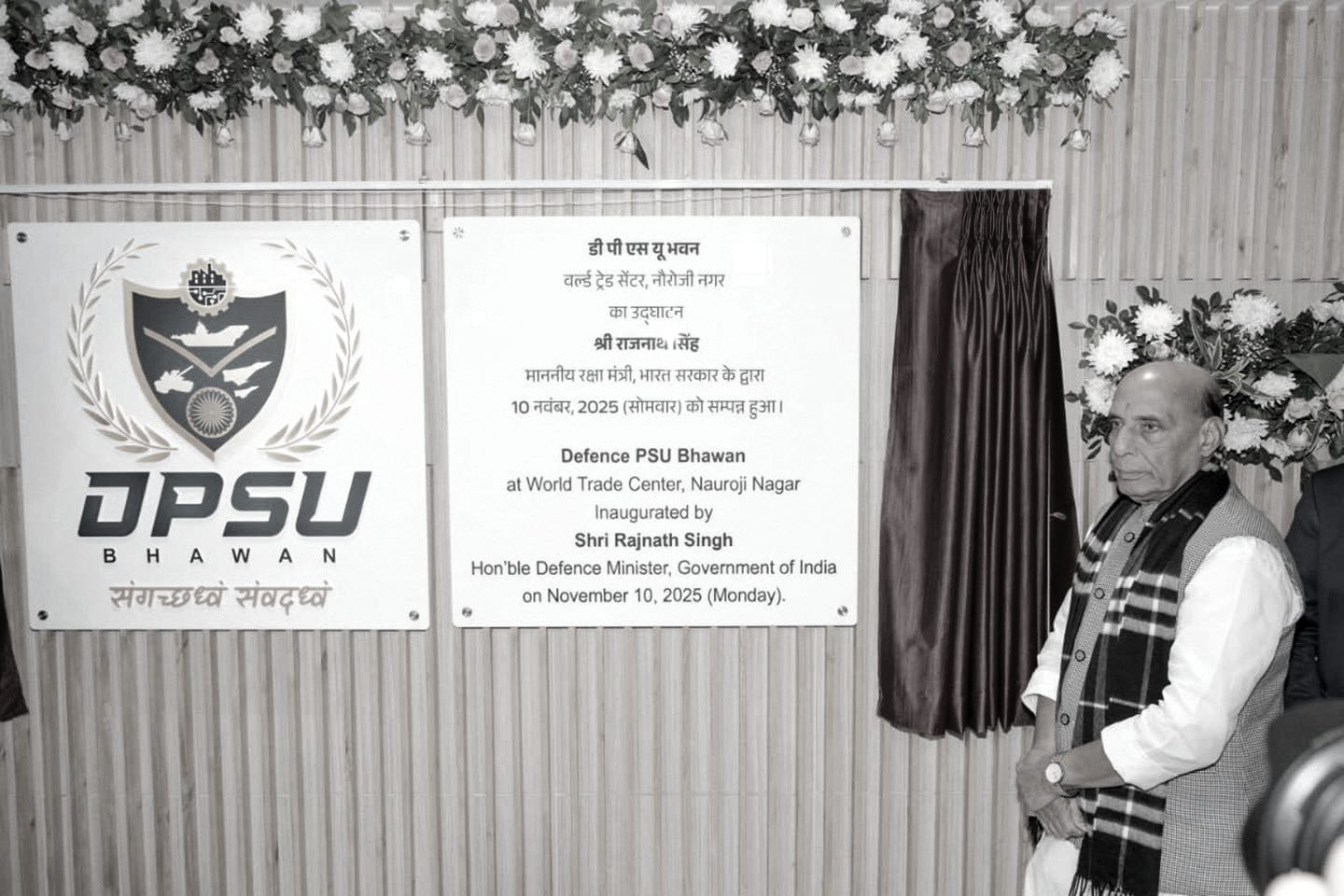
Defence PSU Bhavan Inaugurated in Delhi to strengthen synergy and innovation in Defence manufacturing
Defence Minister Rajnath Singh inaugurated the Defence PSU Bhavan at the World Trade Centre in New Delhi on Monday, marking a major milestone in India’s effort to strengthen coordination, innovation, and indigenisation among its 16 Defence Public Sector Undertakings (DPSUs). The inauguration was announced by the Ministry of Defence (MoD) through an official post on social media platform X and a press release issued by the Department of Defence Production (DDP).
The newly inaugurated facility has been envisioned as a central hub of synergy and collaboration among all DPSUs functioning under the DDP. It has been designed to facilitate joint reviews, research initiatives, and technological innovation in the defence manufacturing ecosystem. According to the Ministry, the Bhavan features advanced conference halls, digital collaboration rooms, AR/VR-based simulation facilities capable of recreating battlefield conditions, and display zones showcasing indigenous defence products.
The establishment of the Defence PSU Bhavan has been aimed at providing a unified space for the country’s defence manufacturing enterprises to coordinate efficiently and to align their research and production efforts with the Government’s vision of Atmanirbhar Bharat (self-reliant India). It was also stated that the new infrastructure reflects the DDP’s commitment to sustainable growth, operational excellence, and global competitiveness.
The ceremony was attended by Raksha Rajya Mantri Sanjay Seth and Secretary (Defence Production) Sanjeev Kumar, along with senior officials from all DPSUs. The inauguration coincided with the Defence Minister’s annual performance review of the DPSUs, during which he declared 2025 as the “Year of Reforms” for India’s defence production sector.
During the review, Rajnath Singh emphasised the importance of research and development (R&D), indigenisation, and exports as the pillars of defence manufacturing reforms. He called upon the DPSUs to increase their investment and manpower in R&D, ensuring that India becomes a global supplier of defence technologies rather than a major importer.
According to official data released by the Ministry of Defence, ₹30,952 crore has been invested in R&D by the 16 DPSUs over the past ten years. The pace of research has been proposed to double, with a projected expenditure of ₹32,766 crore over the next five years (2025–2030). Among this, the seven newly corporatised DPSUs, formed in 2021 following the corporatisation of the Ordnance Factory Board (OFB), are expected to invest over ₹3,000 crore, while the defence shipyards plan to allocate over ₹1,300 crore toward R&D activities.
A compilation of Defence Design and R&D projects undertaken during the past decade and the roadmap for the coming five years was released during the event. In addition, Hindustan Aeronautics Limited (HAL) launched a new R&D Manual to streamline project approval, encourage innovation, and strengthen flexibility and risk management in research programmes.
The 16 DPSUs currently functioning under the DDP include nine legacy undertakings — Hindustan Aeronautics Limited, Bharat Electronics Limited, Bharat Dynamics Limited, Bharat Earth Movers Limited, Mishra Dhatu Nigam Limited, Garden Reach Shipbuilders & Engineers Limited, Goa Shipyard Limited, Hindustan Shipyard Limited, and Mazagon Dock Shipbuilders Limited — and seven newly corporatised companies, created from the erstwhile Ordnance Factory Board in October 2021. These include Advanced Weapons and Equipment India Limited, Armoured Vehicles Nigam Limited, Gliders India Limited, India Optel Limited, Munitions India Limited, Troop Comforts Limited, and Yantra India Limited.
According to official reports, the performance of the DPSUs during 2024–25 has been notable. Their total turnover stood at ₹1.08 lakh crore, representing a 15.4% increase compared with the previous financial year. The combined Profit After Tax of all DPSUs reached ₹20,021 crore, reflecting a 19.5% rise. Exports from DPSUs recorded an increase of 51% over the previous year, demonstrating growing international competitiveness in India’s defence production ecosystem.
While the specific budgetary allocation for the Defence PSU Bhavan has not been disclosed publicly, the facility has been established using funds from the Department of Defence Production under the Ministry of Defence’s administrative and infrastructure budget. It is regarded as part of the Government’s ongoing efforts to modernise defence production infrastructure and to integrate all state-owned defence enterprises under a single collaborative platform.
Officials stated that the Defence PSU Bhavan will serve as a symbol of India’s evolving defence industrial base, providing an environment that encourages innovation, efficiency, and transparency in defence production. With the implementation of the ‘Year of Reforms 2025’, the Ministry of Defence expects the new facility to play a pivotal role in coordinating R&D projects, fostering innovation across the DPSUs, and strengthening India’s position in the global defence manufacturing landscape.