
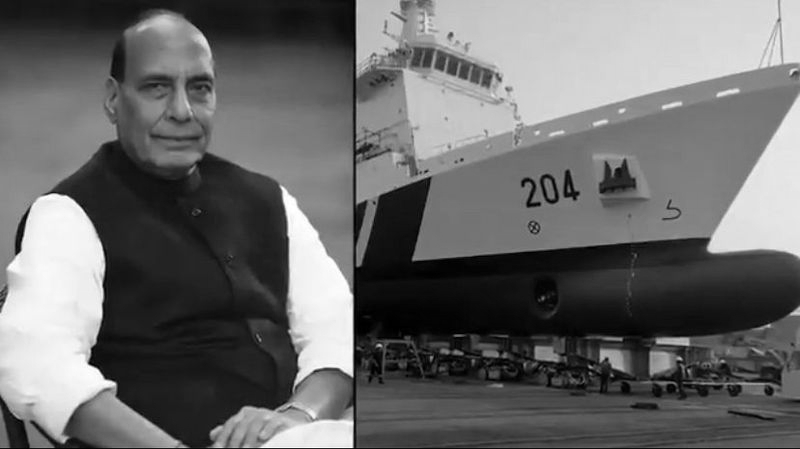
Defence Minister Rajnath Singh Commissions ICG Ship Samudra Pratap in Goa Today
Defence Minister Rajnath Singh today commissioned the Indian Coast Guard (ICG) ship Samudra Pratap, the first of two dedicated pollution control vessels, at Goa Shipyard Limited in Vasco, South Goa . Goa Chief Minister Pramod Sawant , ICG Director General Paramesh Sivamani , and other dignitaries attended the ceremony.
Built with over 60% indigenous content , the 114.5-metre-long, 4,200-tonne vessel is designed to tackle oil spills and marine pollution effectively while enhancing India’s maritime safety and security operations. With a maximum speed of over 22 knots and an endurance of 6,000 nautical miles , Samudra Pratap is equipped with advanced pollution control systems that can detect oil spills, recover pollutants even from viscous oil, separate oil from contaminated water, and analyse contaminants. In addition to its environmental response capabilities, the ship features modern defence and operational technology, including a 30mm CRN-91 gun, two 12.7mm stabilised remote-controlled guns with integrated fire control systems, an indigenously developed integrated bridge system, an integrated platform management system, an automated power management system, and a high-capacity external firefighting system. The vessel will be based at the ICG’s Kochi base .
The commissioning of Samudra Pratap reflects India’s growing preparedness to safeguard its maritime environment. With over 7,500 km of coastline and heavy shipping and oil activity, the vessel strengthens the Coast Guard’s ability to respond rapidly to pollution incidents, protect marine ecosystems, and ensure maritime safety, while also showcasing the country’s progress in indigenous shipbuilding technology.
Globally, countries such as the United States, Norway, Japan, and the Netherlands operate specialised vessels for marine pollution control. The US Coast Guard deploys pollution response units with skimmers, booms, and dispersants, while Norway uses oil recovery ships and offshore monitoring to manage spills in its waters. Japan operates high-speed multi-purpose vessels capable of firefighting, spill recovery, and environmental monitoring, and the Netherlands combines dedicated vessels with real-time satellite tracking to respond efficiently to large-scale spills. By commissioning Samudra Pratap, India aligns itself with these international best practices, combining advanced technology, operational readiness, and environmental stewardship to protect its seas.