
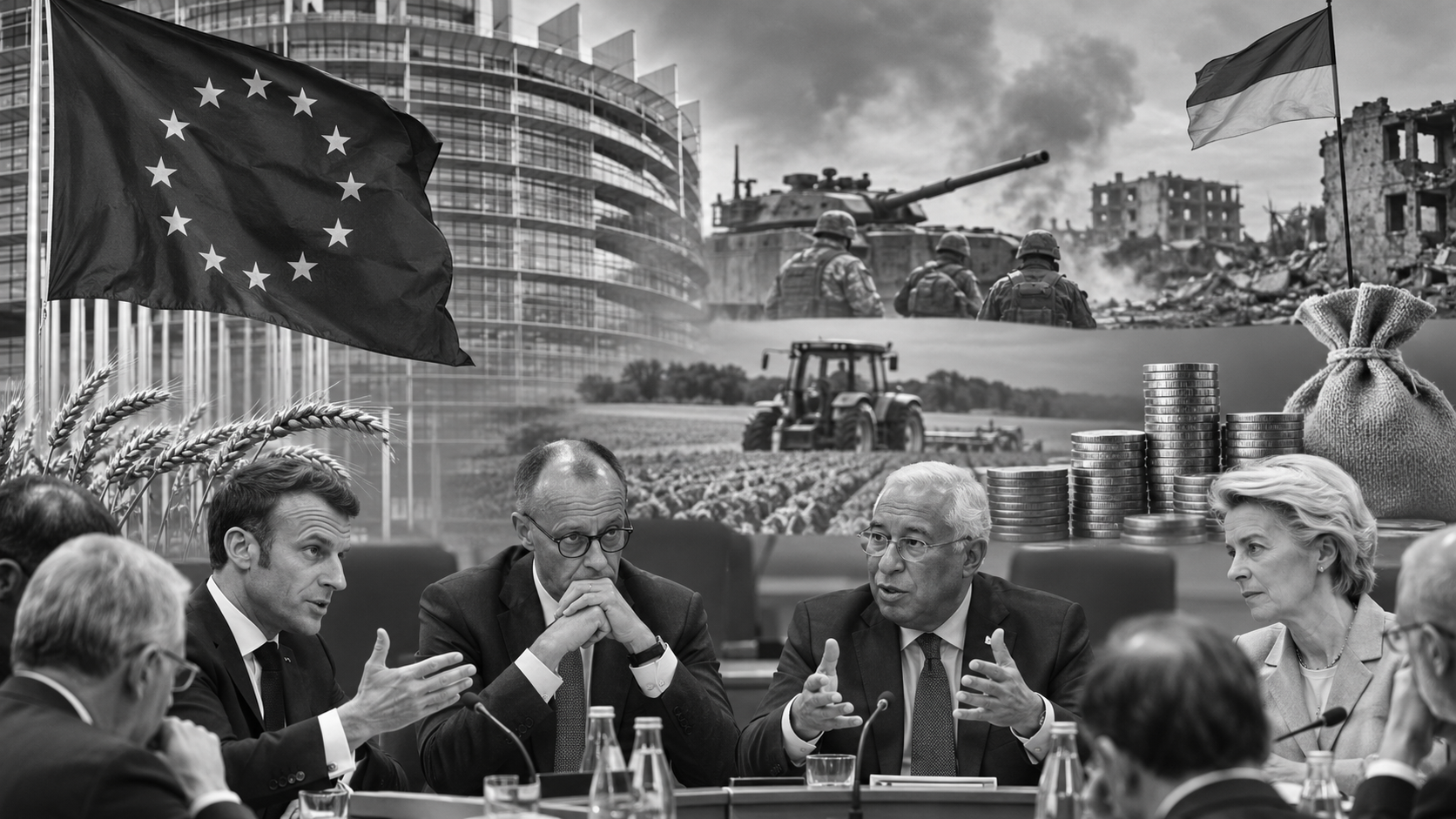
Defence, Farmers and Ukraine: Europe's €1.58 Trillion Budget Dilemma
European Union leaders failed to reach an agreement on the bloc's next seven-year budget and a proposed €45 billion (approximately USD 49 billion) loan to Ukraine after more than 12 hours of negotiations at a special summit in Brussels, exposing deep divisions over spending priorities, financial responsibilities and continued support for Kyiv. Although 24 of the 27 member states backed the proposed loan, disagreements over participation, military assistance and financing arrangements pushed a decision to the December summit. Leaders also remained divided over the proposed €1.582 trillion budget for 2028–2034, with France and Germany pressing for an agreement before the end of this year.
French President Emmanuel Macron called for a settlement by December 31, warning that negotiations could become politically difficult ahead of France's 2027 presidential elections. The next European Council meeting is scheduled for December 17–18. Hungarian Prime Minister Péter Magyar expressed doubts about reaching an agreement even by Christmas.
The budget dispute largely divides net contributors, including Germany, the Netherlands, Austria and Sweden, which favour spending restraint, and countries led by France and Italy, which want to protect agricultural subsidies and cohesion funding. These programmes support farmers, infrastructure and economically weaker regions. Agriculture and cohesion policy each account for roughly one-third of the existing budget.
European Council President António Costa's negotiating proposal seeks to increase competitiveness funding by 120 per cent and defence spending by 232 per cent compared with the 2021–2027 framework. The combined share for agriculture, fisheries and cohesion would decline from 59.1 per cent to 42.4 per cent. Meanwhile, the European Parliament has advocated a larger €1.789 trillion budget, excluding €149.3 billion for pandemic-era debt repayment.
The proposed Ukraine loan would provide up to €25 billion for military assistance and €20 billion for civilian requirements, addressing approximately two-thirds of Kyiv's estimated €70 billion funding gap for 2027. The EU would borrow internationally, with its budget providing guarantees. Ukraine would repay the principal only after receiving Russian war reparations.
Slovakia, Hungary and the Czech Republic remain reluctant to participate, while Bulgaria supports the non-military component. Germany wants collective responsibility from all members. Meanwhile, Costa has proposed new revenue sources, including digital services, tobacco and carbon-related contributions, potentially generating €60 billion annually.
Russia has criticised the proposed assistance, arguing it could prolong the conflict. The December negotiations will test whether the EU can balance Ukraine's financial needs, European security and traditional development commitments while securing unanimous approval for its long-term budget.