
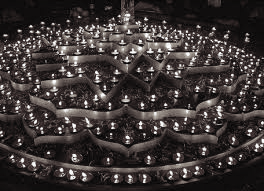
Deepavali lights up the UNESCO heritage list!
It is a great and proud moment for all Indians that our rich culture, festivals, and timeless traditions are being recognised across the world. India celebrated a major cultural milestone today as Deepavali, one of the nation’s most cherished and widely observed living traditions, was officially inscribed on the UNESCO Representative List of the Intangible Cultural Heritage of Humanity. The announcement came during the 20th Session of the UNESCO Intergovernmental Committee held at the Red Fort, New Delhi.
The inscription was adopted in the presence of Union Culture Minister Gajendra Singh Shekhawat, Culture Secretary Vivek Aggarwal, senior officials of the Ministry of Culture, and delegates from 194 Member States, alongside international experts and representatives from UNESCO’s global network. Addressing global delegates, the Union Minister said the recognition marks an immense moment of pride for India and for communities worldwide who keep alive the timeless spirit of Deepavali. He emphasised that the festival embodies the universal message of “Tamso Ma Jyotirgamaya” the transition from darkness to light, symbolising hope, renewal and harmony.
It was also expressed by PM Modi that people in India and around the world are thrilled by this global honour. It was conveyed that Deepavali is closely linked to India’s cultural ethos and is regarded as the soul of Indian civilisation. The festival was highlighted as personifying illumination and righteousness, and it was stated that its inclusion in the UNESCO Intangible Heritage List will contribute to its global popularity even further. The ideals of Prabhu Shri Ram were mentioned as continuing to guide humanity for eternity.
Deepavali’s strength lies in its diversity, celebrated differently across India. In North India, it marks Lord Rama’s return to Ayodhya with homes illuminated by rows of diyas and colourful rangoli. In South India, it is observed as the defeat of Narakasura, beginning with early morning oil baths, traditional meals, and rituals. In Western India, particularly Gujarat, it marks the new year for traders and families, with Lakshmi Puja and community festivities. In Eastern India, Deepavali coincides with Kali Puja, marked by elaborate rituals and offerings. Despite regional variations, the essence of the festival light triumphing over darkness remains universal.
Highlighting its people-centric nature, Minister Shekhawat noted that Deepavali thrives through the contributions of millions, including potters crafting traditional diyas, artisans preparing festive decor, farmers, sweet makers, priests, florists, and households that uphold age-old customs. He said the UNESCO recognition honours this collective cultural labour. The Minister also acknowledged the vibrant role of the Indian diaspora across Southeast Asia, Africa, the Gulf, Europe, and the Caribbean, whose celebrations have carried the spirit of Deepavali across continents and strengthened cultural bridges.
The inscription, he added, brings with it a renewed responsibility to safeguard and transmit this heritage to future generations. He urged citizens to uphold the festival’s values of unity, inclusivity, and cultural continuity. Recognised for its deep cultural significance and its role as a people’s festival celebrated across regions and communities, Deepavali continues to embody the principles of unity, renewal, and social cohesion. Its diverse practices from lighting diyas and rangoli making to rituals, community gatherings, and intergenerational knowledge sharing reflect its enduring vitality and adaptability across time and geography.
The nomination, prepared by the Ministry of Culture through the Sangeet Natak Akademi, followed extensive nationwide consultations involving practitioners, artisans, agrarian communities, diaspora groups, individuals with special needs, transgender communities, cultural organisations, and tradition bearers. Their collective testimonies highlighted Deepavali’s inclusive character, its community-led continuity, and its wide ecosystem of livelihoods, ranging from potters and rangoli artists to sweet-makers, florists, and craftspeople.
UNESCO’s inscription acknowledges Deepavali as a living heritage that strengthens social bonds, supports traditional craftsmanship, reinforces values of generosity and wellbeing, and contributes meaningfully to several Sustainable Development Goals, including livelihood enhancement, gender equality, cultural education, and community welfare. The Ministry of Culture welcomed the decision, stating that the inscription will further promote global awareness of India’s intangible cultural heritage and bolster efforts to safeguard community-based traditions for future generations.