
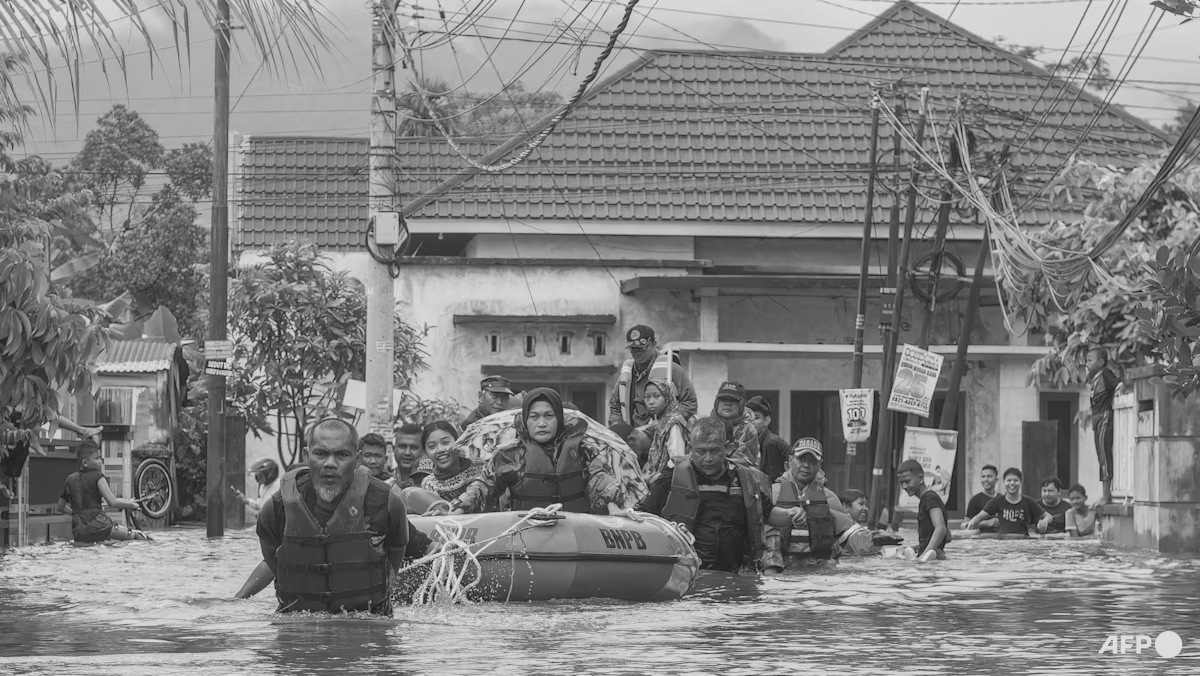
Death toll rises to 279 as Indonesia faces back-to-back disasters
The combined death toll from the tsunami-triggered sea surges, a powerful earthquake, and days of severe flooding that battered Indonesia’s Aceh, North Sumatra and West Sumatra provinces has climbed to 279, authorities confirmed on Friday. Rescue teams continue to struggle through blocked roads, collapsed bridges and unstable slopes as more than 100 people remain missing across some of the hardest-hit districts.
According to officials, the chain of disasters began in mid-November, when relentless monsoon rain intensified by a rare weather disturbance over the Indian Ocean, caused rivers to overflow and triggered widespread flooding across northern and western parts of Sumatra. Entire villages were inundated, and early landslides isolated communities even before the situation escalated.
The crisis deepened on 25 November, when the government of West Sumatra declared a provincial disaster emergency after continuous rain unleashed flash floods and mudslides across several regencies. Displacement increased sharply, with thousands moving into makeshift shelters as roads and communication lines began to fail.
The unfolding humanitarian challenge worsened further on 27 November, when a magnitude-6.6 earthquake struck off the coast near Simeulue Island. Although the quake did not produce a major tsunami, it generated localised sea surges and destabilised already waterlogged hillsides, causing new landslides in parts of Aceh and North Sumatra. Rescue efforts that were already stretched by the flooding were suddenly confronted with quake-damaged buildings, fresh debris fields, and additional injuries.
By late November, search teams reported recovering bodies in isolated pockets of West Sumatra’s Agam district and North Sumatra’s Central Tapanuli region, raising the confirmed toll to 248. Authorities warn that the numbers may rise as access improves to remote areas that remain cut off by landslides or washed-out infrastructure.
Emergency workers supported by volunteers, soldiers and disaster-response units are moving on foot or by helicopter into areas unreachable by road. Heavy rainfall continues across the region, complicating efforts to deliver food, clean water and medical supplies. Medical teams in temporary shelters are treating survivors for injuries, dehydration and trauma, while fearing disease outbreaks if clean-water shortages continue.
Indonesia’s national disaster agency has urged caution, noting that saturated terrain and continuing rain still pose a high risk of additional landslides or flash floods. President Joko Widodo has directed authorities to prioritise evacuation, emergency healthcare and rapid repair of essential infrastructure, while expressing condolences to families who have lost loved ones in what has become one of the year’s most severe multi-disaster events.