
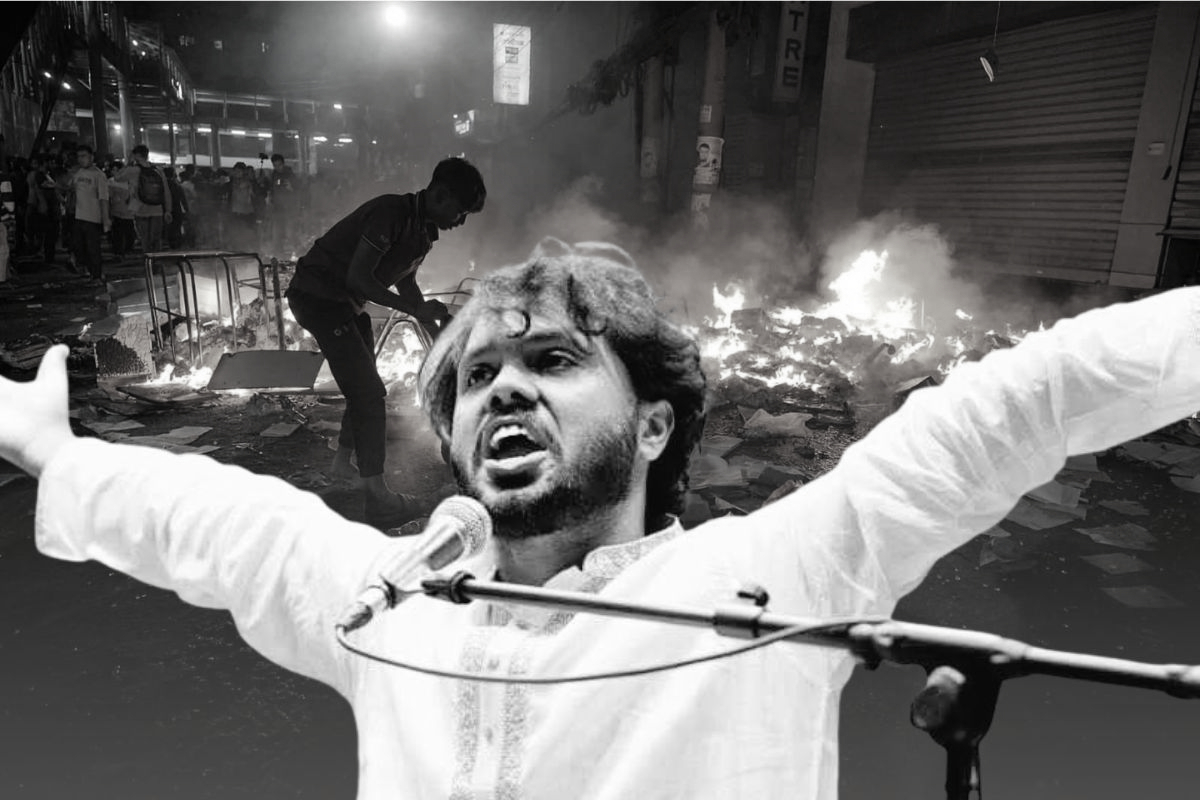
Death of Sharif Osman Hadi sparks anti-India street protests in Dhaka
Bangladesh has erupted in intense unrest following the death of Sharif Osman Hadi, a prominent student leader and vocal critic of former Prime Minister Sheikh Hasina and perceived Indian influence. Hadi was shot by masked assailants in Dhaka on December 12 while campaigning; he was later airlifted to Singapore for treatment and died on December 18, triggering nationwide protests and violence.
While the violence has provoked anti‑India slogans and attacks on media outlets, India has so far refrained from direct intervention . New Delhi’s restraint reflects a strategic approach: India intends to stand with the people of Bangladesh, not with any particular leaders or political parties , acknowledging that historic ties with Sheikh Hasina do not obligate the country to protect a leader at the cost of broader stability. There is growing concern that if the unrest escalates unchecked, India could risk losing a historically close neighbour, as extremist and radical elements attempt to reshape internal politics. Observers suggest India must actively understand the political dynamics and societal mood in Bangladesh, and possibly act faster in diplomatic engagement and advisory support , while avoiding the perception of taking sides.
What began as mourning for Hadi has rapidly transformed into large‑scale demonstrations, with protestors taking to the streets across Dhaka and other cities. Anger at the killing, which some groups have blamed on Indian involvement without any publicly verified evidence, has spilled over into anti‑India rhetoric, attacks on media outlets, clashes with security forces, and a broader challenge to public order ahead of the February 2026 general elections.
Protesters have vandalised and set fire to the offices of Bangladesh’s two biggest newspapers, Prothom Alo and The Daily Star , in the Karwan Bazar district of Dhaka, forcing both publications to suspend operations. Hundreds of demonstrators pushed from Shahbagh to the newspaper buildings, surrounding them late at night, smashing windows, dragging furniture into the street, and lighting fires while chanting slogans. Journalists and staff were temporarily trapped on rooftops and had to be rescued by fire services and security forces.
Aside from media houses, protestors have also targeted historical properties and political symbols tied to the Awami League and the country’s post‑independence leadership, including the house of Bangladesh’s founding leader, Sheikh Mujibur Rahman.
The composition of the protest movement is mixed. There are clearly identifiable factions within the demonstrations that espouse anti‑India sentiment and anti‑Hasina rhetoric , alongside large numbers of unaffiliated citizens and students united by outrage over Hadi’s death. Members of the National Citizen Party (NCP) , an offshoot of student activist networks have openly led chants accusing India of involvement and demanding accountability, even threatening symbolic closures of Indian diplomatic facilities unless “assassins” are returned. Protestors have also invoked slogans linking Indian presence to political grievances and have railed against figures associated with both India and the Awami League.
Some demonstrations have also called for the return of Sheikh Hasina from self‑imposed exile in India. Hasina’s government was ousted in 2024 amid mass protests, and she currently remains abroad. Several protest groups have demanded her extradition and reinstatement, reflecting deep factional divides within Bangladesh’s politics as the nation approaches elections.
The interim government led by Nobel Laureate Muhammad Yunus has condemned the violence, declared a day of national mourning for Hadi, and pledged an investigation into his killing. It has also urged calm and sought to underscore its commitment to law and order and protection of all citizens, including minorities. However, critics argue that the situation highlights a broader breakdown in political stability , rising radicalisation and the dangers of unverified claims against foreign powers, particularly India.
India has reiterated that it respects Bangladesh’s territorial integrity and sovereignty, emphasizing that its historic support for Bangladesh’s independence in 1971 was for the people, not for any particular leader or party . The country continues to monitor events closely, stressing the importance of protecting civilians, supporting democratic processes, and maintaining open dialogue rather than intervening militarily. Observers suggest that India should engage more actively through diplomatic channels, intelligence sharing, and advisory support to ensure the situation does not spiral further out of control.