
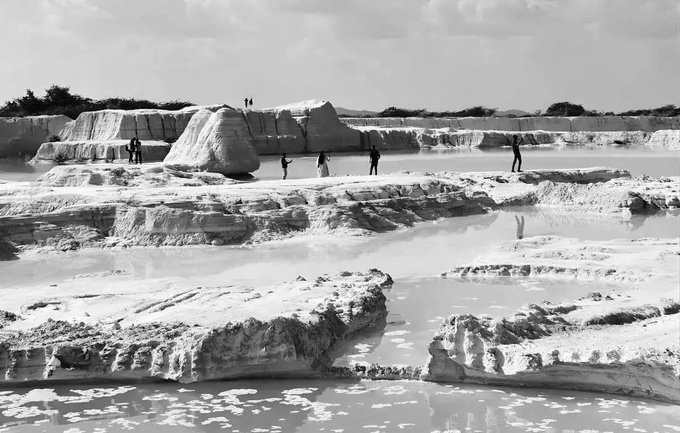
Dark tourism in Rajasthan: White marble slurry site draws thousands despite toxic risks
What looks like a surreal white desert under the sun is in reality Asia’s largest marble waste dumping yard , stretching across 350 acres in Kishangarh, Ajmer district. The site, established in the 1980s when the Rajasthan State Industrial Development and Investment Corporation (RIICO) allotted plots to the Kishangarh Marble Association (KMA) , has accumulated decades of marble slurry from the city’s over 1,200 cutting units.
While the area has long been an industrial dumping ground, its tourism appeal began around 2016 when comedian Kapil Sharma shot a song for his film Kis Kisko Pyaar Karoon here. The site’s stark white mounds and blue ponds quickly drew attention from filmmakers, celebrities, and social media influencers. Subsequent shoots by Nora Fatehi , Honey Singh , Tiger Shroff , and Shraddha Kapoor , as well as pre‑wedding photographers, cemented its popularity as a dark tourism and photography hotspot. Today, the site attracts roughly 5,000 visitors daily , swelling to 20,000 on weekends , all eager to capture the striking landscapes.
Despite its aesthetic charm, experts describe the location as a toxic tourist destination . Studies by the Central University of Rajasthan report air, soil, and groundwater contamination , including high levels of PM2.5, lead silicate, nitrate, and fluoride. Fine marble particles, smaller than 75 micrometres, can become airborne, posing respiratory hazards , while slurry runoff degrades nearby farmland, lowering crop yields. Local farmers report white layers of marble dust covering fields, making soil infertile. Children and adults visiting the site often experience eye irritation, though few wear protective masks.
The KMA has capitalized on tourism , charging fees for professional photo shoots and commercial filming, maintaining facilities like changing rooms, a helipad, restaurants, and recreational zones. Officials claim compliance with National Green Tribunal guidelines and note no health complaints from visitors.
Environmentalists, however, warn that promoting an industrial waste site for entertainment and photography without adequate safeguards is ethically and ecologically problematic. The juxtaposition of pre-wedding shoots, celebrity videos, and the ongoing toxic contamination underscores the site’s paradox as both a visually stunning and environmentally hazardous destination , exemplifying modern industrial dark tourism .