
Czech Republic advances USD 19bn Dukovany nuclear project to replace coal
The Czech Republic is moving forward with a USD 19-billion expansion of the Dukovany nuclear plant, a project officials say is essential to replace coal, meet rising electricity demand and strengthen long-term energy security.
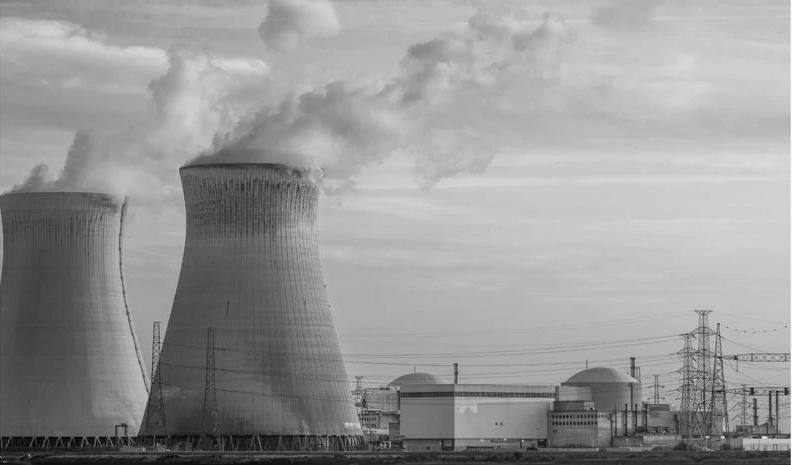
At Dukovany, geological surveys are under way as engineers prepare for the construction of two new reactors, each expected to generate more than 1,000 megawatts. The project, awarded to South Korea’s Korea Hydro & Nuclear Power (KHNP), is scheduled to be completed in the second half of the 2030s. The new units will operate alongside the plant’s existing four reactors, which date back to the 1980s.
The deal with KHNP also provides an option for the construction of two additional reactors at the Temelín nuclear station, which currently has two 1,000-MW units. Together, Dukovany and Temelín supply about 40 per cent of the country’s electricity, roughly equal to the share still produced from coal.
Need to replace coal and stabilise supply
Officials say the expansion has become urgent as the Czech Republic prepares to phase out coal and align with the European Union’s climate-neutrality target for 2050. Rising demand from data centres, electric vehicles and heavy industry is further increasing pressure on the power system.
“We cannot rely on coal any longer, and nuclear energy remains the only dependable, low-carbon source available at the scale we need,” said Petr Zavodsky, chief executive of the Dukovany expansion project.
The shift is also driven by security considerations. Following Russia’s invasion of Ukraine, the Czech Republic moved to end its dependence on Russian nuclear fuel, signing supply contracts with Westinghouse and France’s Framatome.
Part of Europe’s broader nuclear revival
The Czech initiative comes as several European countries revisit nuclear power to address energy security and emissions reduction. The European Union’s decision to classify nuclear energy as environmentally sustainable has widened access to financing and encouraged new investments.
Belgium and Sweden have reversed earlier plans to phase out nuclear power. Poland has signed deals to launch its first nuclear units, and Britain is investing heavily in the Sizewell C project after signing a nuclear cooperation agreement with the United States.
Large financial risks and guarantees
Financing has long been the biggest barrier to nuclear expansion in the Czech Republic. In 2014, utility CEZ cancelled a tender for new reactors at Temelín after the government declined to offer financial guarantees. Without state backing, the company said the multi-billion-dollar investment could not proceed.
To prevent a repeat, the government has taken a far more active role in the Dukovany project. It will acquire an 80 per cent stake in the new plant, secure the loan needed for construction, and allow CEZ to repay the financing over 30 years. A key element is the state’s commitment to guarantee a stable electricity price for 40 years, shielding CEZ from market fluctuations.
The arrangement requires approval from the European Commission under EU state-aid rules, though officials expect clearance because the expansion supports the bloc’s climate goals.
Concerns and cross-border opposition
Environmental groups argue that the high cost of nuclear power could divert funds from renewable energy and that the Czech Republic still lacks a permanent repository for spent nuclear fuel .
Austria, which borders both Czech nuclear plants and opposes atomic energy, remains a vocal critic. Disputes over the Temelín plant once triggered a political crisis and blocked border crossings in 2000. Austrian lawmakers have already rejected the Czech plan to introduce next-generation small modular reactors.
Future role of small modular reactors
Alongside the large-scale reactors, the Czech Republic is planning for small modular reactors (SMRs) to support the next phase of its energy transition. CEZ has signed a strategic partnership with Rolls-Royce SMR to explore deployment options.
SMRs are expected to replace smaller coal plants and district-heating systems, offer flexible generation to complement renewables, supply heat and electricity to industries, and reduce financial risks through shorter construction times and lower upfront costs.
Towards a new energy mix
With the Dukovany expansion, the Temelín option and future SMRs, officials estimate that nuclear power could supply 50–60 per cent or more of the Czech Republic’s electricity by 2050. Coal, which still accounts for around 40 per cent of current generation, is set to be phased out entirely.
The government argues that the nuclear programme will provide stable pricing, reduce exposure to global fuel markets and ensure secure, low-emission electricity for decades.