

Cyclone Arnab Approaches Andhra Coast, Triggers Alerts Across Eastern States
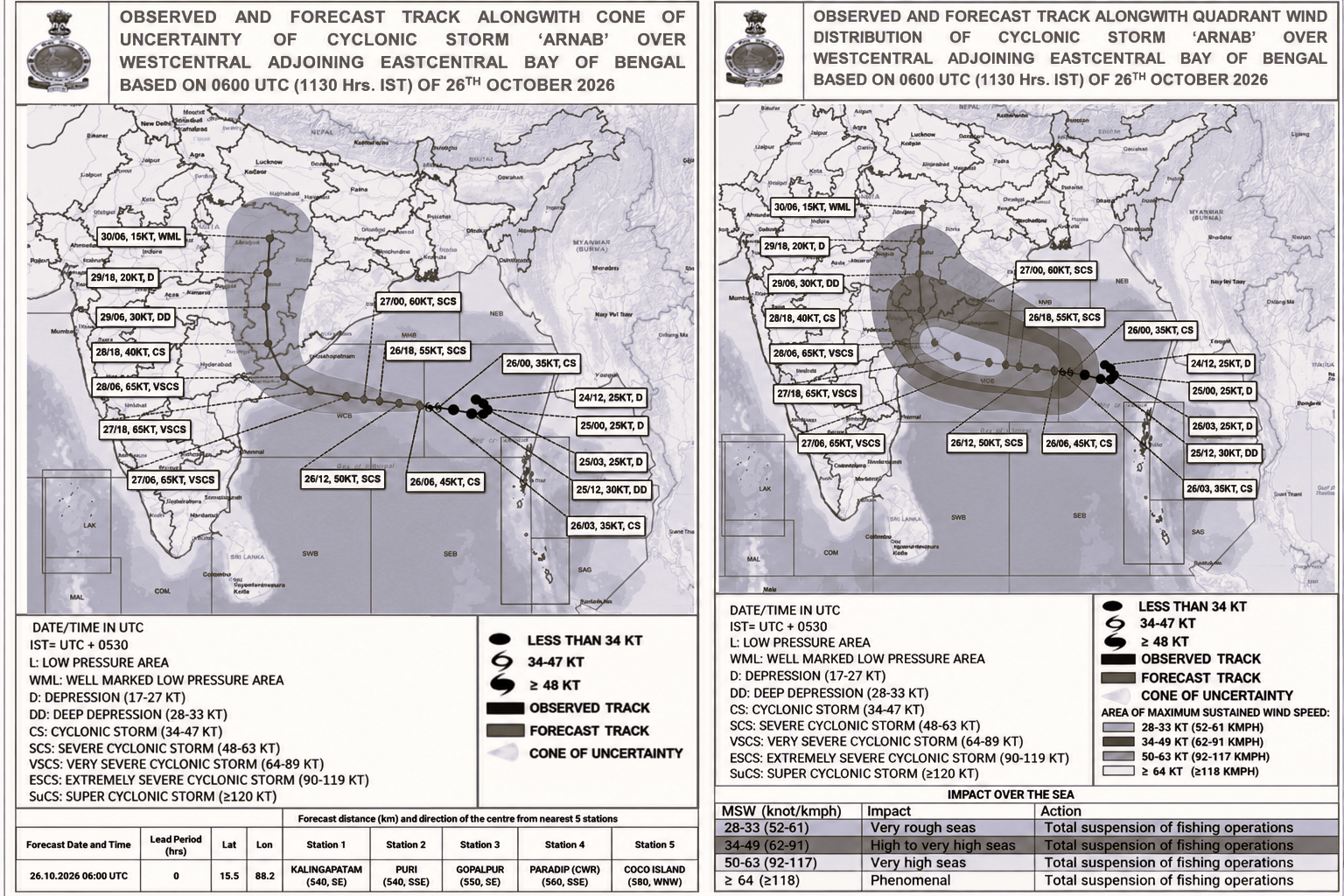
Cyclone Arnab is expected to intensify into a very severe cyclonic storm before crossing the Andhra Pradesh and Yanam coast between Bapatla and Visakhapatnam on the morning of October 28, prompting authorities across the eastern coast to step up emergency preparations. Andhra Pradesh, Odisha and West Bengal are bracing for heavy rainfall, strong winds and possible flooding, while officials have urged residents to follow safety advisories and avoid unnecessary risks.
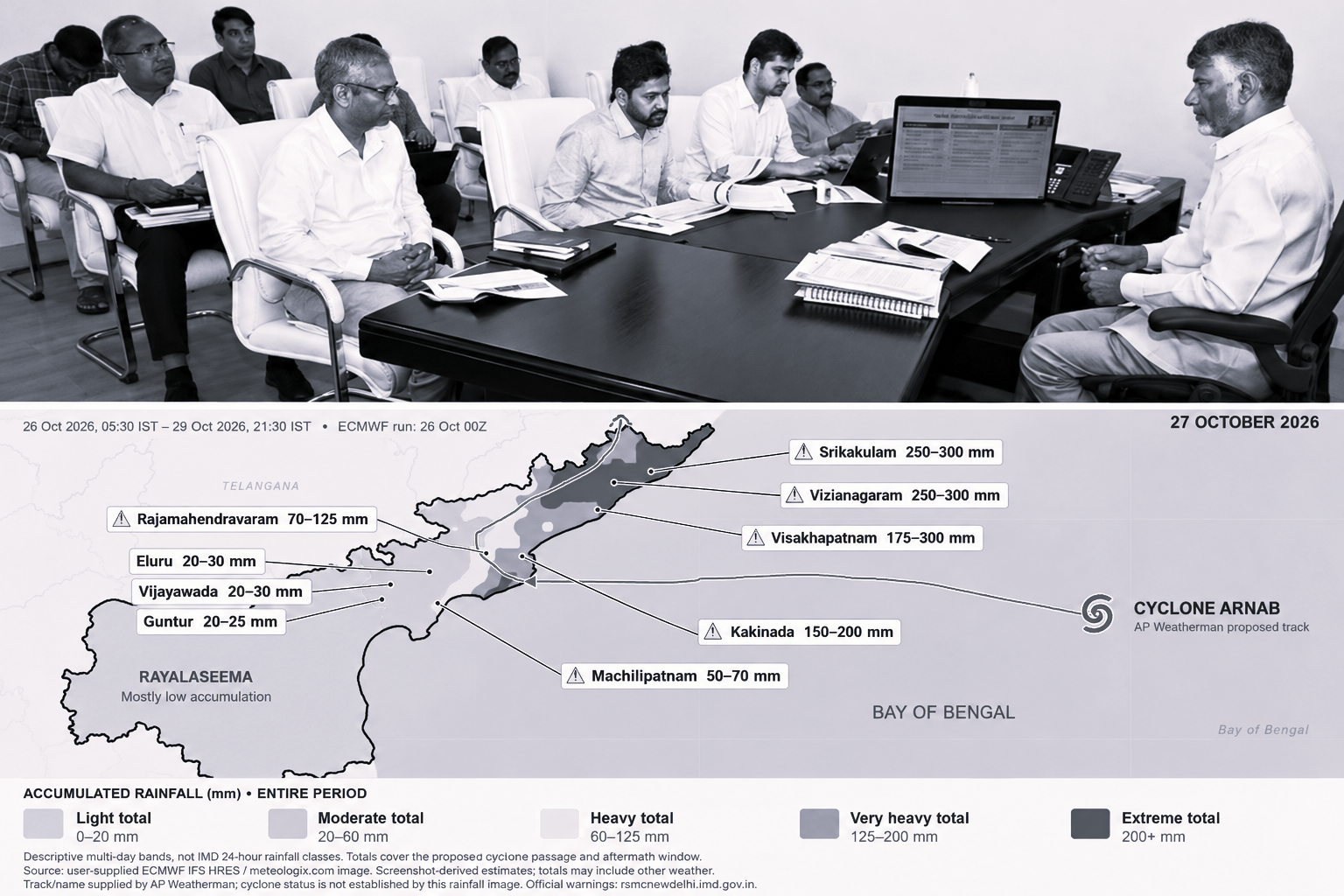
According to the India Meteorological Department (IMD), the cyclone is expected to strengthen with sustained winds of 115–125 kmph and gusts reaching 140 kmph. Coastal Andhra Pradesh and Yanam may experience heavy to very heavy rainfall, with isolated extremely heavy downpours on October 27 and 28. Rainfall may continue in parts of Andhra Pradesh on October 29. An APSDMA update placed the system 540 km from Visakhapatnam and 620 km from Kakinada on Monday evening.
Andhra Pradesh Chief Minister N. Chandrababu Naidu has directed officials to intensify precautionary measures, prioritising the protection of lives and property. During a virtual review with senior officials and district collectors, he ordered round-the-clock monitoring, timely warnings and coordinated emergency responses. Authorities have been instructed to evacuate residents from low-lying areas, prioritising elderly people, persons with disabilities, pregnant women and infants. Arrangements are underway to shift 4,711 pregnant women to healthcare facilities.
Seven NDRF and eight SDRF teams are being deployed across 11 vulnerable districts, with additional forces on standby in NTR and Visakhapatnam. Medical teams and ambulances are on alert, while warning bulletins will be issued every four hours. Officials reported that 30,043 fishing boats had returned to harbours. Fishermen have been barred from venturing into the sea, with the Navy, Coast Guard and marine police available if necessary.
Agriculture Minister Atchannaidu urged farmers to protect harvested paddy, cotton, maize, groundnut and pulses by moving produce to safer places and covering grain with tarpaulins. Banana and papaya plants should be supported with stakes, drainage channels cleared, and seeds, fertilisers and machinery stored in elevated locations. Authorities are monitoring horticultural crops across 1.82 lakh hectares.
Officials are preparing for inflows into 22 reservoirs, targeting storage of 10–12 TMC. The Tandava, Raiwada, Yeleru, Tammileru, Yerrakalava and Tadipudi reservoirs require particular attention, alongside maintaining water flow through streams and canals. Ration supplies must remain adequate, and electricity should be restored promptly after disruptions.
In Odisha, Chief Minister Mohan Charan Majhi has assigned eight ministers to vulnerable districts. Red alerts cover Ganjam, Gajapati, Rayagada, Koraput and Malkangiri, where educational institutions and Anganwadi centres will close on October 28 and 29. Around 60 disaster response teams, 17 NDRF teams and 225 fire service teams are on alert.
West Bengal expects heavy rain from October 28 to 30, with fishermen advised to remain ashore and a landslide warning issued for Darjeeling. Meanwhile, Tamil Nadu faces intense Northeast monsoon rain, with a red alert in Kodaikanal, flooding affecting more than 20 houses, bridge cracks threatening connectivity for hundreds of families, and the Vaigai Dam reaching 50 feet after nine months.
Authorities have urged residents to avoid unnecessary travel, stay away from fallen power lines and unstable structures, prepare essential supplies and rely on official updates rather than rumours.