

Cybercrime, Drug Trafficking Emerge as Major Internal Security Threats: Home Secretary
India’s internal security landscape has changed significantly, with traditional threats declining and technology-driven crimes emerging as major challenges, Union Home Secretary Govind Mohan said on Saturday. He noted that Maoist extremism had largely ended and insurgent activities in the Northeast had fallen considerably, while cybercrime, drug trafficking, illegal immigration and social media misinformation required greater attention.
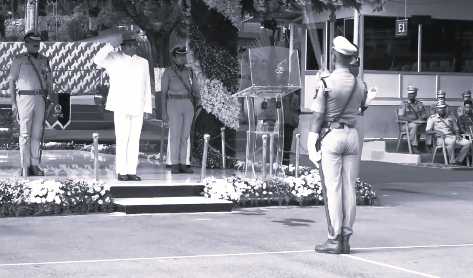
Addressing the passing-out parade of the 78th Regular Recruit (RR) batch of IPS officers at the Sardar Vallabhbhai Patel National Police Academy (SVPNPA) in Hyderabad, Mohan conveyed Union Home Minister Amit Shah’s message on strengthening the country’s security framework. Shah called for zero tolerance towards terrorism, time-bound action and improved coordination among intelligence agencies.
The Home Minister emphasised the role of young IPS officers in securing national borders through modern surveillance systems, digital technologies and better coordination under the Centre’s Smart Border initiative. He also urged police forces to dismantle drug trafficking networks, strengthen technology-based investigations and promote public awareness under the Nasha Mukt Bharat mission. The Centre aims to make India drug-free within the next three years.
Mohan cautioned that fake messages, deepfake videos and misleading social media content were increasingly triggering public gatherings and creating law-and-order problems. He called for innovative solutions to counter misinformation while ensuring that action remained within the legal framework.
He said technological advancements had enabled even people with limited technical skills to commit cybercrimes. Criminals were exploiting mule bank accounts and fake SIM cards, making detection more difficult. Although central agencies were working to address cyber threats, states and Union Territories would have to lead efforts to tackle such crimes.
On traditional security challenges, Mohan said many insurgent groups in the Northeast had joined the mainstream through ceasefire and tripartite agreements. Violence in some areas was increasingly linked to ethnic conflicts. Indigenous terrorism had largely subsided, while foreign-inspired terrorist activities remained concentrated in certain areas.
He also stressed the need to identify illegal immigrants, prevent radicalisation and address market distortions. Criminals were using the dark web to arrange contract killings and virtual private networks (VPNs) to make threats from overseas while concealing their identities.
Highlighting police modernisation, Mohan said the Centre had established a network of young IPS officers working on artificial intelligence (AI) applications in law enforcement. He urged police forces to adopt emerging technologies and strengthen their capabilities to respond effectively to evolving security threats.