
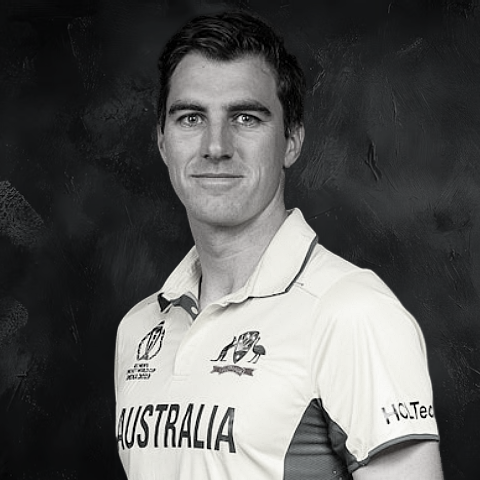
Cummins Misses T20 World Cup to Prioritise Long-Term Fitness
Australia’s T20 World Cup campaign has suffered a major setback with Pat Cummins ruled out due to a lumbar bone stress injury , a development that has reignited debate over the sustainability of all-format careers, particularly for fast bowlers in their 30s.
Cummins, 32, withdrew from the tournament after a follow-up scan revealed his back required additional healing time. The Australian Test captain was replaced by Ben Dwarshuis , while fellow senior pacer Josh Hazlewood is also an early doubt, significantly weakening Australia’s pace attack.
While Cummins’ absence is a competitive blow, the decision reflects a broader shift in modern cricket, where elite players are increasingly forced to prioritise formats. Cummins remains central to Australia’s long-term Test plans, with major series against India, South Africa and New Zealand scheduled later this year and into early 2027.
Australia’s situation mirrors a global trend. Several senior players who once dominated all formats are now scaling back. Mitchell Starc (35) has retired from T20 internationals, while players such as Joe Root (35) , Ben Stokes (34) and Kane Williamson (35) feature selectively. In India, Virat Kohli (37) and Rohit Sharma (38) continue with managed workloads, while fast bowlers like Jasprit Bumrah (32) are carefully rested.
Fast bowlers, in particular, face mounting physical strain. Bone stress injuries are increasingly linked to cumulative workload rather than isolated incidents, raising questions about the viability of playing Tests, ODIs and T20s simultaneously beyond the age of 30.
Younger cricketers such as Cameron Green , Shubman Gill , Marco Jansen and Harry Brook remain multi-format options, but even they are being rotated more frequently as boards move towards format specialisation .
Cummins’ decision to miss the T20 World Cup may hurt Australia in the short term, but it underlines a growing reality in international cricket — career longevity is now taking precedence over all-format dominance .