
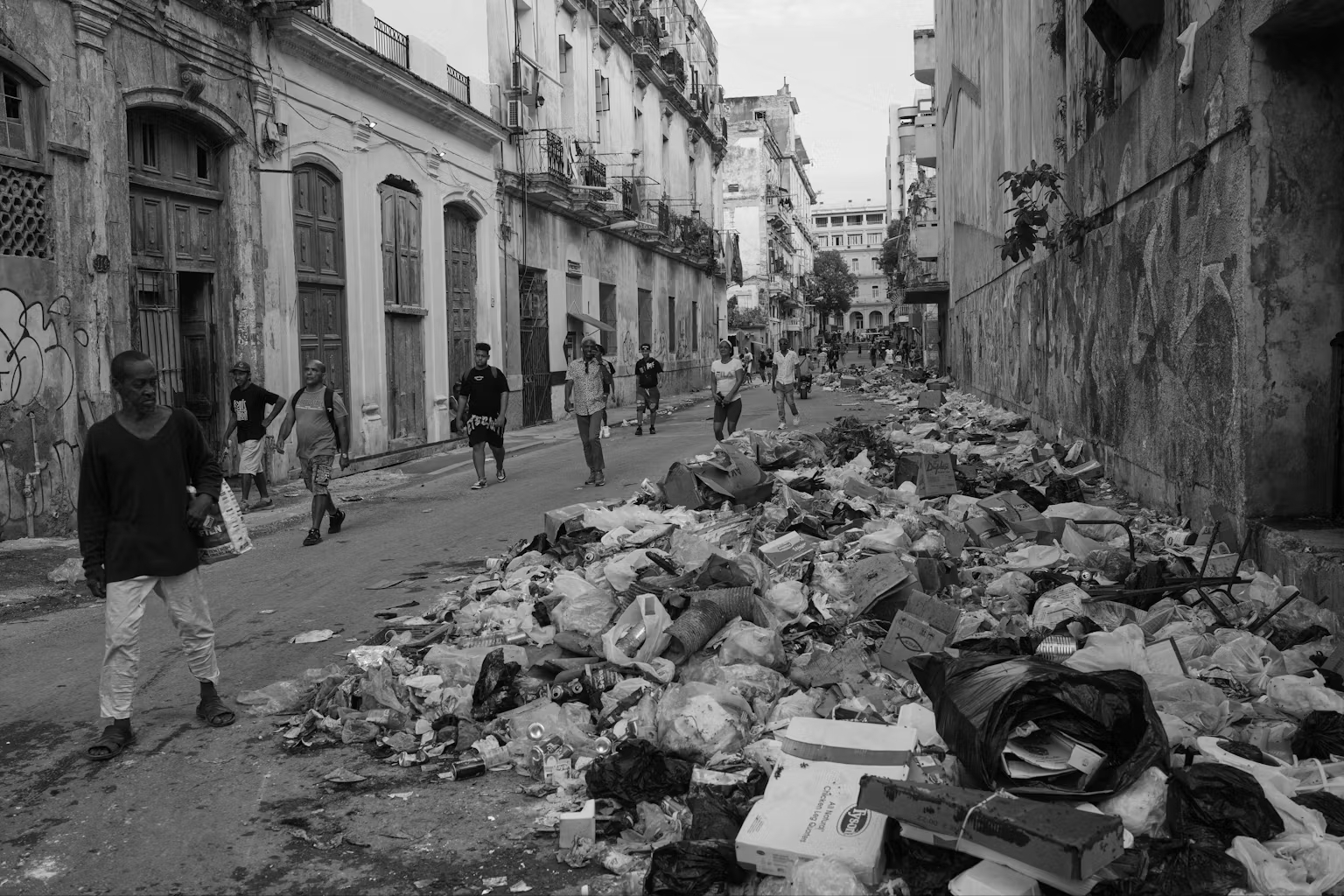
Cuba’s Silent Cries Go Unheard by the World
The small Caribbean island nation of Cuba is currently grappling with a severe economic and social crisis . With a population of over 10 million , daily life has become extremely difficult due to shortages of food, fuel, and medicines . Long queues for essentials, frequent power cuts, and rising prices reflect the harsh realities faced by the people. Largely absent in global political discourse, the country is silently enduring a major humanitarian crisis .
Once recognised as a leader in social development in Latin America, Cuba ensured public welfare through free healthcare and education , extending services even to rural areas and achieving standards comparable to developed nations. Earlier, financial support from the Soviet Union provided economic stability. However, its collapse dealt a major blow to Cuba’s economy. Since then, the country has faced sustained economic pressure. Additionally, reduced assistance from Venezuela , amid US geopolitical influence, has further deepened the crisis.
“Not a Crisis… a Slow-Motion Killing”
One of the key drivers of the crisis is the economic embargo imposed by the United States since the 1960s, which has severely limited Cuba’s global trade. In this context, an open letter by an ordinary Cuban woman has triggered widespread discussion on social media.
She alleged that what is happening in Cuba is not merely a “crisis” but a “slow-motion killing” , blaming US sanctions as the primary cause. She expressed anguish that elderly people are dying due to lack of medicines for heart disease, blood pressure, and diabetes . She criticised restrictions that prevent companies from supplying medicines, stating that these measures have directly worsened the situation.
She further highlighted that the condition of children is even more alarming. Referring to incidents where incubators in hospitals were shut down due to fuel shortages , she warned that infants’ lives are at risk. Questioning the silence of the international community, she asserted that the food crisis is not natural but driven by restrictions on foreign purchases. Measures such as blocking banking transactions and disrupting cargo transport have further aggravated the crisis, she added.
The healthcare sector has also been severely impacted. Cuban doctors, who served globally during the COVID-19 pandemic , are now forced to work amid shortages of syringes, anaesthesia, and X-ray equipment . Despite these challenges, she noted that Cuban scientists developed five COVID vaccines , showcasing the nation’s capability.
Another serious concern is demographic change. In a country of around 10.8 million people , migration has surged, with many young people moving abroad. This has reduced the workforce, while declining birth rates have increased the proportion of elderly citizens, placing additional strain on the economy.
Appealing to the global community, the woman stated that Cuba is not asking for charity, but for justice . She urged that the suffering of its people should not be ignored and called for the sanctions to be recognised as a “crime against humanity.”
Experts caution that Cuba’s crisis cannot be attributed solely to sanctions. It is the result of multiple factors, including economic restrictions, fuel shortages, import dependence, inflation, and demographic changes . Internal challenges such as policy limitations, low production capacity, and shortage of foreign exchange reserves have further intensified the situation.
The energy crisis has hit the country particularly hard. Cuba has long depended on Venezuela for fuel supplies, but reduced shipments due to Venezuela’s own economic difficulties have affected electricity generation. As a result, prolonged power outages, industrial shutdowns, and transport disruptions have become widespread.
Public frustration is increasingly visible, with people displaying placards reading “No fuel, no medicines, hunger.” Meanwhile, inflation continues to erode living standards.
To overcome the crisis, both internal reforms and international cooperation are urgently needed. Otherwise, the “silent cries of Cuba” may continue to echo unheard.
Trump’s Remarks Rekindle Cuba Controversy
Recent comments by Donald Trump on Cuba have sparked international controversy . His remarks suggesting that the United States could “take” Cuba have heightened tensions between the two nations.
Speaking to the media on the Iran war on the 16th of this month , Trump said, “I think I would have the honour of taking Cuba in some form… I can do something about that.” The timing of these remarks is notable, as Cuba is already struggling with economic distress, fuel shortages, and power disruptions .
US-imposed restrictions, particularly on oil supplies , have further intensified Cuba’s energy crisis, leading to widespread power cuts, production disruptions, and transport challenges. Analysts believe Trump’s remarks portray Cuba as a vulnerable nation , hinting at the possibility of political change. His suggestion of a “friendly takeover” has added to the controversy.
Cuba reacted strongly, condemning any form of US interference. Its foreign affairs officials asserted that there would be no compromise on national sovereignty and warned that the country is prepared to face any situation if necessary.