
Crude Oil Tops $120 as US, Iran Prepare for Prolonged Blockade, India’s Fuel Price Bomb May Be Delayed Till Poll Results
Global crude oil prices have surged past $120 per barrel , with Brent touching nearly $119–120 , after Washington signaled its blockade of Iranian oil exports and ports could continue for months if needed . What began as war volatility is now becoming a prolonged supply shock, with serious consequences for oil-importing nations like India.
For India, which imports nearly 88% of its crude , the impact is potentially explosive. Since early March, when crude traded around $80–82 , prices have risen by nearly $40 per barrel . Yet Indian petrol and diesel prices have remained largely frozen. That stability has not come cheap.
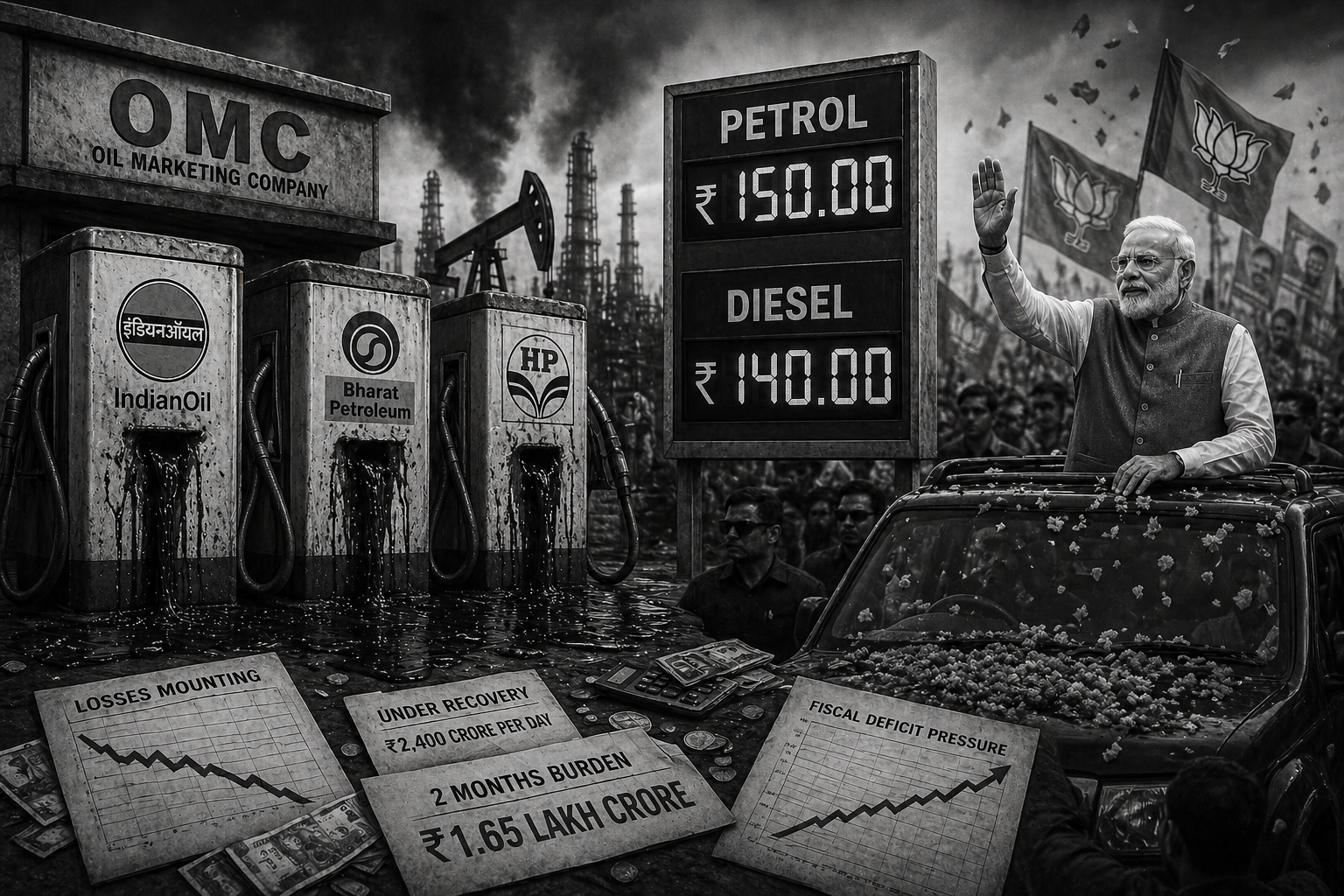
Public sector oil companies are estimated to be absorbing roughly ₹2,400 crore per day in under recoveries because retail fuel prices have not kept pace with global crude. Over roughly 60 days , that amounts to about ₹1.44 lakh crore . Add around ₹22,000 crore in excise duty sacrifices by the Centre over two months, and India may already have absorbed nearly ₹1.65 lakh crore just to shield consumers from immediate fuel shock.
That number is staggering. ₹1.65 lakh crore is roughly comparable to India’s annual fertilizer subsidy bill or nearly half of Telangana’s yearly budget absorbed in barely two months, largely to avoid public anger before crucial state election results.
The fiscal implications are equally serious. With the Union Budget targeting a fiscal deficit of around ₹16 lakh crore , this two-month oil burden alone could place additional pressure equivalent to roughly 10% of that annual deficit path , depending on how losses are ultimately shared between taxpayers, borrowing, and oil companies.
At current crude levels, petrol may already be underpriced by roughly ₹20–24 per litre , with diesel losses even steeper. If Brent remains near $115–120 , analysts estimate fuel prices may eventually need to rise by ₹25–28 per litre unless global prices cool sharply or subsidies continue.
That is why attention is turning to May 4 , when major state election results are due. Many analysts believe the government may delay unleashing the real fuel price shock until after votes are counted.
For now, Indian consumers are being shielded from the full force of the oil spike. But shielding ₹1.65 lakh crore in just two months is not sustainable economics, it is high-cost political cushioning.
The question may no longer be whether fuel prices rise, but whether the oil bomb is postponed until after the ballots.