
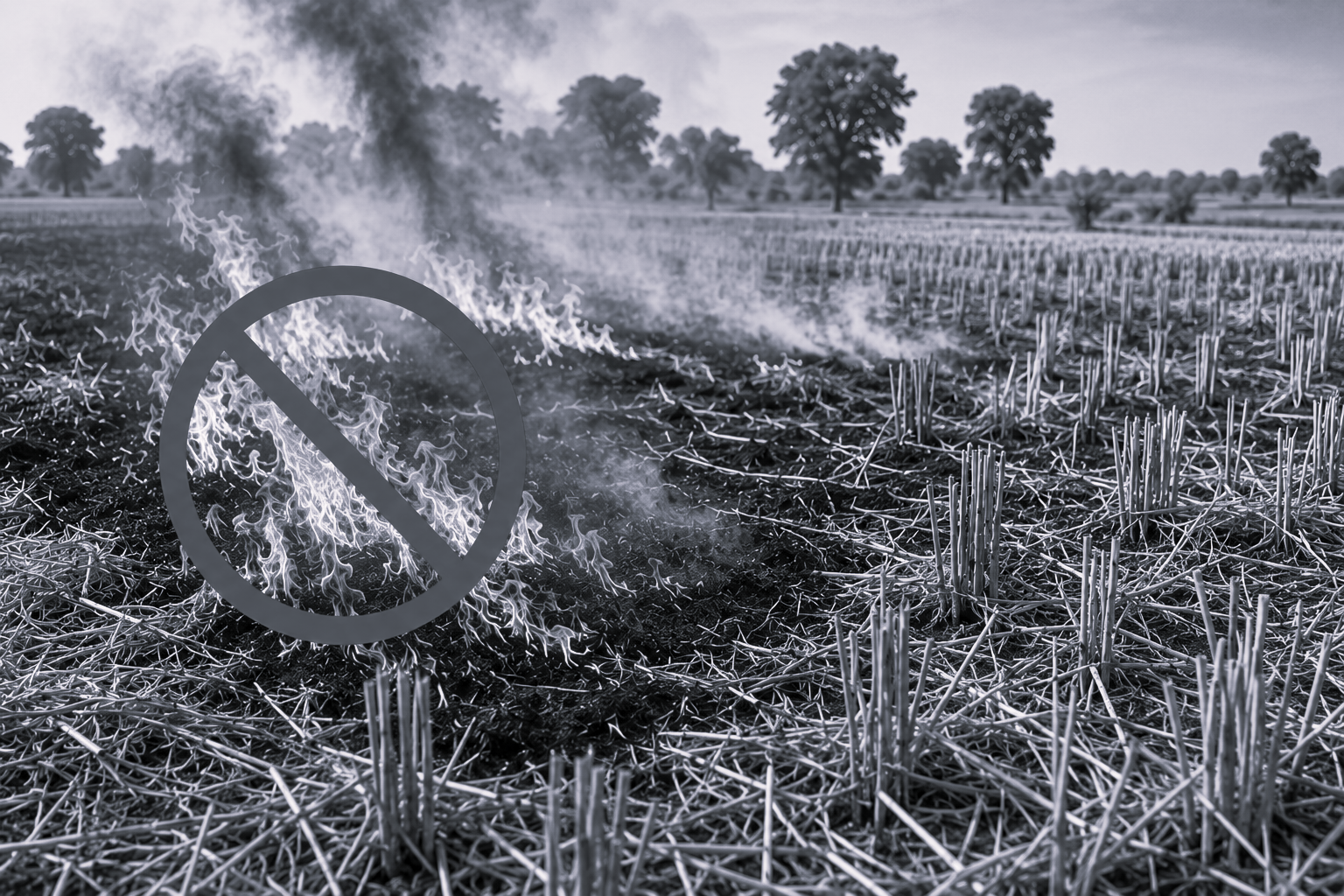
Crop Residue Burning Harms Soil, Health and Environment: Agriculture Department
State Agriculture Department Director Dr B. Gopi has said that burning crop residues left behind after harvesting is causing severe damage to soil fertility, the environment, and public health . He expressed concern that the practice, adopted by farmers for temporary convenience, could lead to heavy economic losses in the long run.
Following the directions of the Agriculture Minister, Dr Gopi instructed Agricultural Extension Officers (AEOs) and Agricultural Officers (AOs) across the state to create extensive awareness among farmers. He directed field-level officials to conduct special village-level campaigns on the harmful effects of burning crop residues.
Dr Gopi explained that burning crop residues destroys organic carbon, nitrogen, phosphorus, potash, and valuable micronutrients in the soil, gradually making agricultural land infertile. He said earthworms and beneficial insects that improve soil health are also destroyed in the fires, reducing soil vitality and eventually lowering crop yields.
He further noted that burning agricultural waste releases harmful gases such as carbon monoxide , leading to severe air pollution. This could increase cases of asthma and respiratory illnesses, particularly affecting pregnant women, children, and elderly people . He also warned that smoke generated from such burning could reduce visibility on roads and lead to accidents.
In this context, Dr Gopi advised farmers to adopt alternative methods instead of burning crop residues. He suggested using modern machinery such as rotavators and shredders to mix crop residues into the soil. He also said that urea, single super phosphate, or decomposers could be used to convert agricultural waste into organic manure quickly, thereby reducing expenditure on chemical fertilisers.
In addition, he suggested that crop residues could be utilised for compost and vermicompost preparation, cattle fodder, and mulching , enabling farmers to generate additional income. He directed officials to organise special awareness sessions on crop residue management during the weekly “Rythu Nestham” programmes held every Tuesday.
Dr Gopi clarified that under the Environment Protection Act, 1986 , and G.O.Ms. No. 27 dated July 10, 2017 , issued by the Telangana government, environmental compensation penalties of up to Rs 5,000 can be imposed for openly burning crop residues.