
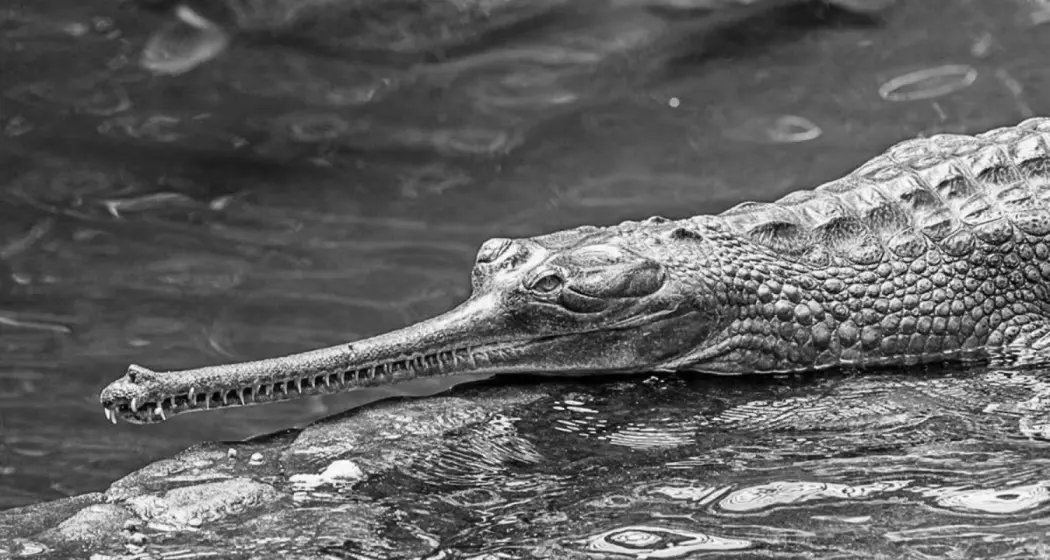
Critically Endangered Gharial Spotted in Assam’s Kaziranga After Years
In a striking moment for wildlife conservation, a critically endangered gharial has been spotted inside Kaziranga National Park in Assam after several years, raising fresh hope for the revival of river ecosystems in the region.
The sighting, confirmed by officials on Saturday, marks a significant ecological event as the species was long believed to have disappeared from Assam’s river systems. The rare reptile was seen in a waterbody within the park, with an 18 second video clip shared by the Chief Minister’s Office showing the animal moving through calm waters from a motor boat.
The gharial , a distinctive South Asian crocodilian known for its long, narrow snout and fish based diet, is classified as critically endangered. Its presence is often considered a strong indicator of a healthy aquatic ecosystem .
Officials described the sighting as more than just a rare wildlife encounter. It reflects what they called the steady and silent success of conservation efforts across Assam’s forests, wetlands, and river networks. The Chief Minister’s Office noted that the return of the species is a powerful reminder of the region’s rich biodiversity and the impact of sustained protection measures.
For forest staff and visitors alike, the moment has been seen as both unexpected and encouraging. Conservation experts suggest that such sightings, if confirmed and followed by continued monitoring, could signal a gradual ecological recovery in habitats once considered unsuitable for sensitive species.
Gharial populations have sharply declined across South Asia due to habitat loss, river pollution, and fishing pressures, making every confirmed sighting important for conservation tracking.
In Kaziranga, already famous for its one horned rhinoceros and diverse wildlife, the unexpected return of the gharial adds another layer to its ecological significance. Officials say continued protection of river systems will be key to ensuring that such rare appearances become more frequent and sustainable in the future.