
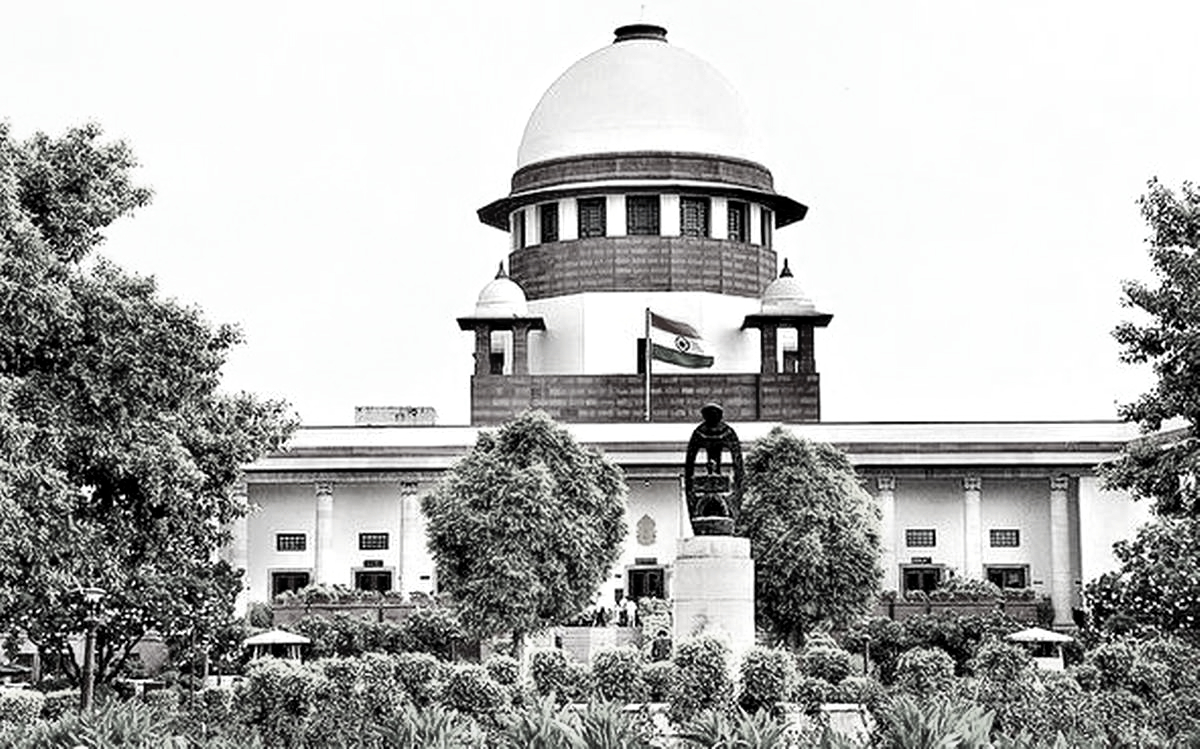
Country Will Not Tolerate Custodial Deaths: Supreme Court Warns States
Custodial violence and deaths were described by the Supreme Court on Tuesday as a “blot on the system” that the country would no longer tolerate. The observation was made during the hearing of the Supreme Court’s suo motu criminal writ petition on the installation and functioning of CCTV cameras in police stations, a matter that has been monitored by the Court since 2020.
The bench of Justices Vikram Nath and Sandeep Mehta noted with concern that 11 deaths in police custody were reported from Rajasthan within eight months, based on data placed before the Court. The judges stated that such incidents could not be accepted in a democratic society and stressed the need for accountability and transparency in police functioning.
The ongoing suo motu case Suo Motu Writ Petition (Criminal) No. 4 of 2020 (Paramvir Singh Saini vs. Baljit Singh & Others) was initiated by the Supreme Court to ensure that every police station in the country is equipped with functional CCTV cameras covering all critical areas, including lock-ups, interrogation rooms, corridors, and entry and exit points. Audio-video recording with night-vision capabilities and 180-day storage were mandated. State and district oversight committees were also ordered to be created to monitor compliance.
During the hearing, the Court expressed dissatisfaction that many states had still not achieved full compliance, despite repeated directions and the allocation of funds in state budgets. In earlier compliance affidavits reviewed by the Court, several states had admitted that funds sanctioned for CCTV installation were either partially utilised or remained unspent, leading to delays in completing surveillance systems meant to prevent custodial abuse.
The concern over custodial deaths was also placed in the national context. As per the most recent National Human Rights Commission (NHRC) data, 175 police custody deaths and 1,631 judicial custody deaths were recorded in 2022–23, indicating that India continues to report around 1,800 custodial deaths annually. These figures, the Court observed, highlight the urgency of structural reforms and strict compliance with its orders.
The prohibition of torture in custody was also indirectly referred to during the hearing. Torture and ill-treatment of arrested persons are barred under several legal provisions, including Article 21 of the Constitution, which guarantees the right to life and prohibits cruel or inhuman treatment, Article 20(3), which protects against forced confessions, and Article 22, which ensures safeguards during arrest. Under the Indian Penal Code, offences such as causing hurt or grievous hurt to extract confessions are punishable under Sections 330 and 331, while deaths resulting from custodial assault are covered under Sections 302 and 304.
Reiterating that custodial violence undermines the rule of law, the Supreme Court emphasised that the failure to safeguard lives in custody erodes public trust in policing systems. The bench directed that compliance reports on CCTV installation and maintenance be filed without delay and indicated that further directions would follow if lapses continued.