
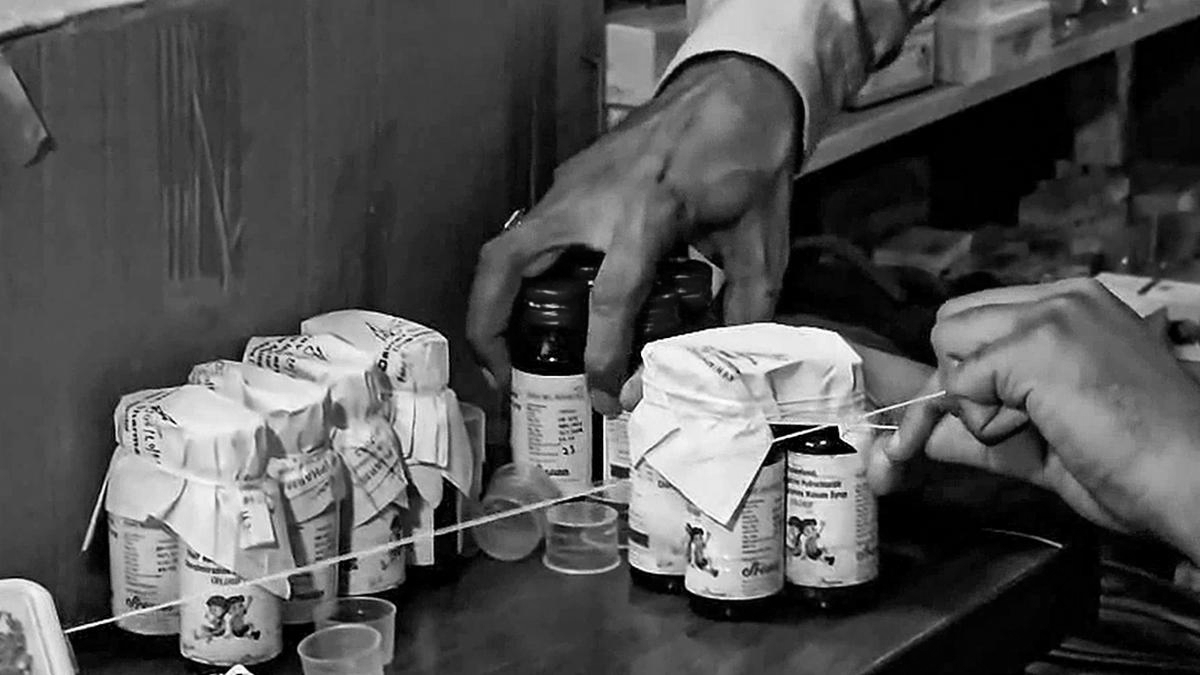
Cough syrup tragedy: SIT arrests wife of accused doctor as WHO and states intensify probe
The Special Investigation Team (SIT) probing the cough syrup tragedy that led to the deaths of 24 children in Madhya Pradesh has arrested Jyoti Soni, wife of Dr Praveen Soni, from Parasia town in Chhindwara district. She is the seventh person to be taken into custody in the case that has shaken public confidence in drug safety and healthcare regulation.
Why were the doctors arrested?
According to SIT in-charge and Sub-Divisional Officer of Police Jitendra Jaat, Jyoti Soni is the proprietor of the medical shop from where the toxic cough syrup ‘Coldrif’ was sold to several victims.Her husband, Dr Praveen Soni, a local paediatrician, was arrested last month on charges of criminal negligence.
Investigators allege that Dr Soni continued prescribing the same brand of syrup even after parents reported adverse reactions in children. He also failed to verify the source and safety of the medicine despite multiple complaints.While the primary manufacturing fault lies with the pharmaceutical company, police maintain that the doctor’s disregard for patient safety and due diligence contributed to the deaths.Both husband and wife are now being questioned about their financial and professional links with the suppliers and distributors of Coldrif.
Chain of arrests and corporate accountability
With Jyoti Soni’s arrest, the SIT has detained seven accused so far, including Sresan Pharma owner G. Ranganathan, medical representative Satish Verma, chemist K. Maheshwari, wholesaler Rajesh Soni, and pharmacist Sourabh Jain.The Tamil Nadu government has since revoked the manufacturing licence of Sresan Pharma and sealed its unit after laboratory tests revealed the presence of 48.6% diethylene glycol (DEG)—a lethal industrial solvent—far above the permissible limit of 0.1%.
Investigators believe that substandard raw materials were used during production and that mandatory quality tests were skipped before the syrups were distributed to retailers in several states.
Investigation progress and coordination
The SIT, formed by the Madhya Pradesh government, is working in coordination with the Central Drugs Standard Control Organisation (CDSCO), Tamil Nadu Drug Control Department, and World Health Organization (WHO).Officials have seized financial records, communication logs, and medical prescriptions from the accused doctor’s clinic and pharmacy. Several batches of Coldrif syrup have been sent to central laboratories for confirmatory chemical analysis.
Role of WHO and drug authorities
The World Health Organization issued a Medical Product Alert after confirming similar contamination in other syrups Coldrif, Respifresh TR, and ReLife previously linked to child deaths in Rajasthan and The Gambia.WHO experts worked with Indian regulators to trace the supply chain, recommend recalls, and enforce mandatory DEG/EG testing for all paediatric formulations.
State authorities in Tamil Nadu and Madhya Pradesh first detected the contamination. Their laboratories found dangerously high DEG levels, prompting an immediate ban on the product in Kerala, Karnataka, Punjab, Himachal Pradesh, Uttar Pradesh, West Bengal, Delhi, and Puducherry.The Madhya Pradesh government also suspended the state drug controller and assistant controller for failing to test random medicine samples earlier.
Public outrage and broader impact
The deaths of 24 children, most under the age of five, have sparked nationwide anger and grief. Madhya Pradesh Chief Minister Mohan Yadav vowed that “no one guilty will be spared.”
Health experts warn that such tragedies undermine public trust in the healthcare system and may lead to fear of prescribed medicines, particularly among parents.
Repeated cases of contamination have also damaged India’s global image as the “Pharmacy of the World”, raising concerns among importing countries about quality control and regulatory enforcement.
Call for* *r* *eform and* *r* *ebuilding* *t* *rust
Following WHO’s recommendations, authorities are now considering:
• Mandatory DEG/EG testing for all liquid medicines.
• Digital tracking of drug batches from production to sale.
• Public disclosure of inspection and testing reports.
Experts say that restoring public confidence will require strict enforcement of Good Manufacturing Practices (GMP), transparent investigations, and stronger coordination between states, central regulators, and the pharmaceutical industry.