
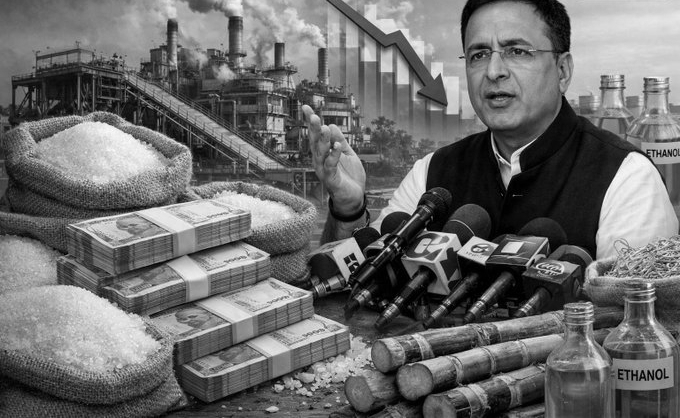
Congress Alleges Rs 36,000-Crore Sugar Scam as Festive Season Prices Soar
The Congress on Thursday accused the Modi government of making sugar more expensive ahead of the festive season, alleging that its failure to act despite advance warnings of a possible shortage had imposed an additional burden of Rs 36,000 crore on consumers.
Addressing a press conference, Congress general secretary Randeep Surjewala alleged that the government knew by April that sugar production and stocks were declining but failed to take timely measures to prevent prices from rising.
He said retail sugar prices had climbed from around Rs 40-45 per kg to Rs 70-75 per kg as demand increased ahead of Dussehra and Diwali. India is expected to consume around 12 million tonnes of sugar between August and November, and Surjewala claimed that consumers could end up paying about Rs 30 more per kg.
“This amounts to an additional burden of around Rs 36,000 crore on the public,” he alleged, claiming that hoarders and black-marketeers were benefiting from the price rise.
Surjewala cited lower opening stocks and reduced production as warning signs that, he claimed, were ignored by the government. He said the opening stock for the 2025-26 sugar season stood at 50 lakh tonnes, compared with 80 lakh tonnes in the previous season.
He also referred to industry estimates showing sugar production at 275 lakh tonnes, lower than the government's earlier projection of 343 lakh metric tonnes.
The Congress leader further alleged that the diversion of sugarcane towards E20 ethanol production had reduced sugar availability in the domestic market. He also blamed unremunerative prices for discouraging sugarcane farmers from increasing production.
Surjewala demanded the restoration of subsidised sugar distribution through the Public Distribution System, saying families should again receive 500 grams per member at subsidised rates.
He also questioned the timing of proposed imports, claiming sugar from Brazil could reach Indian markets only after the peak festive demand had passed.
The government had not immediately responded to the specific allegations.