
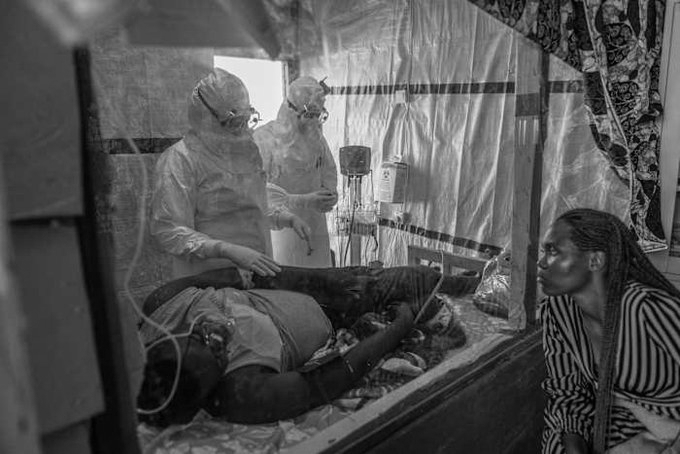
Congo's Ebola Outbreak Kills At Least 930, Cases Rise To 2,344
At least 930 people have died in the Democratic Republic of Congo's rapidly worsening Ebola outbreak, making it the fastest growing Ebola outbreak on record as health authorities struggle to contain the spread of the deadly virus. The country's Ministry of Health said 2,344 confirmed cases had been recorded as of Saturday, with the outbreak continuing to expand across eastern Congo.
The ministry's latest update, issued overnight into Monday, said 37 new deaths were recorded in the previous 24 hours, marking one of the highest single day death tolls since the outbreak was declared on May 15. Health officials also reported that 724 patients are currently in isolation, while 22 more people recovered during the same period as response efforts intensified.
The outbreak is being driven by the Bundibugyo virus, a rare strain of Ebola for which no approved vaccine or specific treatment exists. Unlike the more common Zaire strain, the Bundibugyo virus has limited medical countermeasures, making efforts to control the disease significantly more difficult.
The epidemic is centered in Ituri province but has spread across five provinces in eastern Democratic Republic of Congo, overwhelming healthcare facilities and surveillance teams. The World Health Organization (WHO) has warned that around 80 percent of newly reported infections are linked to unknown chains of transmission, indicating widespread community spread that is becoming increasingly difficult to trace. WHO also believes the actual number of infections is likely higher than official figures because many cases go unreported in conflict affected areas.
The response has been severely hampered by insecurity. Authorities say there have been at least 12 attacks on healthcare facilities and response teams, while many frontline medical workers have staged protests over unpaid wages. So far, 36 healthcare workers have died after contracting Ebola during the outbreak, highlighting the risks faced by those on the front lines.
Eastern Congo has long struggled with armed conflict, population displacement and limited access to healthcare, all of which have complicated contact tracing, safe burials and treatment efforts. Health experts warn that these conditions have allowed the virus to spread rapidly through communities before infected people can be identified and isolated.
The outbreak has also had regional and international repercussions. Uganda, which previously reported imported cases linked to the Congolese outbreak, has discharged its last Ebola patient and entered the WHO mandated 42 day surveillance period before it can declare the outbreak over if no new infections are detected. Meanwhile, Canada has announced temporary entry restrictions on foreign nationals who have recently been in the Democratic Republic of Congo, joining similar measures adopted by some countries despite WHO advising against travel bans, arguing they can hamper outbreak response efforts.