
Congo’s Ebola Outbreak Grows to 282 Cases as Health Workers Share Survival Stories
The Democratic Republic of Congo's Ebola outbreak has expanded to at least 282 confirmed cases , raising concerns about the spread of the deadly virus across the country's conflict-hit eastern region. Health authorities have also recorded more than 1,000 suspected infections linked to the Bundibugyo strain of Ebola , a rare variant for which there is currently no approved vaccine or specific treatment.
According to the health ministry, the outbreak remains centered in Ituri Province , where 264 confirmed cases have been reported. The disease has so far claimed 42 lives in Congo and one in neighboring Uganda, while infections have spread across 22 health zones in three eastern provinces.
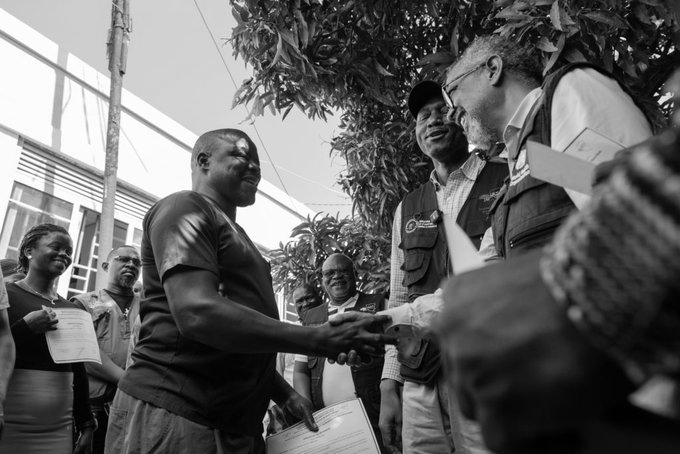
Despite the growing outbreak, health officials highlighted encouraging recovery stories among frontline medical workers. Several healthcare workers who survived Ebola were honored by the World Health Organization during the opening of a new treatment center in Bunia, the capital of Ituri Province.
One survivor, nurse Baraka Bulambulu , described recovering from the virus as an “ indescribable joy ,” while another healthcare worker recalled developing symptoms while caring for patients.
Authorities say containing the outbreak remains challenging due to delayed case detection, difficulties in contact tracing, limited healthcare resources and ongoing violence by armed groups operating in the region. Recent attacks by rebel factions have further complicated response efforts.
The Coalition for Epidemic Preparedness Innovations has pledged up to $62 million to support the development of three experimental vaccines by the International AIDS Vaccine Initiative, Moderna and the University of Oxford.
The outbreak has also crossed into Uganda, which has reported nine cases and tightened border controls. The crisis underscores how fragile health systems can allow localized disease outbreaks to rapidly evolve into wider regional emergencies , particularly in areas affected by conflict and limited medical infrastructure.