
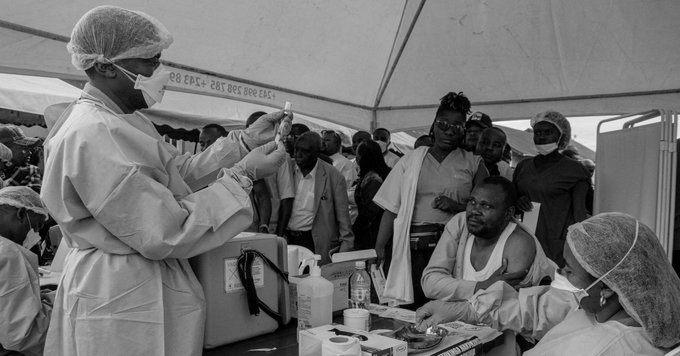
Congo Ebola Outbreak Tops 10,000 Cases as Spread Across Africa Raises Alarm
The Ebola outbreak in the Democratic Republic of the Congo (DRC) has crossed 10,000 confirmed cases, with 10,060 infections recorded as of Tuesday, October 27, according to government data. Nearly half of those infected have died, making it the deadliest Ebola outbreak in the country's history and the fastest-growing on record.
The outbreak, declared on May 15, is caused by the rare Bundibugyo virus, for which no approved vaccine or specific treatment is available. The virus has spread across 66 health zones in eight Congolese provinces, with imported cases reported in Kenya and Nigeria. Uganda and France have also recorded cases during the outbreak, although neither currently has active cases.
According to the World Health Organization (WHO), Kenya had reported nine cases, including one death, by October 20. All eight additional cases were linked to the initial imported case, with no evidence of wider community transmission. Nigeria confirmed an imported case in Abuja on October 20, prompting contact tracing and isolation measures.
The WHO's October 23 report recorded 9,704 confirmed cases and 4,687 deaths in Congo as of October 20. The latest figures highlight the outbreak's continued escalation.
Health authorities face major challenges, including armed conflict, poor roads, misinformation and attacks on response teams. About 80 per cent of recorded cases are occurring outside monitored contacts, indicating that transmission chains remain undetected. At least half of recorded deaths have occurred among people who were not admitted to treatment centres.
The outbreak has also strained an already underfunded healthcare system. Some treatment centres are overwhelmed, while health workers have protested delayed or unpaid wages. On Saturday, a nurse was killed and another health worker seriously injured while responding to an Ebola alert in Tshopo province.
Essential services have also suffered. Fear of infection has kept pregnant women away from hospitals, doubling maternal mortality in some provinces. Routine childhood vaccinations have been disrupted, children have missed school and the response has diverted attention from other diseases, including cholera.
A potential breakthrough came on October 23, when the TUMAINI Phase 2/3 vaccine trial began in Bunia, evaluating vaccine candidates against Bundibugyo virus. The trial aims to generate evidence for future protection.
The WHO continues to urge stronger surveillance, early diagnosis, cross-border coordination and community engagement, and advises against travel or trade restrictions on affected countries.