
Congo Begins Ebola Vaccination In Bunia As Death Toll Crosses 3,600
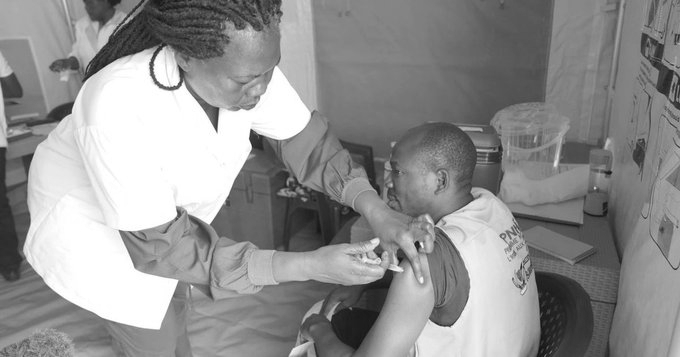
The Democratic Republic of Congo has begun vaccinating frontline health workers against Ebola in Bunia, the epicenter of the country’s rapidly growing outbreak, as authorities try to protect those most exposed to the virus.
The campaign began Saturday in Bunia and Mongbwalu in Ituri province, two of the worst affected areas. The wider drive in Ituri and North Kivu is expected to cover about 20,000 frontline workers over six to nine months.
Ituri military governor Maj Gen Gaby Kasongo Mulumba said health workers were being prioritised because they were “particularly exposed and deeply involved in the response”.
The campaign uses Ervebo, which is licensed for Ebola caused by the Zaire strain. However, the current outbreak is caused by the Bundibugyo virus, for which there is no licensed vaccine or treatment. Researchers are therefore studying whether Ervebo can provide protection against the different strains.
Congo has received 70,000 Ervebo doses, with about 50,000 intended for frontline and health workers and 20,000 allocated to a clinical trial examining its effectiveness against Bundibugyo.
The outbreak has killed 3,639 people among 7,541 confirmed cases, according to government figures cited Saturday. Another 1,823 people have recovered, making this the deadliest of Congo’s 17 recorded Ebola outbreaks.
The situation remains mixed across affected regions. Ituri has shown some encouraging signs, with transmission declining in parts of the province, but cases have been rising rapidly in North Kivu. WHO has warned that the outbreak remains a serious threat.
Insecurity, displacement, a health workers’ strike and heavy population movement are making containment harder.
Dr Jeannot Elua, a healthcare worker in Bunia, said vaccination was necessary because of the risks faced by medical staff. “We healthcare workers don't really have a choice: we are going to receive it,” he said.
Another frontline worker, Dr Jean Paul Uzele, who received Ervebo during an earlier Ebola outbreak, questioned whether a second vaccination was necessary.
“But the question is whether we need to be vaccinated a second time,” he said.
Ervebo vaccination had already begun in Kisangani last month. Meanwhile, clinical trials are continuing to develop vaccines and treatments specifically for Bundibugyo virus.
The Bunia campaign is therefore serving two purposes: protecting frontline workers and helping scientists determine whether an existing Ebola vaccine can work against the strain driving the current outbreak.