
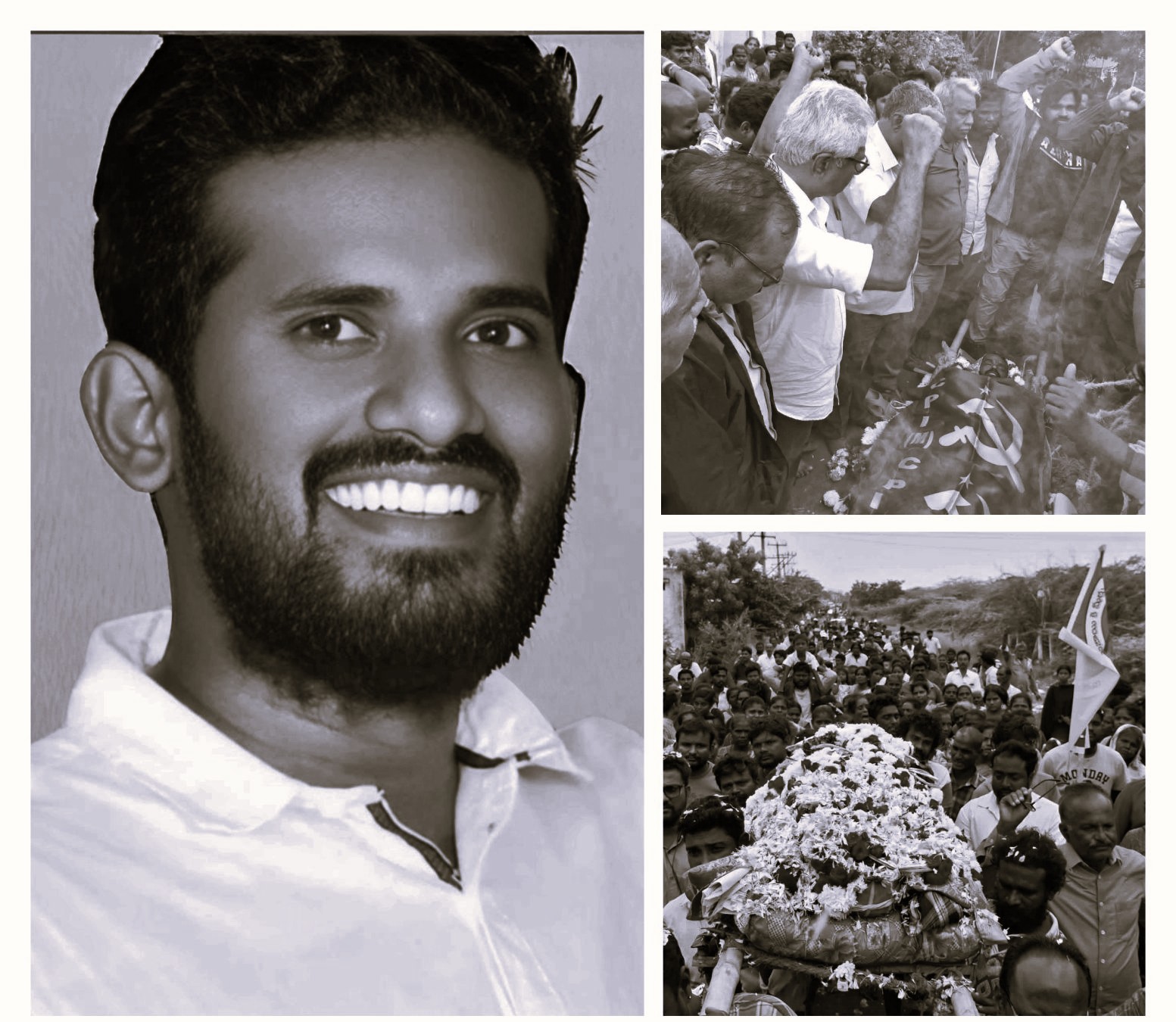
Communist leader Penchalaiah murdered - Police shoot suspect during arrest
Kottaveedi Penchalaiah, a district-level activist of the cultural group Prajanatya Mandali and a local leader in the Communist Party, was allegedly murdered on Saturday near Kallurupalli Housing Board Colony in Nellore. Penchalaiah had been at the forefront of grassroots campaigns against the local marijuana (ganja) trade, raising awareness against drug use and anti-social activities in his community. Following the murder, the prime suspect, Kamakshi, and her associates fled to a sugar factory in Kovur. During a police operation early Saturday, one of the accused allegedly attacked a head constable with a knife. In response, Nellore Rural Circle Inspector opened fire in self-defence, injuring the suspect near the knee. Both the injured suspect and the constable were admitted to Nellore Government General Hospital for treatment. Separate cases have been filed for the murder and the attack on the police officer.
The killing comes amid intensified efforts by the Andhra Pradesh government to curb narcotics across the state. The special task force EAGLE (Elite Anti‑Narcotics Group for Law Enforcement) has adopted a zero-tolerance approach toward ganja and narcotics, combining enforcement, surveillance, and community awareness programs. Recent figures highlight the scale of the crackdown: 23,770 kg of ganja and 27 litres of hashish oil seized across districts in the past year, 2,114 arrests of individuals involved in narcotics, 293 vehicles used for smuggling confiscated, and multiple mass destruction operations of seized narcotics, including 3,737 kg of ganja in February 2025. Police leadership, including DSP Srinivaslu, has urged citizens to participate actively by reporting suspicious activity, stating that community cooperation is essential and information passed to police can help prevent crime and dismantle trafficking networks before they harm society.
While the state has made notable progress, the murder of Penchalaiah represents a serious challenge. Grassroots activists like him, who were both community leaders and political organizers, often act as the eyes and ears for police. His death weakens community-level monitoring of illegal drug activity. Violence against police officers may discourage residents from reporting suspicious activity, slowing enforcement, while high-risk raids now require additional resources and caution, potentially reducing overall effectiveness. Such incidents can embolden criminal networks and demonstrate that violent resistance may temporarily hinder law enforcement, while also attracting public and political scrutiny, adding operational stress on investigators. Authorities caution that protecting activists, enhancing community engagement, and strategic planning for high-risk operations are essential to sustaining anti-drug campaigns.
Penchalaiah’s murder underscores the dangers faced by individuals fighting narcotics at the grassroots level and those engaged in political activism to support social causes. It also highlights the need for closer cooperation between law enforcement and communities to prevent such tragedies and maintain the momentum of Andhra Pradesh’s anti-drug initiatives. While police continue their operations to apprehend all suspects and dismantle trafficking networks, the case serves as a stark reminder of the risks inherent in battling local drug cartels.
\