
CM Revanth Reddy unveils ‘Future City’ under Hyderabad 4.0 vision
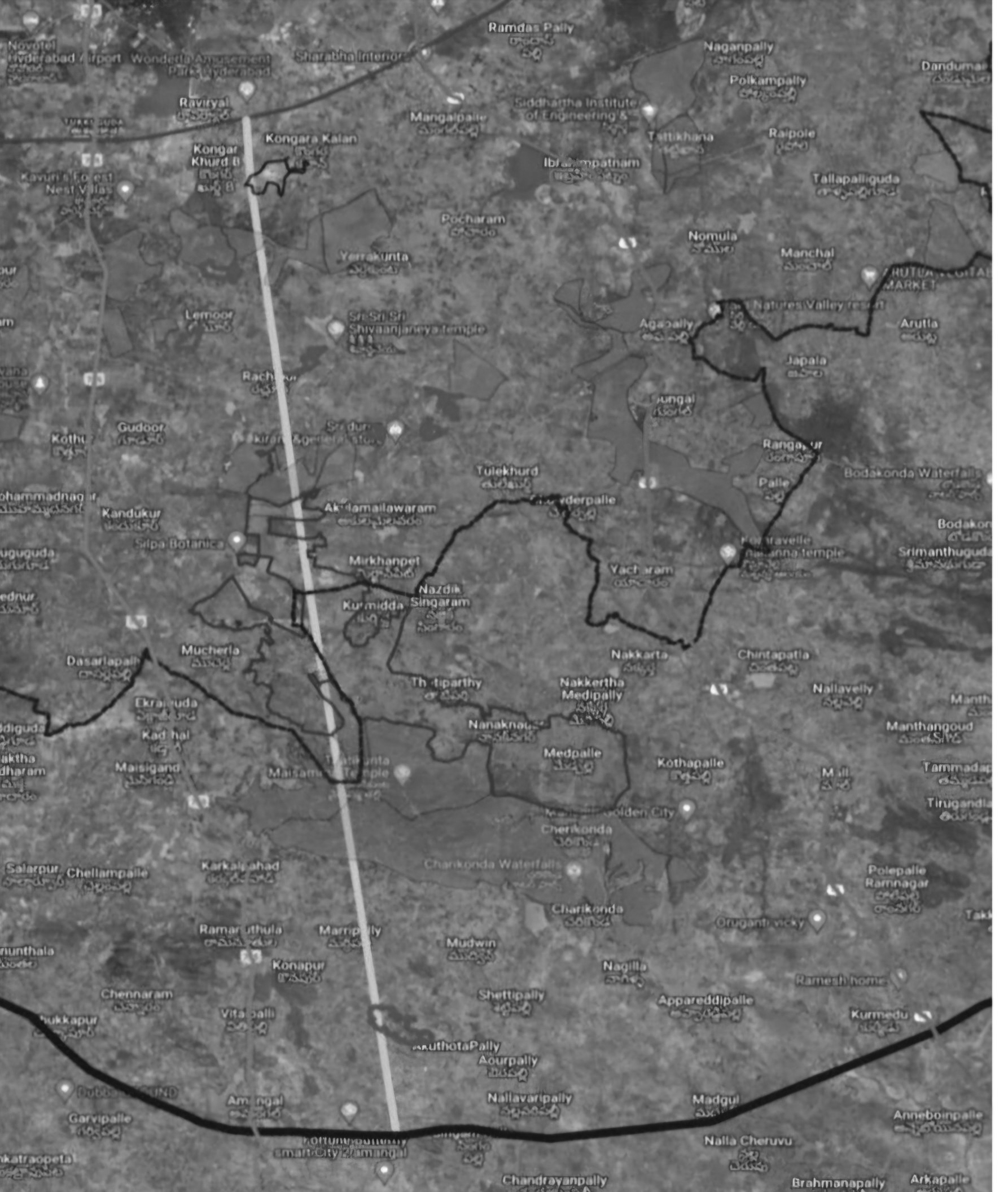
Telangana Chief Minister A. Revanth Reddy, speaking at a recent public event in Hyderabad, unveiled his government’s grand vision for “Hyderabad 4.0”, announcing the development of “Future City” India’s first net-zero, future-ready urban hub. The project, spread over 765 square kilometres across seven mandals in Ranga Reddy district, aims to transform the southern outskirts of Hyderabad into a global model of sustainable and tech-driven urban living. But even as the government promises AI cities, clean energy parks, and skill universities, the plan faces major challenges, from unresolved land ownership issues and farmer protests to legal disputes and uncertainties over compensation.
The land earmarked for Future City was originally acquired under the previous BRS government for the Hyderabad Pharma City once promoted as the world’s largest integrated pharmaceutical hub. Over 13,900 acres were acquired from local farmers under assurances of industrial growth and job opportunities. However, the project ran into stiff resistance from villagers, environmental activists, and multiple court cases. With many still contesting the acquisition, the Congress government has now shifted its approach, replacing the industrial cluster with a more diversified smart city plan integrating technology, education, clean energy, and residential development under the Hyderabad 4.0 banner.
Future City is envisioned as a cluster of specialized zones: an AI City with a global AI University and data centres, a Sports City, clean energy and green mobility parks, life sciences clusters, and eco-friendly residential zones designed to achieve net-zero emissions. A new governing body, the Future City Development Authority (FCDA), will oversee planning and execution. The government argues that this approach aligns with global urban trends and will make Hyderabad a pioneer of climate-conscious development, job creation, and innovation.
Infrastructure is already being planned to support the project. A 41.5 km Greenfield Radial Road will connect Raviryala on the Outer Ring Road to Amangal on the Regional Ring Road, with six lanes, cycle tracks, and provision for a future metro line. The project, estimated at ₹4,621 crore, will link key hubs like the proposed Skill University and AI City, reducing travel time and spurring economic activity. Officials say such infrastructure will anchor Hyderabad 4.0’s vision of integrated, high-speed connectivity.
Yet on the ground, discontent is growing. Farmers from Kandukur, Kadthal, Kongarakalan, and other affected villages claim they were never consulted about this new purpose. They argue that the land was acquired specifically for Pharma City, not for real estate or urban housing, and that using it for another purpose violates acquisition norms. Many are now demanding either return of their land or fresh compensation at current market value. Several petitions are pending before the Telangana High Court, which has ordered status quo in parts of the project area. Locals also express frustration as the government has halted layout permissions and registrations, leaving them unable to sell, build, or utilize their land.
The government says Future City will unfold in phases beginning with core infrastructure, followed by universities, green industries, and residential clusters. Experts estimate the full rollout could take 10 to 15 years, given the legal and environmental complexities. While investors expect land values to rise once clarity emerges, current uncertainty has stalled transactions, leaving many landowners in limbo.
Economists and urban planners see Hyderabad 4.0 and Future City as a transformative chance to shift from industrial expansion to sustainable, knowledge-based growth. But they also caution that the success of such a massive vision depends on transparency, fair rehabilitation, and public participation. Without resolving farmers’ concerns and ensuring legal compliance, the futuristic promise may falter before it takes flight.
As it stands, Future City symbolizes Telangana’s ambition to redefine Hyderabad as a global smart city green, inclusive, and technologically advanced. But whether this grand dream becomes a reality will depend not just on roads and skyscrapers, but on the government’s ability to balance development with justice for the people whose land forms its foundation.