
CM Revanth Orders 100-Day Roadmap for Digital Governance Overhaul
In a significant move aimed at modernizing public administration, Telangana Chief Minister A. Revanth Reddy has ordered the formation of a high-level committee to chart the next phase of the state's digital governance agenda. The committee has been given a 100-day deadline to submit a comprehensive roadmap for strengthening technology-driven governance and improving accountability across government departments.
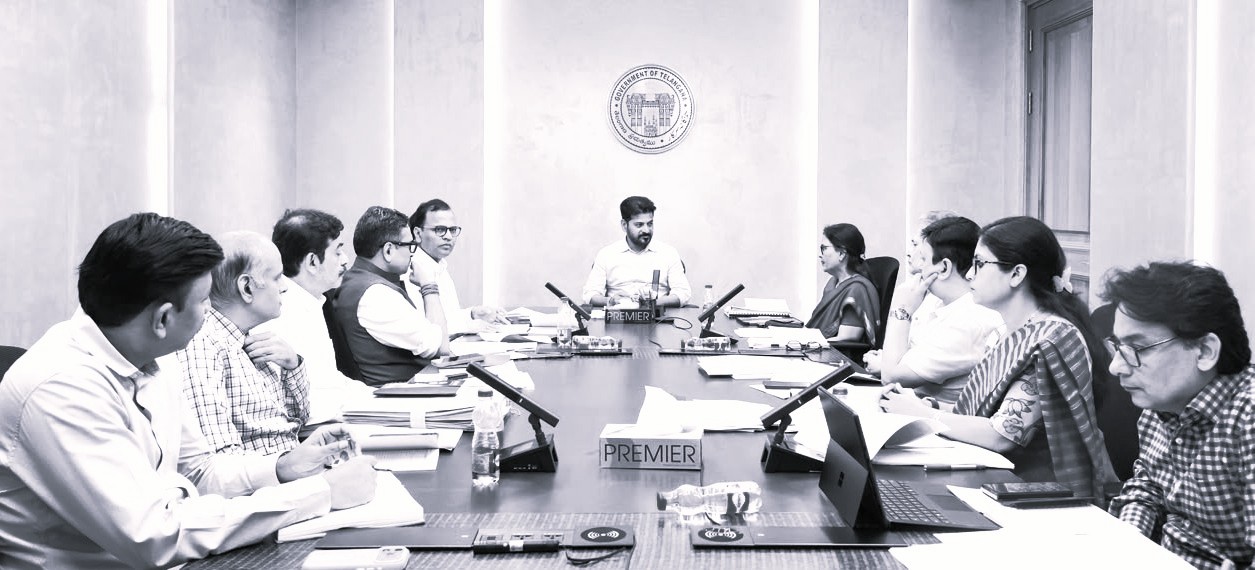
Chairing a high-level review meeting at the Bodhi Pavilion in MCR HRD Institute , the Chief Minister stressed that Telangana must move towards a fully digitized administrative ecosystem , where government services are delivered efficiently, transparently, and with minimal human intervention. He directed officials to prepare a detailed action plan and explore the need for new legal and regulatory frameworks to support the state's digital transformation goals.
Emphasizing the role of technology in governance, Revanth Reddy said digital systems are essential not only for improving citizen services but also for ensuring that welfare benefits reach eligible beneficiaries directly , reducing leakages and enhancing transparency. The initiative aligns with Telangana's broader efforts to build a technology-enabled governance model backed by expanding digital infrastructure and integrated public service platforms.
A major focus of the review meeting was the welfare of contract and outsourcing employees , who form a substantial part of the government workforce. The Chief Minister directed officials to digitize employee records, salary data, and banking information to ensure that wages are credited directly into employees' accounts between the 1st and 5th of every month . The proposed system will cover both regular government employees and personnel engaged through outsourcing agencies.
The discussion also brought to light serious compliance issues within the outsourcing sector. According to officials, Telangana has nearly 4,800 contract and outsourcing agencies , of which around 4,300 are allegedly failing to remit statutory benefits such as Employees' State Insurance (ESI) and Provident Fund (PF) contributions. Officials informed the government that, despite timely release of funds by departments, many agencies delay salary payments and fail to meet their legal obligations toward workers.
Taking a strong view of the issue, the Chief Minister directed authorities to initiate strict action against defaulting agencies and said technology-based monitoring could help eliminate such irregularities. He noted that an integrated digital governance framework would enable real-time tracking of salary payments, statutory deductions, and employee benefits, helping curb exploitation and improve accountability.
As part of the reform process, the proposed committee will examine administrative bottlenecks, employee welfare mechanisms, and digital monitoring systems before submitting its recommendations. The Chief Minister also ordered the digitization of government employee data related to health cards, welfare entitlements, and service records , while calling for a dedicated monitoring mechanism under the Finance Department to oversee implementation on a continuous basis.
Officials believe the initiative could mark a major step toward creating a data-driven, transparent, and citizen-centric governance model , while addressing long-standing concerns over workforce management and welfare compliance in the public sector.
The meeting was attended by MP Vem Narender Reddy , Chief Minister's Advisor K. Ramakrishna Rao , Chief Secretary Sanjay Jaju , senior officials Jayesh Ranjan , Shanthi Kumari , and other top bureaucrats.