
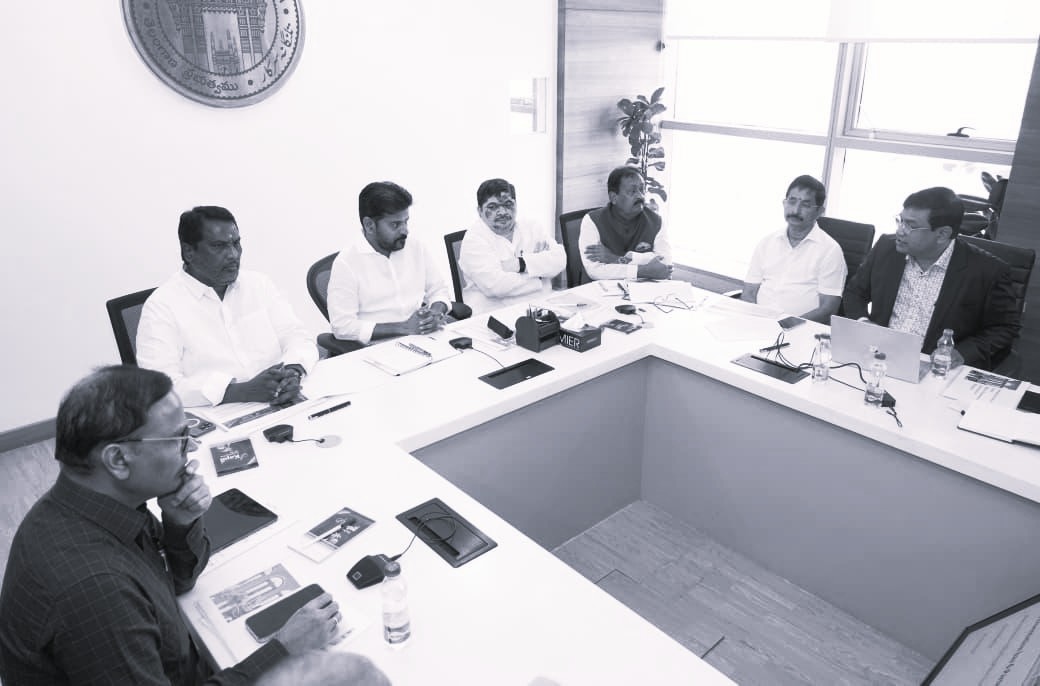
CM Revanth focuses on welfare hostel issues in T’gana
Telangana Chief Minister Revanth Reddy has directed officials to pay special attention to student welfare in government-run hostels, emphasizing health, food quality, and technological monitoring. He instructed that students, as well as teaching and non-teaching staff, be brought under face-recognition systems and that modern technology be used to ensure food quality inspections.
Ongoing criticism of government hostels
Government welfare hostels in Telangana have long faced criticism over poor food quality and inadequate facilities. Recent incidents have brought these concerns into sharp focus. For instance, in 2025, 31 students at the Jyotiba Phule BC Hostel in Karimnagar fell ill after consuming hostel food. Meanwhile, hostels at Kakatiya Medical College in Warangal reportedly faced sanitation issues due to strikes by cleaning staff, exposing students to dirty water and unhygienic bathroom conditions. In Karimnagar, problems such as missing doors and windows, old beds, and poor infrastructure have affected student living conditions.
These issues highlight gaps in nutrition, health check-ups, safety, cleanliness, and technological monitoring. In response, CM Revanth Reddy has instructed central and state officials to take corrective action. Historically, BC students have also protested against poor food and facilities, showing that concerns about hostel conditions are longstanding.
Political angle - Is BRS involved?
The Congress party has suggested that some student protests in welfare hostels might be influenced by the BRS (Bharat Rashtra Samithi). While there is no concrete evidence that protests are orchestrated, BRS student leaders appear to play a role by repeatedly highlighting issues and organizing demonstrations. This involvement could politically motivate students, particularly against the current Congress government. BRS leaders such as KTR, Harish Rao, and Kavitha have publicly raised concerns about hostel conditions, including dirty facilities at Gurukula schools.
Hostel conditions under BRS rule
During the BRS administration (2014–2023), welfare hostels and Gurukula residential schools in Telangana reportedly faced multiple issues, including poor food quality, hygiene problems, student health risks, suicides, and funding gaps. While the BRS government expanded Gurukula schools and claimed to spend ₹1.25 lakh per student annually, critics argue that underlying problems remained unaddressed.
Major concerns:
• Food poisoning - Repeated incidents of food poisoning occurred under BRS rule. In 2022, 347 students fell ill within 30 days, and a total of 1,070 students were affected across 17 districts over eight months. Poor hygiene in kitchens and dining halls, unclean water tanks, and contaminated drinking water were major causes.
• Student suicides - Congress leaders claimed that 62 deaths occurred in BRS-era hostels due to suicides and food-related illnesses. Examples include two suicides at a Bhuvanagiri hostel and others linked to poor hostel conditions.
• Sanitation and facilities - Many hostels lacked toilets and tap water (reported in 37% of schools). Students often slept on floors in dilapidated buildings. BC Welfare Associations criticized government neglect, highlighting problems even in central Hyderabad.
• Funding and management issues - Delayed staff salaries, strikes by mid-day meal workers, and stagnant mess charges led to compromises in food quality. Welfare initiatives reportedly declined during this period.
Positive developments:
The BRS government did establish over 1,000 Gurukula schools, providing residential education to around 600,000 students, making Telangana home to some of the country’s largest Gurukula systems. However, structural and operational issues continue to persist.