
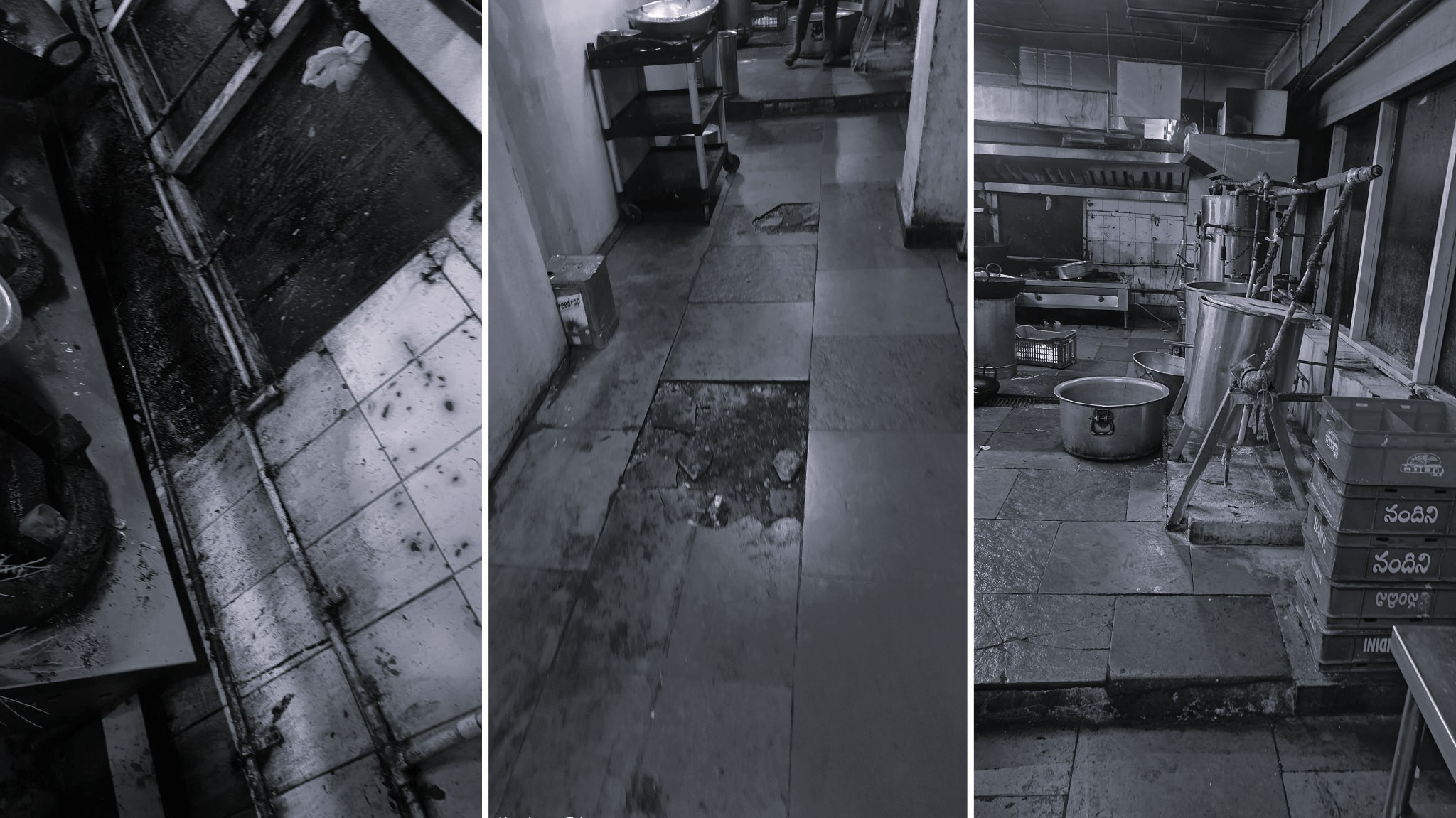
Cloud Kitchens, Warehouses under scanner in Telangana
A two-day special enforcement drive by Telangana’s food safety wing has exposed a worrying pattern of violations across urban food chains, even as the rapid growth of restaurants, cloud kitchens and delivery-based food services continues to reshape consumer habits in the state. In the inspection campaign conducted on November 25 and 26, officials raided 75 warehouses belonging to major e-commerce platforms and seized 76 kg of around 1,903 units of expired food, stale products, and rotten vegetables. Thirty-two improvement notices were issued after officers found misleading labels, improper storage and non-compliance with hygiene rules. The Food Safety Commissioner, Sangita Satyanarayana, warned that even large firms would face strict action if they violated regulations and reiterated that consumer safety would not be compromised.
The latest crackdown comes at a time when Hyderabad’s food-services ecosystem has grown at unprecedented speed. According to the NRAI’s India Food Services Report 2024, the city now hosts more than 74,800 outlets including restaurants, cafés, small eateries, and nearly 16,400 cloud kitchens making it one of India’s fastest-expanding urban food markets. While the flourish of new eateries signals economic vitality and changing lifestyles, it also intensifies the pressure on regulatory agencies to ensure compliance across a vast, fragmented, and increasingly digital food network.
The shift in consumer behaviour has been driven by the convenience and accessibility provided by delivery platforms such as Swiggy and Zomato. Over the past decade, these apps have transformed eating habits by offering vast choices, quick delivery, personalized recommendations and an ecosystem of discounts that often make ordering food feel easier and, at times, cheaper than cooking at home. Young professionals, students and dual-income families, particularly in urban areas, increasingly rely on delivery meals during long workdays, late-night hours or social gatherings. The rise of cloud kitchens businesses without dine-in spaces that operate purely through delivery has further expanded the market, catering to diverse price points and cuisines.
However, the same expansion has invited new concerns for public health. Inspectors nationwide—especially in cities like Hyderabad, Bengaluru and Delhi—frequently detect expired ingredients, unhygienic storage, reused oil and improper kitchen practices even in popular outlets. Experts warn that increased dependence on outside food also exposes consumers to high-calorie, low-nutrition diets that contribute to lifestyle-related health risks such as obesity, hypertension and digestive issues.
Adding to the shift in food culture is the powerful influence of social media. Short videos and influencer-driven content showcasing “must-try” cafés, trending dishes and aesthetic food spots have created a new wave of consumption among youth. With cafés doubling as hangout spaces, study corners and content-creation hubs, the line between leisure and food consumption has blurred. Many young people feel compelled by viral trends, promotions and aesthetic branding to try new eateries, often overlooking nutritional value and hygiene. Influencer marketing, which frequently involves paid collaborations, further amplifies this trend and may not always reflect real kitchen conditions.
Public health advocates emphasise that while the restaurant boom offers employment and culinary diversity, it demands higher consumer awareness. They advise customers to check hygiene ratings, FSSAI licenses and credible reviews before ordering, remain cautious of algorithm-driven promotions on delivery apps, and ensure home-cooked meals remain the dietary foundation. With monthly spending on delivery services rising in many households, often unnoticed experts also highlight the need for better budgeting and mindful consumption.
The Telangana government’s recent raids underscore the scale of regulatory challenges as the food-services landscape evolves. With more than 70,000 outlets and thousands of digital-only kitchens operating in Hyderabad alone, ensuring compliance requires continuous monitoring, advanced reporting systems and public participation. As dining-out and delivery culture deepen, officials say that public vigilance, digital literacy regarding food promotions, and awareness of health impacts are becoming just as important as enforcement.
The latest enforcement action signals that the state is tightening oversight. But as the eating-out ecosystem expands through social media influence, delivery convenience and rapid restaurant growth, the larger challenge lies in guiding consumers to make informed choices while ensuring that the booming hospitality sector maintains the standards expected of it.