
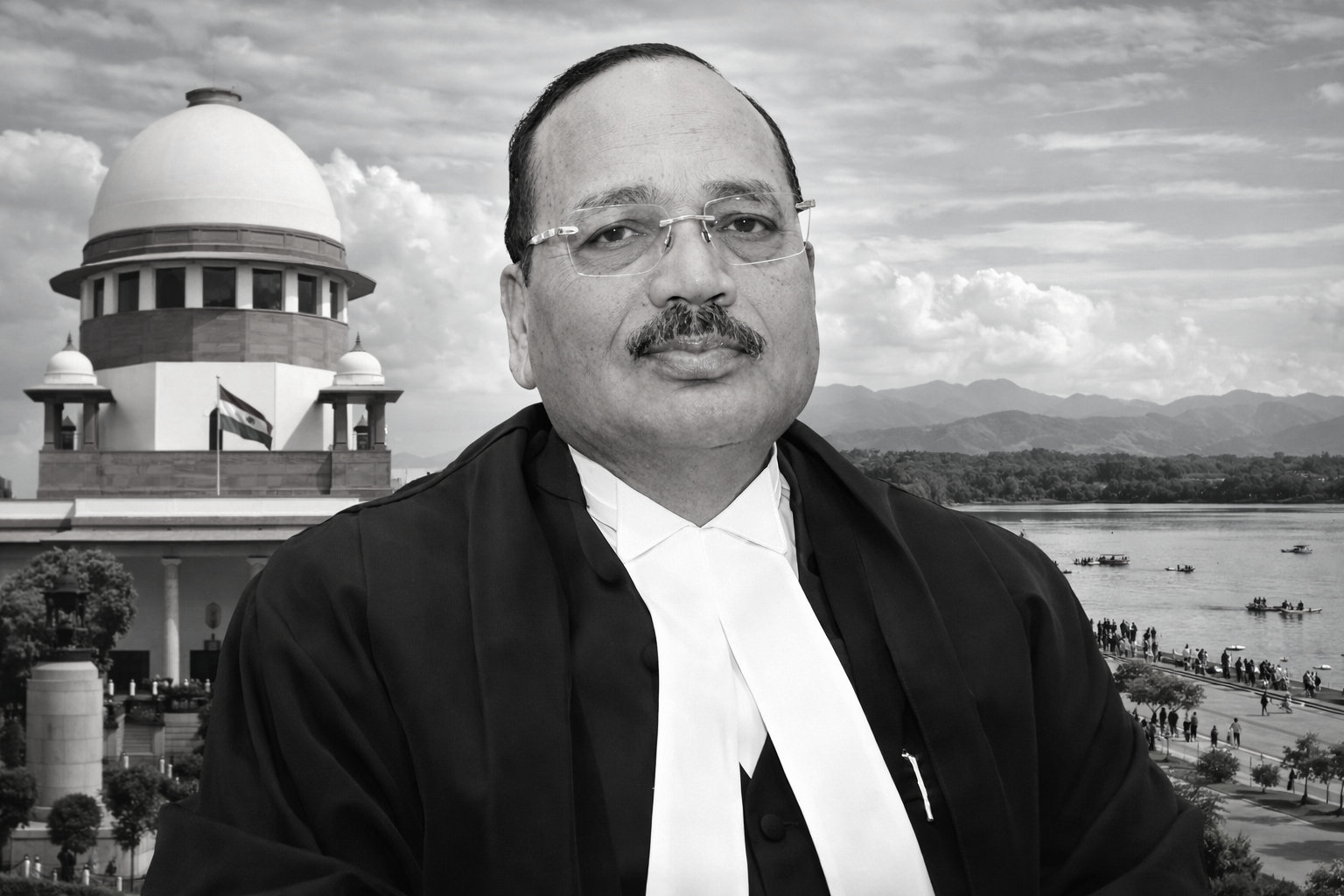
CJI Surya Kant expresses concern over degradation of Chandigarh’s Sukhna Lake
Chief Justice of India Surya Kant on Wednesday expressed deep concern over the alarming degradation of Chandigarh’s iconic Sukhna Lake, exclaiming, “Aur kitna sukhaoge Sukhna lake ko?” during a hearing in the Supreme Court. The remark highlighted the ongoing destruction caused by illegal constructions orchestrated by builder and sand mafias, allegedly in collusion with corrupt bureaucrats and political entities in Punjab.
The Supreme Court bench, comprising CJI Surya Kant and Justices Joymalya Bagchi and Vipul M Pancholi, was hearing interim applications filed in the long-pending 1995 Public Interest Litigation, ‘In Re: TN Godavarman Thirumulpad’ , which primarily deals with forest and environmental protection. The bench expressed concern over local environmental issues being directly brought to the apex court, bypassing the High Courts, which are better positioned to handle them. Referring to the Sukhna Lake case, the CJI noted that illegal activities seemed to be carried out at the behest of private developers, resulting in serious ecological damage. The bench directed the Additional Solicitor General Aishwarya Bhati and senior lawyer K Parmeswar, assisting as amicus curiae, to provide details of local issues that could be managed by the High Court.
Sukhna Lake has long faced environmental threats due to encroachments and illegal constructions in its protected catchment area. In 2020, the Chandigarh High Court ordered demolition of several illegal structures to preserve the lake, but violations continue, exacerbating its degradation. The matter has been litigated intermittently for decades, with the Supreme Court now handling interim pleas under the 1995 Godavarman PIL.
Experts say several factors contribute to the slow progress of environmental cases like Sukhna Lake. Many matters are filed as interim applications in long-pending PILs, creating procedural congestion in already overloaded courts. Coordination among Chandigarh administration, Punjab authorities, urban bodies, and environmental agencies is often poor. Builder and sand mafias reportedly operate with political and bureaucratic backing, slowing enforcement. Legal loopholes and repeated appeals further delay implementation, while ground-level action, even after court orders, is slow, allowing repeated violations.
CJI Surya Kant’s remarks underscore the urgent need for strict enforcement of environmental laws, accountability of all stakeholders, and active monitoring to prevent further damage to Sukhna Lake, a critical ecological and cultural landmark of Chandigarh.