
CJI Surya Kant Calls BRICS Judicial Forum a ‘Modern Fabric Woven With Traditional Threads’
Chief Justice of India Surya Kant on Saturday described the BRICS Chief Justices’ Forum as a “modern fabric woven with traditional threads”, saying the gathering reflects a shared commitment among judicial systems to find solutions that serve humanity and guide development towards shared prosperity.
The three-day forum, hosted by the Supreme Court of India from September 4 to 6, has brought together chief justices, presidents of supreme courts and senior judicial leaders from BRICS member states and partner countries. Judicial leaders participating include Igor Krasnov of Russia, Zhang Jun of China, Boulos Gahmy Iskander Boulos of Egypt, Prof. Dr. Sunarto of Indonesia, Mohammed Hamad Al Badi Al Dhaheri of the UAE, Andrei Shved of Belarus, Aslambek Mergaliyev of Kazakhstan, Mahube Betty Molemela of South Africa, Ayatollah Gholam Hossein Mohseni-Eje’i of Iran and Malikakhon Kalandarova of Uzbekistan.
Delivering the welcome address on the forum’s second day, CJI Kant said the participating nations were more than separate jurisdictions and represented a “fellowship of judicial minds” united by the belief that enduring values of justice can respond to the changing challenges of the modern world.
Drawing on India’s intellectual heritage, Kant referred to ancient Nalanda University, which attracted scholars from China, Korea, Tibet, Persia and Southeast Asia. He said Nalanda provided a space where people with different traditions could debate and exchange ideas without first agreeing on a common system of law or philosophy.
Kant said this tradition of disagreement and deliberation offered a historical precedent for the BRICS forum, where different judicial systems could engage directly while respecting their differences.
He said economic progress, technology, dispute resolution and sustainable energy are often viewed as separate engines of development, but all depend on one foundation — timely and predictable justice.
The CJI compared judicial systems to a load-bearing wall, saying their importance may not always be visible, but no stable national or economic structure can function without them. He noted that uncertainty over the speed and fairness of dispute resolution increases costs for foreign investors through higher risk premiums, additional securities and stricter exit clauses.
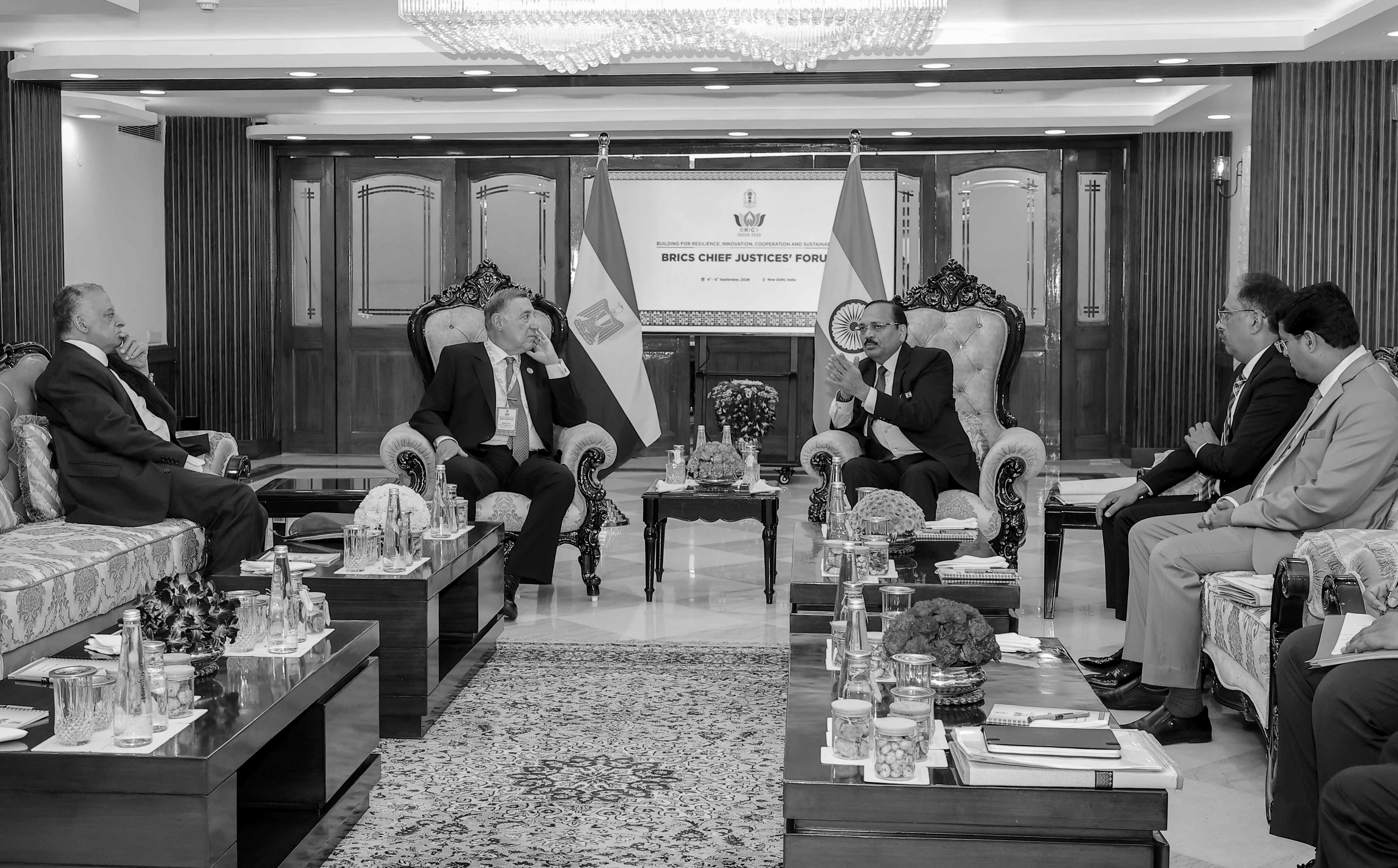
On the forum’s sidelines, CJI Kant held bilateral meetings with judicial leaders on judicial cooperation, mediation and arbitration, commercial courts, mutual recognition of judicial awards and decrees, technology and artificial intelligence. Discussions also covered professional exchanges through the National Judicial Academy, sharing legal best practices and strengthening people-to-people ties through faster judicial processes.
The forum’s broader agenda includes international commercial disputes, cross-border enforcement of arbitral awards, AI and the judiciary, and judicial leadership in sustainable development, with the aim of strengthening judicial cooperation among BRICS and partner countries.