
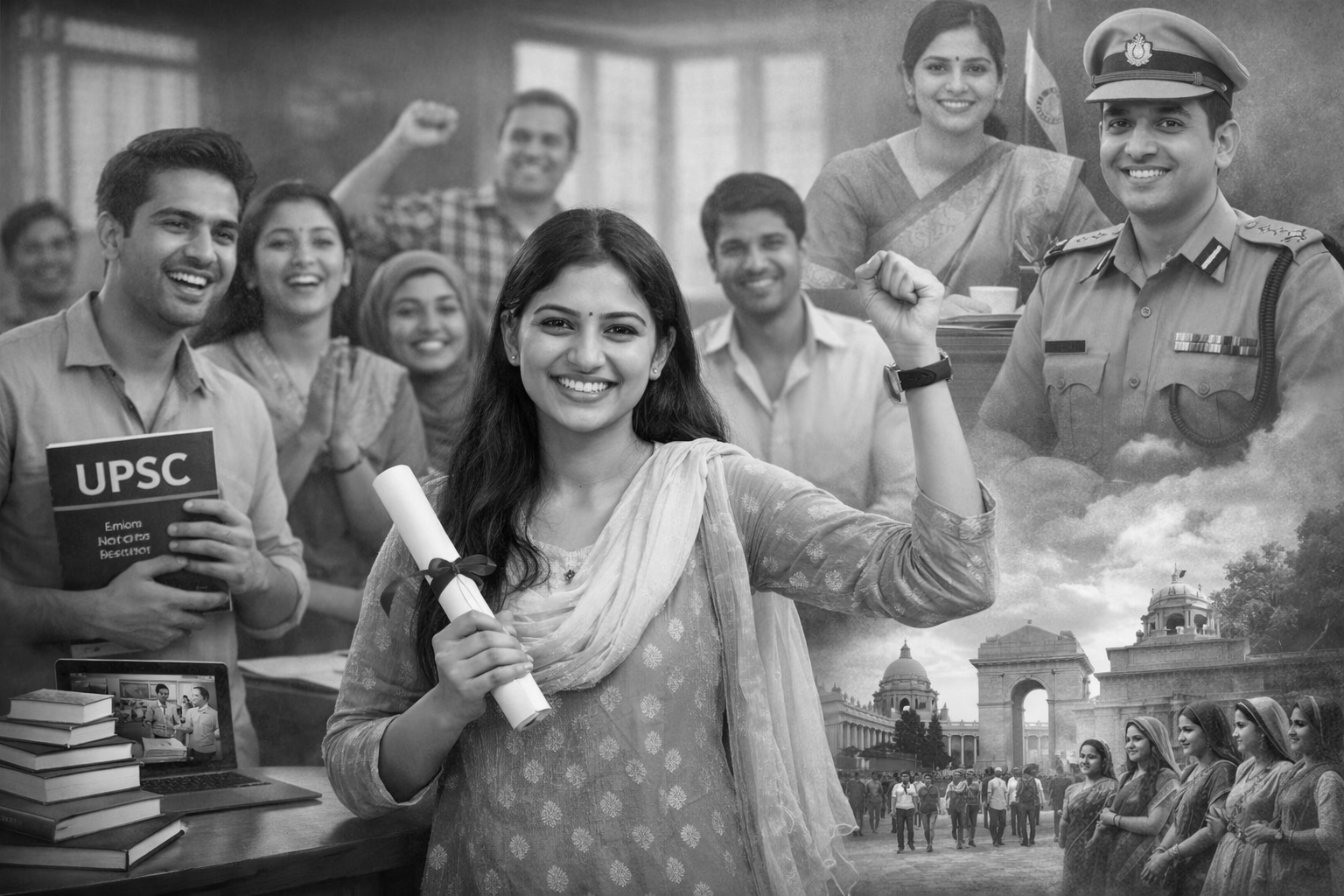
Civil Services See Rising Women’s Share, Reflecting India’s Changing Social Fabric
India’s Civil Services are undergoing a quiet but significant transformation, with women steadily increasing their presence in one of the country’s most prestigious career pathways. The latest Civil Services Examination (CSE) results highlight this shift, as women now constitute over 31% of successful candidates , signalling a growing move toward gender inclusivity in governance.
Out of 958 candidates recommended in CSE 2025, 299 are women , marking a notable rise from nearly 20% a decade ago . The current male-to-female selection ratio stands at roughly 69:31 , or about 2.2 men for every woman , reflecting both progress and the persistence of a gender gap. The steady rise underscores how improved access to education, digital resources and a more level playing field are enabling more women to compete successfully.
The increase, however, has not been uniform. In the early part of the last decade, growth remained modest, with women’s representation hovering around 23–25% between 2010 and 2015 . A gradual shift began thereafter, with the share rising to nearly 30% by 2019 , marking a key turning point. The post-2019 period witnessed faster gains, with participation touching 33–35% in some recent years , before stabilising slightly above the 30% mark.
This trajectory reflects deeper structural changes within the examination ecosystem. Candidates today are no longer confined to metropolitan centres or elite institutions. Increasingly, aspirants are emerging from small towns, rural regions and diverse socio-economic backgrounds , often relying on digital platforms and self-learning tools rather than traditional coaching systems. This democratisation of preparation has broadened access and reduced long-standing barriers.
Policy interventions have also played a crucial role. Reforms such as the National Education Policy (NEP) 2020 have given students greater flexibility to pursue subjects aligned with their interests and strengths. Initiatives like “Pratibha Setu” ensure that candidates who reach advanced stages of the examination process but do not make the final list are still connected with employment opportunities, preventing the loss of valuable talent.
Despite these encouraging trends, challenges remain. While women account for nearly one-third of new entrants, their representation in the higher echelons of bureaucracy continues to lag, with women making up only about one-fifth of serving IAS officers . This indicates that although the entry pipeline is improving , achieving parity in leadership positions will take sustained effort.
The evolving composition of Civil Services also reflects broader societal change. Greater participation across gender, region and social backgrounds is reshaping the character of India’s administrative machinery, making it more representative of the population it serves. At the same time, the expectations from civil servants are expanding, requiring adaptability, continuous learning and effective public engagement.
As India moves toward its long-term developmental goals, the rising presence of women in Civil Services stands as a strong indicator of a more inclusive future. The journey from one-fourth to nearly one-third representation in just over a decade is not merely a statistical improvement, but a reflection of shifting aspirations, expanding opportunities and a system gradually opening its doors wider than ever before.