
CII unveils National Circular Economy Framework 3.0 in Delhi
The Confederation of Indian Industry (CII) launched the National Circular Economy Framework Edition 3 (NCEF 3) at the 10th International Conference on Waste to Worth Technologies, held in New Delhi on Friday. Themed “Fostering a Circular World Through Economic Synergies and Global Technological Partnerships,” the conference brought together policymakers, global experts, and industry leaders to chart India’s path toward a resource-efficient and sustainable future.
India’s economy is at a critical turning point striving to sustain rapid growth while reducing pressure on natural resources. The concept of a circular economy, which promotes reusing, recycling, and regenerating materials instead of following the traditional “take-make-dispose” model, is fast emerging as a strategic necessity rather than an environmental choice.
India’s Circular Transition Gains Momentum
India is gradually shifting from a resource-intensive model to one centered on sustainability and self-reliance. With an emphasis on reducing the use of virgin raw materials, improving resource productivity, and promoting waste-to-value innovations, the government, industries, and citizens are aligning toward circularity.
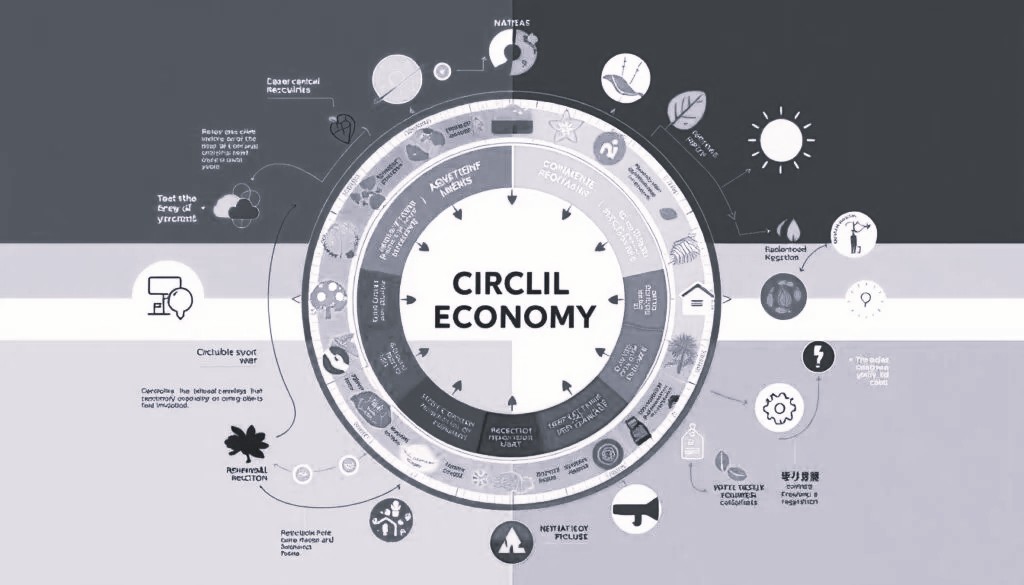
The National Circular Economy Framework (NCEF) launched by CII serves as a roadmap for this transformation. The newly released Edition 3 expands its coverage to 20 priority materials and provides an actionable plan for industries, financial institutions, and urban local bodies to adopt circular practices. The framework strongly aligns with key national initiatives such as Atmanirbhar Bharat and Mission LiFE (Lifestyle for Environment) and supports the long-term vision of a Viksit Bharat (Developed India) by 2047.
From Vision to Implementation
“The first two editions of NCEF helped build awareness and establish a shared understanding of circularity,” said Masood Mallick, Chairman of CII’s National Committee on Waste to Worth Technologies and CEO of Re Sustainability Limited. “NCEF 3 moves us firmly into the delivery phase. It shows how circularity will be implemented through measurable targets, material-specific actions, and shared responsibility between government, industry, and citizens.”
Mallick emphasized that circularity is not just an environmental goal but an economic strategy that enhances domestic value chains, reduces import dependence, and drives green innovation. “It’s a blueprint for building a resource-secure, low-carbon, and competitive economy,” he said.
Sectoral Opportunities: Where Circularity Can Transform India
India’s circular economy potential is vast estimated by NITI Aayog to be worth US$ 45 billion by 2030. Several key sectors are poised to benefit from this shift:
1. Construction and Infrastructure
India’s booming construction sector, responsible for nearly 30% of solid waste, can lead the transition by adopting recycled materials such as fly ash, slag, and demolition waste. Circular practices can drastically reduce landfill pressure and carbon emissions while cutting costs.
2. Automotive and Mobility
With vehicle ownership on the rise, circularity in the auto sector through vehicle recycling, remanufacturing, and shared mobility can significantly reduce resource use. India’s new Vehicle Scrappage Policy and emerging battery recycling industry in the electric vehicle (EV) segment complement this effort.
3. Electronics and E-Waste
India is the third-largest generator of e-waste globally. Circular models like refurbished electronics, modular designs, and material recovery systems can help reduce imports of rare metals and create green jobs in the repair and reuse economy.
4. Plastics and Packaging
The plastic sector, a major polluter, offers opportunities for redesigning packaging, scaling up recycling, and using biodegradable alternatives. The Plastic Waste Management Rules and Extended Producer Responsibility (EPR) norms are already driving industry innovation.
5. Textiles and Fashion
India’s textile industry, one of the world’s largest, faces challenges of water use and waste generation. Circular fashion using recycled fibers, repair services, and sustainable production can add value while reducing environmental impact.
6. Agriculture and Bioeconomy
Agriculture can become a hub of circular innovation through composting, bioenergy generation, and efficient resource use. Using crop residues to produce bio-CNG or organic fertilizers can reduce air pollution and enhance soil health.
Government - Industry - Consumer Synergy
The circular economy can succeed only through a whole-of-society approach. The government’s role lies in setting clear regulations, incentives, and data systems. Industry must innovate business models and invest in circular supply chains. Consumers, meanwhile, can drive change through sustainable consumption reusing products, separating waste, and supporting eco-friendly brands. A symbolic highlight of the event was the handover of the NCEF 3 document to Environment Minister Bhupender Yadav, reaffirming the shared commitment of government and industry to accelerate India’s circular transformation.
Leaders Call for Innovation and Collaboration
In a video message, Nitin Gadkari, Minister for Road Transport and Highways, emphasized that India’s future lies in converting waste into wealth. “Turning agricultural and municipal waste into clean energy will not only help manage waste but also protect the environment and public health,” he said.
V. K. Chaurasia, Advisor, CPHEEO, Ministry of Housing and Urban Affairs, stressed that true progress in circularity requires collaboration between government, industry, and innovators to create frameworks that support sustainable urban growth.
The conference also recognized excellence through the CII 4R Awards 2025, honoring around 50 organizations for leadership in Reduce, Reuse, Recycle, and Repair practices. The inaugural Young 4R Awards celebrated innovators under 35 who are building next-generation waste-to-worth solutions.
A decade for circular transformation
With over 300 delegates in attendance, the conference served as a platform for showcasing cutting-edge waste-to-worth technologies and global partnerships. Discussions covered governance frameworks, innovation ecosystems, and financing models to accelerate circular adoption. CII officials noted that NCEF 3 provides much-needed clarity on how India can translate its national ambitions into measurable progress. The framework sets sectoral baselines, identifies challenges, and outlines pathways to achieve circularity targets for 2030 and beyond.
As India eyes its goal of becoming a developed, carbon-neutral economy by 2047, the circular economy offers a powerful means to achieve growth without waste. By transforming the way materials, products, and energy are used, India can create millions of green jobs, strengthen industries, and ensure that economic development and environmental sustainability go hand in hand